Oluwafunbi Bello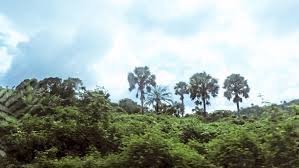
ABEOKUTA, Nigeria – Environmental experts say Nigeria’s vast biodiversity is central to global environmental health, food security and sustainable economic growth, warning that unchecked degradation threatens livelihoods and ecosystems.
The assessment emerged during the inauguration of a multi-stakeholder platform and validation of a biodiversity needs study covering Ogun and Edo states, organised by the Nigeria National Park Service with the Food and Agriculture Organisation under the GEF-7 Project.
In a statement on sunnday, Chief Technical Adviser, Prof Segun Oladoye, says Nigeria hosts some of Africa’s richest biodiversity, spanning savannahs, forests and freshwater ecosystems.
“Nigeria supports over 4,700 plant species and hundreds of mammal, bird and aquatic species,” he says, warning that habitat loss, pollution and climate change increasingly threaten survival.
The GEF-7 Biodiversity Project focuses on integrated landscape planning, ecosystem restoration, sustainable livelihoods and knowledge management to protect lowland forests.
National Programme Coordinator, Lawrence Osaze, says the multi-stakeholder platform promotes transparency, collaboration and community ownership.
“This approach ensures conservation supports livelihoods rather than undermines them,” he explains.
Experts emphasise biodiversity-friendly production, gender inclusion and integrated land management as critical to sustainability.
Forestry scholar Prof Tayo Oyelowo says aligning production with natural systems boosts resilience, while gender expert Lydia Ameh stresses that women’s ecological knowledge strengthens outcomes.
Ogun State officials urge swift policy action, noting the state’s significant remaining forest blocks.
“Conservation is not optional; it is development,” experts warn.
About the Author


 Koko Maxwella
 Hussaini Ibrahim