Borrowed Tides: Nigeria’s £746m Port Gamble and the High-Stakes Battle for Economic Sovereignty
 Hussaini Ibrahim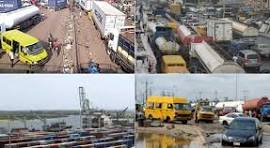
KANO, Nigeria – In the humid chaos of Lagos’ port corridors—where trucks idle for days and cargo ships queue on the Atlantic horizon—Nigeria’s economic pulse beats unevenly. It is here, at the overstretched gateways of Apapa and Tin Can Island, that the country’s ambitions for global trade collide daily with decades of neglect.
Now, a proposed £746 million infrastructure agreement with the United Kingdom promises to rewrite that story.
But beneath the optimism lies a deeper, more uncomfortable question: is Nigeria investing in its future—or mortgaging it?
In this report analysis, Hussaini Ibrahim examines the opportunities, risks, and geopolitical implications of a deal that could reshape the country’s economic trajectory for decades to come.
A Gateway Under Strain
Nigeria’s ports are more than transit hubs—they are lifelines for an import-dependent economy and critical arteries for export revenue. Yet, they remain choked by inefficiency.
Apapa Port, the nation’s busiest, has become synonymous with gridlock. Tin Can Island Port fares little better, constrained by ageing infrastructure and limited capacity. The result is a system plagued by delays, high transaction costs, and lost competitiveness.
For many importers, the frustration has become untenable. Cargo diversion to neighbouring countries is no longer an exception but an emerging trend—bleeding Nigeria of much-needed revenue.
Against this backdrop, the proposed UK-backed investment is being framed as transformative: a long-overdue intervention to modernise infrastructure, streamline operations, and restore Nigeria’s position as West Africa’s maritime hub.
Yet, transformation rarely comes without trade-offs.
The Debt Dilemma
For economist Abdulnasir Turawa Yola, the promise of modernisation cannot be separated from the realities of Nigeria’s rising debt burden.
“Any addition to Nigeria’s external debt portfolio must be approached with caution,” he warned. “While £746 million may appear modest relative to the total debt stock, the real issue lies in repayment sustainability and the efficiency of fund utilisation. If the project does not generate sufficient economic returns, it could worsen debt servicing pressures.”
Nigeria’s external debt has climbed steadily in recent years, driven by infrastructure financing and fiscal deficits. Servicing that debt is already consuming a significant portion of government revenue—raising fears of fiscal strain.
For Turawa Yola, the central issue is not borrowing itself, but discipline.
“The key question is not just the size of the loan, but how effectively it is utilised,” he said.
Promise Meets Reality
There is little dispute that Nigeria’s ports need urgent reform. Modern infrastructure could dramatically reduce vessel turnaround times, cut logistics costs, and boost trade volumes.
“Yes, port modernisation has the potential to significantly enhance trade efficiency,” Turawa Yola explained. “Nigeria’s ports have long suffered from congestion, delays, and high transaction costs. Upgrading infrastructure can reduce turnaround time for vessels, lower logistics costs, and ultimately increase government revenue through higher trade volumes.”
But he is quick to add a caveat—one echoed by many analysts.
“Without institutional reforms—particularly in customs operations, port management, and regulatory coordination—the gains may be limited. Infrastructure must be complemented by governance reforms.”
In other words, concrete alone cannot fix systemic dysfunction.
The Hidden Cost of Tied Financing
Beyond debt concerns, the structure of the deal itself has drawn scrutiny.
“This type of tied financing raises concerns about value for money,” Turawa Yola noted. “While it may ensure quality standards and technical expertise, it also restricts local participation and reduces the multiplier effect within the domestic economy. Ideally, such projects should maximise local content to stimulate indigenous industries.”
Tied financing—where procurement is linked to the lending country—can fast-track access to expertise. But it also risks sidelining local contractors, limiting job creation, and weakening domestic industrial growth.
In a country striving to diversify its economy, such trade-offs are particularly significant.
Jobs: Gains with Limits
On paper, a project of this scale promises employment opportunities. In practice, the picture is more nuanced.
“In the short term, construction activities will generate jobs, particularly for engineers, technicians, and labourers,” Turawa Yola said. “In the long term, improved port efficiency can stimulate trade-related employment.”
Yet, he cautions against overestimating the impact.
“If a large portion of inputs and expertise is imported, the local job creation impact may be diluted.”
Still, indirect benefits may ripple through the economy.
“Enhanced port performance can boost exports, attract investment, and support small and medium enterprises that rely on efficient logistics systems. These spillover effects are critical.”
A Double-Edged Strategy
Ultimately, Turawa Yola sees the agreement as a high-risk, high-reward proposition.
“This project can be a strategic investment if properly executed,” he said. “Ports are critical infrastructure and improving them aligns with long-term economic growth objectives.”
But the warning is stark:
“It could also become a fiscal burden if plagued by inefficiencies, cost overruns, or weak accountability.”
His conclusion is unequivocal:
“Nigeria must ensure transparency, competitive procurement, and measurable outcomes. If managed well, this investment could unlock trade potential. If not, it risks becoming another addition to an already strained debt profile.”
Transparency on Trial
For public affairs analyst Funke Cole, the issue is not just economics—but governance.
“The level of transparency remains difficult to fully assess without public access to the detailed terms of the agreement,” she said. “Critical elements—such as procurement frameworks, financing structure, and conditionalities—are often not sufficiently published.”
This opacity, she argues, is not new—but it is deeply problematic.
Without transparency, public trust erodes. Without scrutiny, accountability weakens.
Industrialisation at Risk?
Cole also raised concerns about the broader implications of foreign sourcing requirements.
“Foreign sourcing clauses can limit domestic participation and weaken local content development policies,” she warned, adding that they risk “sidelining Nigerian contractors and reducing technology transfer opportunities.”
For a country seeking to build industrial capacity, such constraints could have long-term consequences.
The question, she suggests, is whether Nigeria is building infrastructure—or reinforcing dependency.
Independence or Dependency?
The agreement, Cole argues, represents a paradox.
“On one hand, it facilitates urgently needed infrastructure upgrades that Nigeria may struggle to finance independently,” she said. “But reliance on foreign capital, expertise, and procurement channels may entrench structural dependence.”
The balance, she insists, lies in execution.
“Long-term benefits will depend on capacity-building components, local workforce development, and eventual transfer of technical knowledge.”
Oversight: The Missing Link?
To mitigate risks, Cole calls for robust oversight mechanisms.
“The National Assembly should exercise its constitutional mandate through rigorous review… and continuous oversight hearings,” she said.
Civil society, too, has a role to play—ensuring compliance, transparency, and accountability.
Without these safeguards, even well-intentioned projects can falter.
Tinubu’s Economic Diplomacy
The deal also reflects a broader shift under President Bola Ahmed Tinubu—towards aggressive economic diplomacy.
According to Cole, the administration’s strategy “prioritises attracting foreign investment and strengthening bilateral partnerships.”
Yet, she cautions, success will depend on safeguarding national interests.
In a global economy shaped by competition and interdependence, the margin for error is thin.
A Defining Crossroads
Nigeria stands at a critical juncture.
The £746 million port deal offers a rare opportunity to modernise infrastructure, boost trade, and unlock economic growth. But it also exposes vulnerabilities—debt pressures, governance gaps, and the risk of dependency.
What happens next will depend not on the agreement itself, but on how it is implemented.
Will Nigeria seize this moment to build resilient, self-sustaining systems?
Or will it drift deeper into a cycle of borrowing and dependency?
In the end, the answer may determine far more than the fate of its ports.
It may define the future of Africa’s largest economy.
About the Author


 Korede Abdullah