Edino Chubiyo Cornelius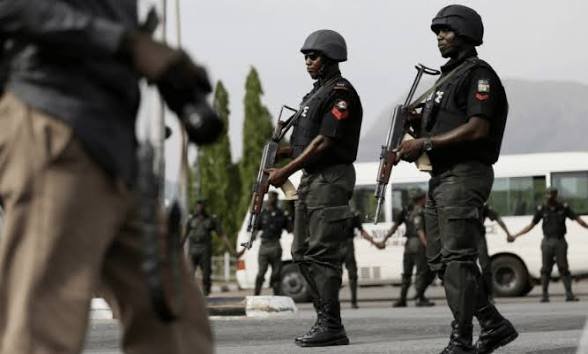
ABUJA, Nigeria – From villages abandoned to bandits to highways stalked by kidnappers, Nigeria’s worsening insecurity has left many communities asking whether protection can still come from Abuja alone. As calls for state police grow louder, Edino Cornelius finds that the debate is no longer simply about fighting crime, but about whether Nigeria’s states possess the money, institutions and political safeguards needed to protect themselves.
A Country Running Out of Patience
Nigeria’s security crisis has intensified over the past decade.
Banditry in the North-West, farmer-herder conflicts in the North-Central, separatist violence in the South-East and oil-related crimes in the South-South have exposed the limitations of a centralised police system.
The Nigeria Police Force currently has about 371,800 personnel serving a population estimated at more than 230 million people, translating to roughly one officer for every 600 Nigerians. Security experts say this falls below international recommendations for effective policing.
Even more troubling, nearly 100,000 police officers are reportedly assigned to VIP protection duties, reducing the number available for public policing.
For many communities, police response often comes too late.
The question increasingly being asked is simple:
Can Abuja continue to police Nigeria alone?
The Global Model
Countries such as the United States, Canada and India operate decentralised policing systems where local or state governments share responsibility with the central government.
Supporters of state police argue that local officers possess better knowledge of their communities, languages, terrain and criminal networks.
Critics argue that Nigeria’s political and economic realities may make such systems difficult to sustain.
The issue, therefore, is not merely whether state police should exist.
It is whether the states can pay for them.
The Cost of Policing
Creating state police would require substantial investment.
States would need to fund recruitment, training academies, barracks, vehicles, communication systems, surveillance technology, intelligence gathering, insurance, welfare and salaries and pensions.
Security analyst Dr. Tunde Akinlabi says financial sustainability remains the biggest concern.
“The conversation about state police often focuses on security efficiency, but the financial burden is equally critical. A well-equipped police force is expensive. Salaries alone could overwhelm weaker states.”
He warns: “If a state cannot fund training, welfare, equipment and intelligence operations consistently, that police force becomes weak, vulnerable to corruption, and ineffective.”
The States That Can Afford It
The financial capacities of Nigerian states vary considerably.
According to National Bureau of Statistics data, Lagos generated ₦815.9 billion in internally generated revenue in 2023, Rivers generated ₦195.4 billion, Ogun recorded ₦146.9 billion and Delta generated ₦90.9 billion.
These states possess relatively strong internal revenue bases.
States Most Likely to Sustain State Police; Lagos, Rivers, Ogun, and Delta.
These states already fund large infrastructure projects and maintain stronger internally generated revenue systems.
Some analysts believe they could support modern police institutions.
The States That May Struggle
The situation is markedly different in poorer states.
Taraba generated approximately ₦10.9 billion in internally generated revenue in 2023, while Yobe generated ₦11.2 billion. Many northern states remain heavily dependent on federal allocations.
States That May Face Financial Difficulties; Yobe, Taraba, Zamfara, and Sokoto.
These states face security challenges but often possess weaker revenue bases.
Dr. Akinlabi warns: “Criminal networks naturally exploit weak institutions. If some states have strong police forces while others have weak ones, crime may simply migrate into vulnerable states.”
The result could be unequal security across Nigeria.
Security Cannot Work Alone
Dr. Akinlabi says state police may improve response times but cannot solve insecurity on their own.
“State police may improve local intelligence and response speed, but policing cannot function in isolation. Poverty, unemployment, weak intelligence sharing, and judicial inefficiency will continue to fuel crime.”
He adds: “Without justice reform and economic development, crime will continue to regenerate.”
The Funding Problem
Public finance analyst Mrs. Kemi Oladiran believes economic realities may become the biggest obstacle.
“Many states survive largely on federal allocations. Some struggle to pay salaries. Creating another major security institution could worsen fiscal pressure.”
She warns that difficult budget choices may emerge.
“A governor forced to choose between funding hospitals, schools or police salaries may create long-term economic damage.”
According to her: “Without sustainable revenue sources, decentralised policing may become an expensive experiment.”
The Fear of Political Control
Human rights lawyer Barrister Umoru Theophilus says concerns about political abuse cannot be ignored.
“The fear is not imaginary. In a fragile political environment, some governors may use police institutions to intimidate critics, opposition figures, journalists, or activists.”
He believes constitutional safeguards are necessary.
“Without independent oversight, state police could become instruments of repression rather than public safety.”
He advocates:
– Civilian oversight boards.
– Judicial monitoring.
– Independent recruitment systems.
– Transparent disciplinary procedures.
Communities Want Local Protection
Community leader Alhaji Musa Garba supports local policing.
“Local officers understand community dynamics better. They know suspicious movements faster than outsiders.”
But he also fears political interference.
“If politicians control recruitment and deployment, loyalty may shift from citizens to political office holders.”
His position reflects the wider national debate. “State police should protect communities, not political interests.”
A Two-Speed Security System?
One of the greatest risks of decentralisation is the emergence of unequal policing.
Rich states may recruit better officers, purchase modern equipment and invest in intelligence.
Poor states may struggle to pay salaries.
Analysts fear this could create two separate security realities: wealthier states with stronger security, and poorer states with weaker protection.
Such disparities may encourage criminal groups to move into vulnerable regions.
Beyond Policing
The debate over state police ultimately reflects larger governance questions.
Should security reforms focus only on policing?
Or should Nigeria also address:
– Unemployment.
– Poverty.
– Weak justice systems.
– Intelligence failures.
– Economic inequality.
State police may improve local intelligence.
They may shorten emergency response times.
They may strengthen community trust.
But they may also expose financial weaknesses and political risks.
The debate, therefore, is not only about who controls the police.
It is also about who can afford them.
And whether decentralisation can succeed where centralisation has struggled.
About the Author

 Korede Abdullah
 Hope Ajayi
 Mirian Gom