
 Mirian Gom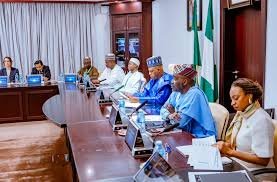
ABUJA, Nigeria – President Bola Tinubu launches Nigeria’s National Halal Economy Strategy, positioning Africa’s largest economy to tap into the $7.7 trillion global halal market as part of efforts to diversify exports, attract foreign investment and create sustainable jobs.
Represented by Vice President Kashim Shettima at the Presidential Villa on Thursday, Tinubu says the strategy marks Nigeria’s formal entry into a fast-growing global market built on quality standards, safety and ethical production rather than religious identity.
The President says the strategy is projected to contribute $1.5 billion to Nigeria’s GDP by 2027, with ambitions to unlock over $12 billion in economic value by 2030 through halal-compliant food exports, pharmaceuticals, cosmetics, tourism and ethical finance.
“This document is a declaration of our promise to meet global standards with Nigerian capacity and to convert opportunity into lasting economic value,” Tinubu says.
“What follows must be disciplined, inclusive and measurable action that delivers jobs, exports and shared prosperity.”
According to a statement by the Senior Special Assistant to the Vice President on Media and Communication, Stanley Nkwocha, the strategy is chaired by the Minister of Industry, Trade and Investment and designed as a whole-of-government and private-sector-driven intervention.
Tinubu dismisses concerns that the halal economy is religiously exclusive, stressing that it has evolved into a global framework defined by traceability, safety, quality assurance and consumer trust.
“It is no longer defined solely by faith,” the President says.
“These principles resonate far beyond any single community and increasingly guide global trade.”
He notes that countries such as the United Kingdom, France, Germany, the United States, Canada and Australia are already among the world’s leading producers and exporters of halal-certified goods.
About the Author

 Otamere Gladness
 Koko Maxwella
 Edino Chubiyo Cornelius