Oluwafunbi Bello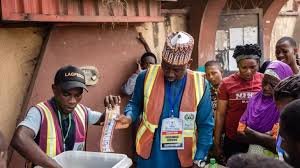
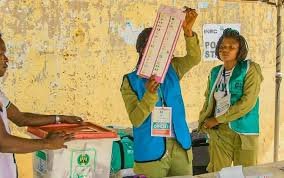
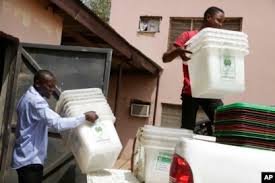
Electoral officials preparing ballot materials at a Nigerian polling centre during previous general elections.
ABUJA, Nigeria – As Africa’s largest democracy edges closer to the 2027 general elections, a staggering figure has ignited fierce debate across the country: ₦873.78 billion.
That is the proposed budget for conducting the polls — a sum announced as Nigeria’s public debt balloons to ₦153.29 trillion, leaving many citizens asking a pressing question: How much should democracy cost?
The figure has triggered arguments among economists, election observers and ordinary Nigerians alike. For some, it represents the unavoidable price of organising a complex national vote in a country of more than 200 million people. For others, it is a symbol of wasteful governance in an economy already under immense strain.
Between debt pressures, currency volatility and persistent distrust in public institutions, the proposed election spending has become more than a budget line — it is now a test of Nigeria’s democratic credibility. Oluwafunbi Bello, writes.
A Price Tag That Raises Eyebrows
Comparisons with other African democracies have intensified the debate.
South Africa’s 2024 general election budget stood at 2.3 billion rand, roughly ₦195.5 billion. Ghana’s 2024 election cost 786.9 million Ghanaian cedis, equivalent to about ₦100.7 billion.
Nigeria’s projected election spending is more than four times South Africa’s and nearly nine times Ghana’s.
Such comparisons have fuelled scepticism among Nigerians already grappling with inflation, currency depreciation and rising living costs.
Engr. Gabriel Ebujo, a retired engineer from Imo State, voiced frustration shared by many citizens.
“Many people have shares in that budget. Nigeria is too corrupt,” he said.
“People who can complain about the budget have shares in it. The money is too much. How much are they going to pay the staff? Even the corps members that usually help out are not well paid. Only God will deliver Nigeria.”
For critics like Ebujo, the debate goes beyond numbers — it reflects deeper mistrust of government spending.
Calls for Digital Elections
Some Nigerians believe technology could provide both transparency and cost savings.
Electronic voting systems, they argue, could eliminate many of the logistical costs associated with transporting ballots and personnel across Nigeria’s vast terrain.
Chinedu Goodwill, a civil society advocate, believes digital voting would also curb corruption.
“Digital election would have been good, but the government wouldn’t want to hear about it because it would open their yansh,” he said.
“It will be difficult to embezzle money with digital elections because every spending will be on record. But if it’s on paper, they can write anything with any amount.”
His argument echoes growing calls among Nigerian youth and civic groups for technology-driven elections.
But experts caution that the digital solution may not be as simple — or as cheap — as it appears.
Why Elections Are Becoming More Expensive
Public Affairs Analyst Dr. Jide Ojo argues that Nigeria’s rising election costs must be viewed within the context of recent economic upheavals.
The 2023 general elections cost over ₦300 billion. Since then, the economic landscape has shifted dramatically.
Fuel subsidy removal, currency reforms and a sharply weakened naira have transformed government spending calculations.
“When you look at the devaluation of the naira and the exchange rate, you will agree that the cost of election will be higher in 2027,” Ojo said.
The naira, which traded below ₦1,000 to the US dollar before the 2023 election, surged close to ₦2,000 before stabilising around ₦1,400.
For election organisers, currency volatility carries serious implications.
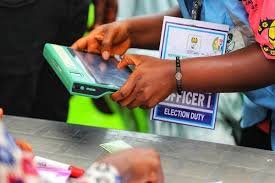
Many electoral technologies — including the Bimodal Voter Accreditation System (BVAS) devices used for voter verification — are imported, meaning procurement depends heavily on foreign exchange.
“Any procurement that will be done, particularly equipment not manufactured in Nigeria, will require forex,” Ojo explained.
“The exchange rate is high. Operational costs like renting buses to move materials and personnel have doubled since 2023.”
The Hidden Logistics of Democracy
Running elections in Nigeria is a logistical operation of enormous scale.
The Independent National Electoral Commission (INEC) oversees nearly 177,000 polling units spread across urban centres, remote villages, forests and riverine communities.
Delivering ballot papers, sensitive materials and electronic devices to each location requires extensive transportation networks and security coordination.
Ojo notes that the proposed budget also includes payments for thousands of temporary workers recruited during election periods.
“INEC has about 16,500 staff members,” he said.
“Beyond that, they recruit ad hoc workers and corps members who sometimes stay overnight at polling units.”
These personnel must be trained, transported and compensated — costs that quickly accumulate across the country’s vast electoral infrastructure.
“The money looks big,” Ojo added, “but with the devaluation of our currency, it is not as big as it sounds.”
The Digital Voting Dilemma
While many Nigerians advocate electronic voting, Ojo warns that such a transition could introduce even higher costs.
“Electronic voting will cost a lot more,” he said.
“Those devices are not manufactured in Nigeria. When you buy them, you must buy extra in case of some malfunction.”
Technology also has a limited lifespan.
Just like laptops or smartphones, voting devices may need replacement after several years due to hardware degradation or software upgrades.
“After four years they may not function optimally. Replacing and upgrading them will cost more,” Ojo said.
The implication is clear: digital elections could improve transparency but may not reduce costs in the short term.
The Question Nigerians Are Really Asking
For many observers, the central issue is not simply how much elections cost — but whether the spending delivers credible results.
Ojo argues that public accountability remains a missing piece in Nigeria’s electoral system.
“What we should be asking is not just the cost of the election, but whether there is value for the money spent,” he said.
He notes that no comprehensive public audit of INEC’s finances has been widely published since Nigeria’s return to democracy in 1999.
Without transparency, rising budgets risk eroding public confidence.
“Nigerians need to know whether we are getting value for money,” he said.
“Every four years, the budget keeps increasing.”
Timing, Funding and Electoral Risks
Another concern centres on the timing of election funding.
Under earlier provisions of Nigeria’s Electoral Act, election funds were to be released one year before the polls to allow adequate preparation.
However, amendments now mandate the release of funds six months before elections.
Ojo believes the timeline is dangerously tight.
He recalls how delayed funding ahead of the 2007 elections contributed to severe logistical failures.
INEC had planned to procure 34,000 Direct Data Capturing machines for nationwide voter registration but received funds too late.
The resulting election is widely regarded as one of Nigeria’s most flawed.
“Six months is really tight for necessary preparations,” he said.
“My worry is whether INEC gets the full funding it needs at the right time and whether it can account for all the money it receives.”
Democracy in a Time of Debt
Nigeria now faces a delicate balancing act.
The country’s debt profile has surpassed ₦153 trillion, while inflation and economic hardship continue to strain households.
Yet elections remain the cornerstone of democratic governance.
The debate over the ₦873.78 billion election budget reflects deeper tensions about public trust, governance and national priorities.
For citizens, the expectation is simple: if democracy costs billions, it must deliver credibility, transparency and accountability.
As the countdown to the 2027 elections begins, the real question may not be how much Nigeria spends on elections — but whether the process strengthens the democracy it is meant to protect.
For now, the proposed budget stands as both a financial commitment to democracy and a powerful test of public trust.
About the Author

 Mirian Gom
 Koko Maxwella