
 Oluwatobi Adu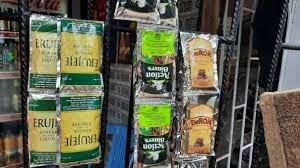
ABUJA, Nigeria – Nigeria’s manufacturers warn that a renewed ban on sachet alcoholic beverages risks job losses, illicit trade and revenue decline, urging regulators to exercise restraint.
The Manufacturers Association of Nigeria (MAN) criticises the National Agency for Food, Drug Administration and Control (NAFDAC) over its renewed enforcement of a ban on sachet and PET-bottled alcoholic drinks.
MAN, Director General, Segun Ajayi-Kadir on Wednesday, says the move contradicts federal directives and legislative resolutions, while threatening the survival of indigenous manufacturers.
“The renewed ban will certainly hurt the Nigerian economy,” Ajayi-Kadir says in a statement. “It endangers jobs, livelihoods and the entire value chain.”
He warns that restricting legally produced sachet alcohol will open the market to illicit, substandard and smuggled products beyond regulatory oversight.
“It will deny the government vital revenue and push consumers towards unsafe alternatives,” he says.
Ajayi-Kadir notes that the House of Representatives had earlier restrained NAFDAC from enforcing the ban after extensive stakeholder consultations, adding that the Senate resolution cited by the agency lacked similar engagement.
“This has created confusion among operators over which directive to obey,” he says.
MAN argues that sachet alcohol was introduced to serve adult consumers with limited purchasing power, not to promote abuse.
“Smaller portions can even discourage excessive consumption compared with larger containers,” Ajayi-Kadir says.
He dismisses claims of underage abuse as unsupported by evidence, citing independent research that contradicts such assertions.
According to him, manufacturers have spent over ₦1 billion on nationwide campaigns promoting responsible consumption and discouraging underage drinking.
“To ban regulated products produced under hygienic, NAFDAC-certified conditions is to invite unregulated and dangerous substances,” he warns.
MAN urges the Federal Government to intervene and direct NAFDAC to suspend enforcement, pledging continued collaboration with regulators to uphold safety standards.
About the Author


 Korede Abdullah
 Koko Maxwella

 Mirian Gom