Lagos Street Begging: Why Government Crackdowns Alone Cannot End the Growing Social Crisis
 Korede Abdullah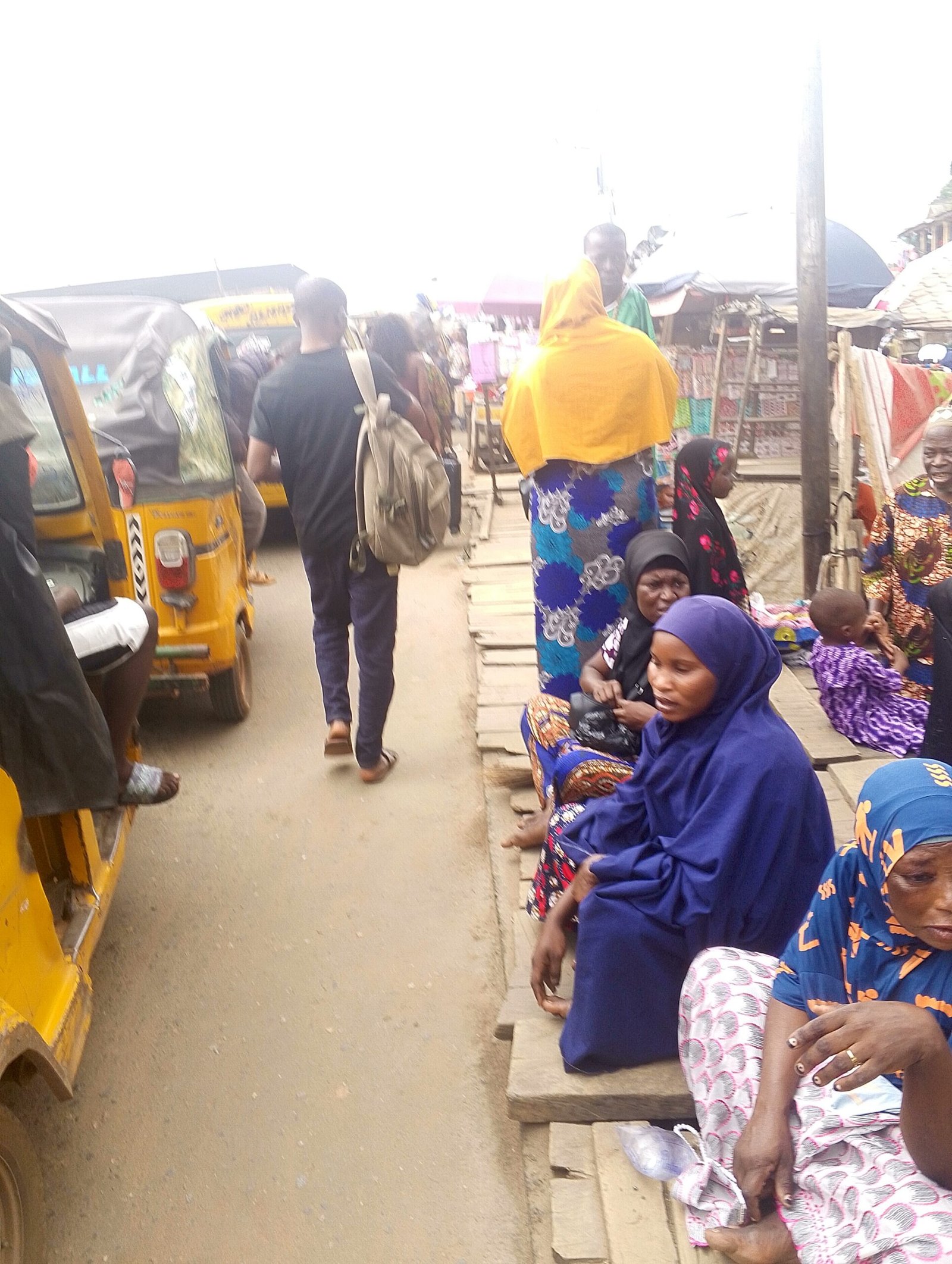
Beggars seek alms along Iyana-Ipaja Road in Lagos despite repeated government enforcement operations. (Photo: Korede Abdullah/AHR)
LAGOS, Nigeria – Every day, at Lagos’ busiest junctions and traffic lights, the same scene unfolds children weaving through vehicles with outstretched hands, elderly men and women pleading for alms, mothers carrying babies under the scorching sun and persons with disabilities navigating dangerous highways in search of survival. Despite repeated arrests, rehabilitation programmes and government warnings, the faces on the streets keep changing—but the problem remains. With hundreds of beggars rounded up in recent enforcement operations, the Lagos State Government insists it is restoring order. Yet beneath the crackdown lies a deeper question: Can arrests end a crisis rooted in poverty, unemployment and social exclusion? In this report, Korede Abdullah examines the lives behind the statistics, the government’s response and why experts say lasting solutions must go beyond law enforcement.
A City Struggling with a Persistent Problem
Street begging has become one of the most visible social challenges confronting Lagos.
From Oshodi and CMS to Agege, Abule-Egba, Iyana-Ipaja, Egbeda and Lekki, beggars occupy traffic intersections, markets, pedestrian bridges and road medians, seeking alms from commuters and motorists.
While many residents see the practice as a humanitarian concern, others increasingly view it as a public safety and environmental challenge.
For the Lagos State Government, the answer has been intensified enforcement.
Government Steps Up Enforcement
In June 2026, operatives of the Lagos State Environmental Sanitation Corps (LAGESC) arrested 289 beggars and destitute persons during coordinated operations across several parts of the state.
The raids covered Oshodi, Agege, CMS, Lagos Island, Ikorodu, Ikeja, Mushin, Alimosho and Falomo.
According to the Commissioner for Environment and Water Resources, Tokunbo Wahab, those arrested would be profiled before being rehabilitated and, where necessary, reunited with their families or returned to their states of origin.
Government records also indicate that wider enforcement operations involving LAGESC and the Lagos State Environmental and Special Offences Task Force resulted in 515 arrests during the same period.
The state says the exercise forms part of broader efforts to improve public order, environmental sanitation and public safety.

Why the Government Says the Crackdown Is Necessary
Officials insist the campaign is about more than removing beggars from public spaces.
According to the Ministry’s spokesperson, Kunle Adeshina, some individuals occupying pedestrian bridges and road medians have also been linked to attacks on unsuspecting residents.
“It is part of our efforts to enforce discipline and maintain order in the state.”
He added: “Some of the people who occupy pedestrian bridges sometimes attack innocent citizens at night. They are the same people who stay on road medians and public spaces begging for money. So, this is a continuous effort.”
The government continues to rely on provisions of the Criminal Law of Lagos State relating to public nuisance and disorderly conduct to support the operations.
‘If I Stop Begging, My Children Will Go Hungry’
For many people living on the streets, however, begging is less a choice than a desperate means of survival.
Musa, a man living with a physical disability who migrated from Kano State, said poverty left him with few alternatives.
“I know begging is not the best way to survive, but what else can I do? I cannot read or write, I don’t have any skill, and nobody is ready to employ me because of my disability.”
He survives entirely on public donations.
Widow Aisha, from Jigawa State, shared a similar story.
“There is nothing for me back home. If I don’t come out every day, my children will sleep hungry.”
Another elderly beggar from Katsina State said previous government efforts to return beggars to their home states had failed because many simply came back.
“There was no job, no food and nobody to help them.”
Residents Caught Between Compassion and Concern
Among Lagos residents, opinions remain divided.
Commercial bus driver Azeez Balogun said beggars rushing towards vehicles during traffic create safety risks for both motorists and pedestrians.
Trader Kafayat Sulaimon believes the growing presence of beggars discourages customers from stopping near her shop in Oshodi.
Others believe enforcement alone cannot solve the problem.
Oshodi resident Emeka Ugo called for stronger rehabilitation programmes, while Bose Adeyemi described the increasing number of children begging during school hours as deeply troubling.
Resident Muez Omodele argued that poverty—not criminality—remains the real issue the government must confront.
Experts Say Poverty Is Driving the Crisis
Sociologist and Federal University Lokoja lecturer Dr Femi Amos believes the recurring arrests demonstrate that the problem extends beyond environmental sanitation.
“Many of those arrested come from poor rural communities. Many have never had access to formal education, possess no vocational skills, while some are persons living with disabilities.”
He argued that street begging should primarily be treated as a development challenge rather than simply a law enforcement issue.
Rehabilitation Without Reintegration Is Unlikely to Succeed
While commending Lagos for rehabilitating many of those arrested, Dr Amos warned that transportation back to home states is not a lasting solution.
“If people are returned to the same conditions of extreme poverty, unemployment, illiteracy and neglect, there is every likelihood that they will find their way back to Lagos.”
He called for sustained investment in literacy programmes, vocational training, disability support, healthcare, microcredit schemes and social protection.
According to him, reintegration must be properly planned and adequately funded if it is to succeed.
A National Challenge Demanding a National Response
Dr Amos believes Lagos cannot solve street begging alone because many of those on its streets originate from other parts of Nigeria.
He called for stronger collaboration between the Federal Government, state governments, local councils, traditional rulers, religious institutions and civil society organisations.
“Unless there is a coordinated national strategy aimed at reducing poverty, expanding access to education and creating employment opportunities, enforcement exercises will continue to produce temporary results while the problem persists.”
Beyond the Crackdown
The Lagos State Government’s enforcement operations have removed hundreds of beggars from the streets and demonstrated its commitment to maintaining public order.
Yet this investigation suggests that the problem is less about people refusing to obey the law than about thousands struggling to survive in the face of poverty, unemployment, disability and social exclusion.
Every person removed from a roadside today may return tomorrow if the conditions that forced them there remain unchanged.
For Lagos, the challenge is no longer simply clearing the streets—it is creating opportunities that make begging unnecessary. Until enforcement is matched by meaningful rehabilitation, sustainable livelihoods and coordinated social protection, the city risks fighting the same battle, at the same junctions, year after year.
About the Author


 Hope Ajayi
 Mirian Gom