
 Korede Abdullah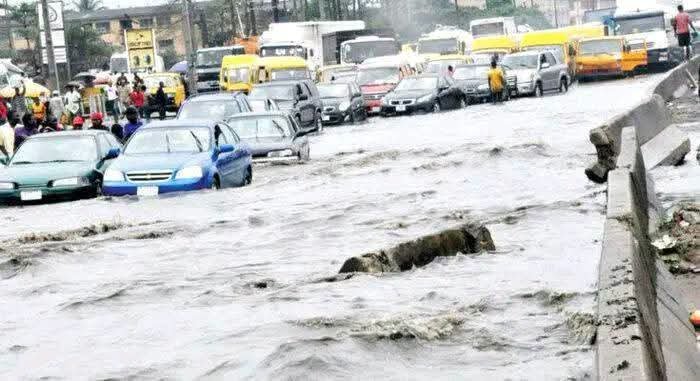
LAGOS, Nigeria – The Lagos State Government says its sustained investment in flood control infrastructure and climate adaptation measures is reducing the impact of heavy rainfall across Africa’s largest city, insisting that recent flash floods should not overshadow years of progress in drainage expansion, environmental enforcement and urban resilience.
Speaking on Saturday after inspecting major drainage channels and flood-prone locations in Oniru, Chevron Drive, Agungi-Ajiran, Freedom Road and Orange Island, Commissioner for the Environment and Water Resources, Tokunbo Wahab, said the state has adopted a long-term strategy to minimise flood risks despite increasingly intense rainfall linked to climate change.
Wahab dismissed criticism of the government’s flood management efforts, arguing that some reactions to recent flooding were politically motivated rather than based on the realities of the state’s ongoing interventions.
“Yes, some people are politicising the issue, but that is their choice this season. They are not giving enough credit to the team for the level of work being carried out day and night,” he said.
Wahab argued that the strategy is producing measurable results, noting that many areas now experience temporary flash flooding that drains away within hours instead of prolonged inundation.
“If you listened to the President of Ghana’s speech after the recent flooding in Accra, many of the measures they intend to adopt are things Lagos has already been implementing for the past three years.
“That shows how Lagos has managed the situation. What we experience in many places is not large-scale overflowing floods but temporary flash floods that recede within a few hours,” Wahab said.
“Within 72 hours, we noticed significant improvement in the discharge flow downstream, which has helped relieve flooding around Ajiran village and neighbouring communities,” he said.
About the Author


 Oluwatobi Adu
 Hope Ajayi