
Kwara Trains Farmers, Extension Workers on Climate-Smart Agriculture
 Oluwafunbi Bello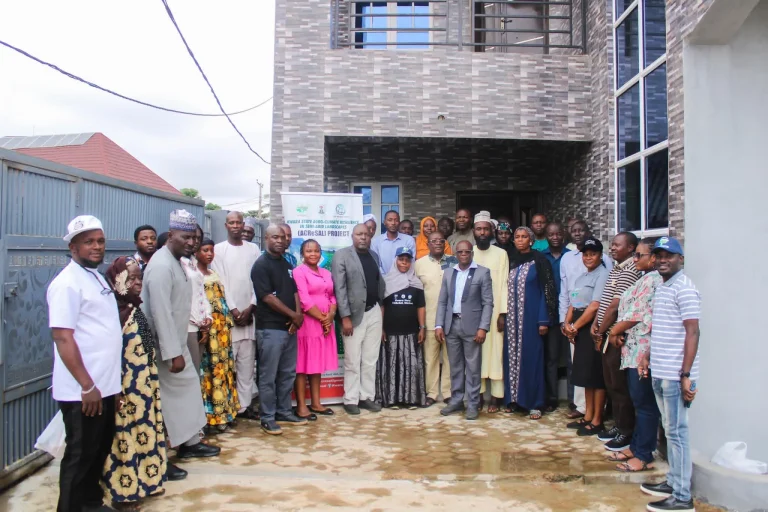
ILORIN, Nigeria – The Kwara State Government has launched a climate-smart agriculture training programme for agricultural extension workers and selected farmers as part of efforts to improve food production, strengthen food security and build resilience against climate change.
The initiative, implemented through the Kwara Agro-Climatic Resilience in Semi-Arid Landscapes (KWACReSAL) Project, is being delivered in partnership with the National Agricultural Extension and Research Liaason Services (NAERLS), Ahmadu Bello University, Zaria, and the International Institute of Tropical Agriculture (IITA), Ibadan.
According to a statement issued on Wednesday by KWACReSAL spokesperson, Okanlawon Taiwo, the programme followed a technical planning meeting involving the three institutions to harmonise strategies for scaling up climate-smart agriculture across the project’s three catchment areas.
Speaking at the opening of the workshop, the State Project Coordinator of KWACReSAL, Alhaji Shamsideen Aregbe, described the initiative as a strategic investment in the future of agriculture in Kwara State.
He said empowering extension workers with modern climate-smart farming techniques would help farmers improve crop yields, protect soil fertility and adapt to increasingly unpredictable weather conditions.
Aregbe urged participants to transfer the knowledge acquired during the training to farming communities across the state to encourage the widespread adoption of improved agricultural technologies.
Delivering a technical presentation, NAERLS expert, Engr. Luqman Durojaiye, said climate change continues to threaten agricultural productivity through erratic rainfall patterns, declining soil fertility and prolonged dry spells.
He explained that Farmer Field Schools and demonstration plots would allow farmers to compare improved technologies with conventional farming practices, making it easier to adopt innovations suited to local conditions.
Also speaking, IITA resource person, Dr Akeem Ajeigbe, disclosed that each participating local government area would establish one Mother Demonstration Plot supported by 25 Baby Demonstration Plots under the supervision of agricultural extension specialists.
About the Author

 Mirian Gom
 Oluwatobi Adu
 Korede Abdullah