
 Oluwafunbi Bello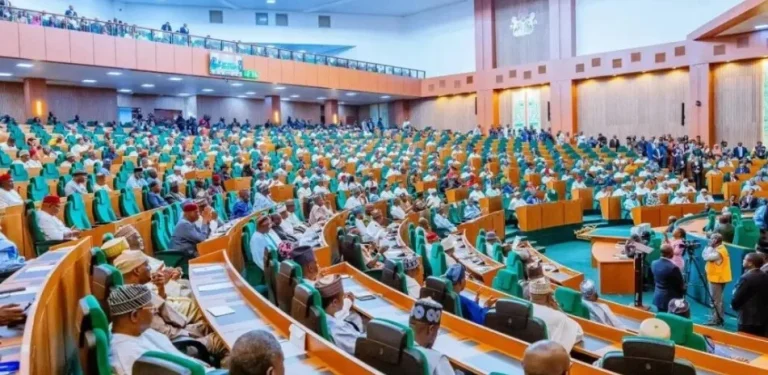
ABUJA, Nigeria — The House of Representatives is urging the Federal Government to strengthen food safety enforcement, improve surveillance across the food value chain and expand public awareness campaigns to curb the rising burden of foodborne diseases in Nigeria.
The resolution follows the adoption of a motion of urgent public importance sponsored by Billy Osawaru, who represents Orhionmwon/Uhunmwonde Federal Constituency of Edo State, during Tuesday’s plenary presided over by Speaker Tajudeen Abbas.
Presenting the motion, Osawaru describes food contamination as one of Nigeria’s most pressing public health threats, citing World Health Organisation data showing that unsafe food causes hundreds of millions of illnesses and more than a million deaths globally each year, with Africa carrying the heaviest burden.
He says Nigeria continues to record about 50 million foodborne disease cases and more than 53,000 deaths annually, with children under five accounting for more than 80% of the health burden.
“Nigeria still records about 50 million foodborne disease cases and more than 53,000 deaths annually, with children under the age of five accounting for over 80 per cent of the health burden,” Osawaru says.
The lawmaker also warns that foodborne diseases cost Nigeria an estimated $3.6 billion every year through healthcare expenses, lost productivity and trade restrictions.
Lawmakers say poor hygiene, unsafe water, weak regulatory enforcement and inadequate sanitation continue to expose millions of Nigerians to contaminated food despite improvements in disease surveillance.
Following the adoption of the motion, the House calls on the Federal Ministry of Health and Social Welfare, the National Agency for Food and Drug Administration and Control (NAFDAC), the Standards Organisation of Nigeria (SON) and the Nigeria Centre for Disease Control and Prevention (NCDC) to strengthen food surveillance, inspections and certification throughout the food value chain.
The House also directs its Committees on Healthcare Services, Food Safety and Nutrition to collaborate with relevant agencies to secure funding for food testing equipment, improve the training and certification of food handlers and identify legislative gaps.
“The committee should ensure adequate funding for food testing equipment, prioritise the training and certification of food handlers, and recommend amendments that will further strengthen Nigeria’s food safety regulations,” the House resolves.
About the Author


 Mirian Gom
 Korede Abdullah

 Oluwatobi Adu