
Eating Ourselves Sick: How Nigeria’s Beloved Meals Are Killing Us Slowly
 Oluwatobi Adu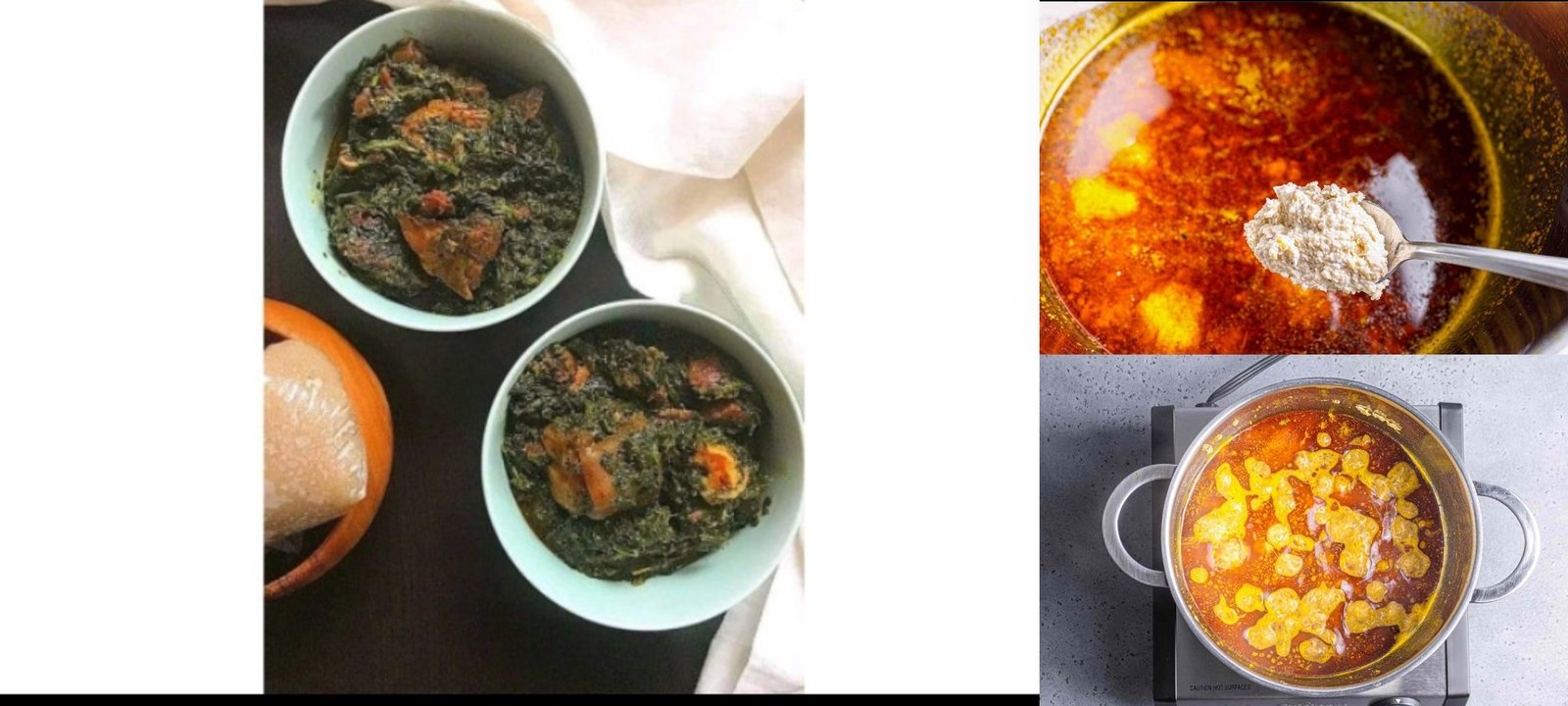
Nigerian traditional meals served in large portions
ABUJA, Nigeria – In Nigeria, food is never just food. It is affection ladled generously into bowls, hospitality measured by how full a plate looks, and culture preserved through oil-rich soups that glisten with pride. Yet beneath these comforting rituals, a quiet and deeply unsettling health crisis is tightening its grip.
Obesity is no longer an imported problem or a distant Western concern. It is unfolding in Nigerian kitchens, roadside eateries, and traffic-clogged evenings — silently, steadily, and often unnoticed.
In this report, Oluwatobi Adu, writes from within that reality. As a young Nigerian, I grew up believing that a protruding tummy was harmless, even desirable. Compliments came easily: “You are looking fresh. You are adding weight.” Late-night meals after long commutes were routine. Portions grew larger without thought. Oil flowed freely, as tradition permitted.
Until the body began to protest.
Reducing portions felt almost like betrayal — of culture, of love, of identity. But change did not require abandoning our food. It required rethinking how we eat it.
This investigation draws on personal journeys, expert interviews, and global and local data to unpack how saturated fats, oversized portions, urban stress, and cultural norms are quietly fuelling Nigeria’s obesity surge — and how small, practical reforms can reverse it without erasing who we are.
When Weight Creeps in Quietly
For many Nigerians, weight gain arrives without announcement.
One young woman recounts how her clothes tightened gradually. “I didn’t think anything was wrong. Everyone around me ate the same way — large portions, plenty oil. It felt normal.” It was only after health checks raised concerns that she began reducing oil and portion sizes, keeping her traditional meals intact.
David Olawale, an office worker in Lagos, lives a life shaped by exhaustion. His days often stretch from 9 a.m. to 10 p.m., beginning with a 4:30 a.m. wake-up.
“Before, I used to skip breakfast,” he explains. “Now, I must eat early just to stay awake — tea and snacks, fried eggs and Indomie, sometimes coffee.”
Lunch is whatever is available near the office: rice, beans, swallow. Cooking is a luxury time does not permit. “You eat what you see,” he says. “Not what you plan.”
The weight gain came with jokes. An old friend laughed, “David, you have added weight. What have you been eating?” Amusing, yes — but accurate.
“You can’t be eating rice in the morning, eba in the afternoon, and spaghetti at night,” he warns. “That’s too much carbohydrate.”
For David, food quality matters as much as quantity. “You are what you eat,” he insists, raising concerns about food sold near dirty gutters and poorly regulated spaces.
Portions as Proof of Love
In Lugbe, Abuja, Mrs. Jennifer, a mother of two, describes how portions quietly expanded in her home.
“When I was younger, I ate small,” she says. “Now I serve myself almost the same quantity as my husband. Sometimes even more because I taste the food while cooking.”
In her household, fullness equals care. “If everyone is satisfied, then the food is good.”
Traffic and work worsen the pattern. “By the time we get home, we are tired. We eat late. On very busy days, we just buy fast food.”
It was only when her clothes felt tight — and a clinic visit revealed slightly high blood pressure — that concern replaced familiarity.
“Our traditional meals are healthy,” she reflects. “But maybe it’s not the food itself. It’s how we prepare it, and how much we eat.”
Miss Folashade, a resident of Gwarinpa, echoes this awakening. A hospital visit revealed a high lipid profile.
“At first, I was scared,” she admits. “But with my nutritionist’s help, I learned how to eat better. It really changed my numbers.”
The Bigger Picture: A Nation at Risk
According to the World Health Organization, overweight and obesity are defined by excessive fat accumulation that increases disease risk. A body mass index above 25 signals overweight; above 30 indicates obesity.
Globally, higher-than-optimal BMI was responsible for nearly five million deaths from non-communicable diseases in 2019. Between 1990 and 2022, obesity in children aged 5–19 quadrupled, while adult obesity more than doubled.
Nigeria is not immune.
Data from the Global Nutrition Report show that 15.7 percent of adult women and 5.9 percent of adult men live with obesity. Urban areas and women are disproportionately affected. More recent analyses suggest adult overweight rates of about 26 percent and obesity around 15 percent — figures expected to rise sharply by 2050.
Urbanisation, sedentary work, traffic stress, and dietary shifts are accelerating the trend.
Why Oil and Portions Matter
Food scientist and nutrition advocate Afolaranmi Damilola Mariam explains the science simply.
“Fats are energy-dense,” she says. “Large portions and oil-heavy meals increase calorie intake. When consumed regularly, the excess energy is stored as body fat.”
Over time, the risks compound: insulin resistance, elevated cholesterol, atherosclerosis, cardiovascular disease, and stroke.
Traditional foods are not the enemy.
“Pounded yam, eba, jollof rice — they become risky when portions are large and oil is excessive,” she clarifies. “We can make them healthier by reducing oil, increasing vegetables, controlling portions, and choosing boiling or grilling instead of deep frying.”
Public health practitioner Ogunbiyi Boluwatife Adetokunbo highlights Nigeria’s growing “double burden” — undernutrition alongside rising obesity.
“Large portions mean more calories than the body needs,” she says. “Late-night eating also reduces how efficiently the body burns those calories.”
Urban life intensifies the problem. Long work hours, traffic, stress, and fast food dependency quietly reshape bodies.
“We don’t need to abandon our food,” she insists. “We need moderation.”
A Warning from the Heart
Professor Augustine Odili, President of the Nigerian Cardiac Society and consultant cardiologist at the University of Abuja Teaching Hospital, does not mince words.
He points to increasing consumption of fried foods, butter, red meat, sugary drinks, and refined carbohydrates, combined with sedentary lifestyles.
“Abdominal obesity is rising,” he warns. “And it is dangerous.”
Then he offers a stark reminder:
“The first law of thermodynamics still applies. Excess energy from food — whether carbohydrates, fats, sugar, or alcohol — that is not used is converted into fat and stored in the body.”
Eating Forward, Not Backward
Nigeria’s obesity crisis is not rooted in tradition, but in excess — excess oil, excess portions, excess inactivity.
The solutions are not radical. They are practical.
Smaller servings. Less oil. More vegetables. Earlier dinners. Walking where possible. Teaching children balance, not restriction.
Food can still be love. It can still be a culture. But it must also be taken care of.
If Nigerians act now — as individuals, families, communities, and policymakers — this silent epidemic can be slowed, even reversed. The plate, after all, can heal — or harm.
About the Author


 Edino Chubiyo Cornelius
 Otamere Gladness
 Hussaini Ibrahim