
Fields of Debt: How Nigeria’s Farmers Are Priced Out of Feeding a Nation
 Chukwu Obinna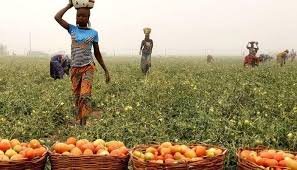
ABUJA, Nigeria – At dawn in Nigeria’s farming belts, the fields are quieter than they used to be. Not because the rains have failed, but because the arithmetic of farming no longer adds up. Across the country, smallholder farmers — the backbone of Nigeria’s food system — are shrinking their plots, borrowing to plant, or quietly wondering if they can afford another season at all.
The cost of almost everything required to grow food has surged at once: fertiliser, seeds, chemicals, fuel, transport. The shock has been swift and unforgiving. Development experts warn that unless the trend is reversed, Nigeria’s food insecurity — already among the world’s most severe — will deepen, dragging millions more into hunger.
Official data tell a stark story. Food inflation reached 40.53 per cent in May 2024, among the highest in the world. But on farms, the crisis is measured less in percentages than in painful decisions: half an acre instead of one; fewer fertiliser applications; another loan taken with no certainty it can be repaid. Chukwu Obinna, writes.
“We are just trying to keep going,” says Akpos Precious, his voice flat with fatigue. “But everything costs more now — everything.”
A Shock that Started at the Pump
The turning point came on 29 May 2023, when President Bola Tinubu announced the removal of Nigeria’s decades-old petrol subsidy on his first day in office. Within weeks, fuel prices more than doubled, then tripled, then climbed again.
Petrol that sold for about ₦190 per litre rose above ₦537 by June 2023, crossed ₦617 in July, and reached ₦626.70 in August. By September 2024, it averaged ₦897, and by late 2024 some states recorded prices between ₦1,025 and ₦1,200 — an increase of more than 500 per cent in under 18 months.
For farmers, fuel is not a background cost; it is the bloodstream of agriculture. It powers irrigation pumps, threshers and generators, and moves produce from villages to markets. As prices rose, transport costs jumped by nearly 300 per cent on some routes, squeezing farmers from the moment seeds went into the soil to the day crops reached buyers.
When the Naira Fell, Costs Exploded
As fuel prices soared, the naira collapsed. In June 2023, Nigeria floated its currency as part of broader reforms. Within a year, the naira had lost 95.6 per cent of its value. The exchange rate slid from about ₦460 to the dollar in early 2023 to around ₦1,700 by 2024, settling between ₦1,478 and ₦1,551 in early 2025.
The effect on agriculture was devastating. Fertilisers, seeds, herbicides, pesticides and spare parts are largely imported or priced in dollars. As the naira weakened, prices at the farm gate surged almost overnight.
Nigeria imported fertilisers worth US$244.74 million in 2024, according to UN trade data. The wider fertiliser market, valued at roughly US$1.2 billion, remains deeply dependent on foreign currency — a vulnerability laid bare by the devaluation.
The Price of Planting
In an agro-input shop, Ibrahim Gafir watches farmers count notes carefully before deciding what they can afford.
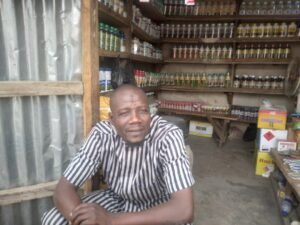
“Fertiliser that sold for ₦15,000 to ₦25,000 now starts from ₦40,000,” he says. “Some are ₦60,000.”
That is a rise of between 60 and 300 per cent, depending on the product. A standard 50-kilogramme bag that cost about ₦20,000 in 2022 climbed to roughly ₦46,000 by 2024.
Chemicals tell the same story. Products once sold at ₦2,500 now cost ₦4,000 to ₦6,000, Gafir says. Farmers respond by buying less, diluting applications or skipping them entirely — choices that inevitably reduce yields.
When Farming Stops Paying
For Muaz A’yau, a smallholder farmer, the figures are blunt.
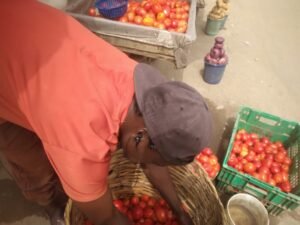
“A land you could farm with ₦100,000 before now takes about ₦800,000,” he says.
To keep planting, A’yau borrows. But credit, mostly informal, has become a trap.
“I take loans to farm, and after paying back, I’m barely left with enough to prepare for the next season.”
Precious has chosen a different survival strategy: farming less.
“I was cultivating one acre before, but I cut it into half just to keep the family going,” he says. “It gives me less production, and it’s really not good for us.”
Such decisions are rational at household level — limit losses, manage risk — but collectively they cut national food supply at precisely the wrong moment.
From Farms to Families
The consequences reach far beyond the fields. With output falling, food prices have soared. Beans were 282 per cent more expensive in October 2024 than a year earlier. Local rice rose 153 per cent; imported rice 44 per cent.
The human toll is staggering. The World Food Programme estimates Nigeria’s food-insecure population rose from 18.6 million in late 2023 to 26.5 million during the 2024 lean season. Even at harvest time, when conditions usually improve, 25.1 million people remained food insecure. By the 2025 lean season, that figure could reach 33.1 million.
Emergency-level hunger is also rising fast. The number of people facing IPC Phase 4 food insecurity is projected to jump from one million to 1.8 million. Around 5.4 million children and nearly 800,000 pregnant and breastfeeding women risk acute malnutrition.
Broken Systems Magnify the Shock
High costs are only part of the problem. Poor rural roads, limited storage and unreliable power mean post-harvest losses can reach 50 per cent in some areas. Of roughly 272 rice mills nationwide, fewer than half operate consistently, squeezed by fuel and electricity costs.
Formal credit remains out of reach for most farmers. Government subsidy programmes have repeatedly failed to reach intended beneficiaries, often captured by intermediaries. Meanwhile, agriculture receives just 1.75 per cent of Nigeria’s 2025 budget — far below the 10 per cent pledged under the Maputo Declaration.
Nigeria now spends nearly ₦6 trillion annually importing food, while exports barely match that figure. Insecurity in northern farming zones — banditry, kidnappings and farmer-herder violence — further shrinks cultivated land.
“Just trying to keep going”
Agriculture employs more than 70 per cent of Nigerians and draws on 70.8 million hectares of arable land. Yet Nigeria ranked 107th of 113 on the Global Food Security Index in 2022, a position unlikely to have improved.
For farmers like Precious and A’yau, the crisis is not abstract. It is lived season by season.
“We are just trying to keep going,” Precious repeats.
Whether they can — and whether Nigeria can afford for them not to — may define the country’s food future.
About the Author

 Edino Chubiyo Cornelius
 Oluwafunbi Bello
 Koko Maxwella
 Otamere Gladness