
Cheap Food, Costly Harvests: When Falling Prices Push Nigeria’s Farmers to the Brink
 Otamere Gladness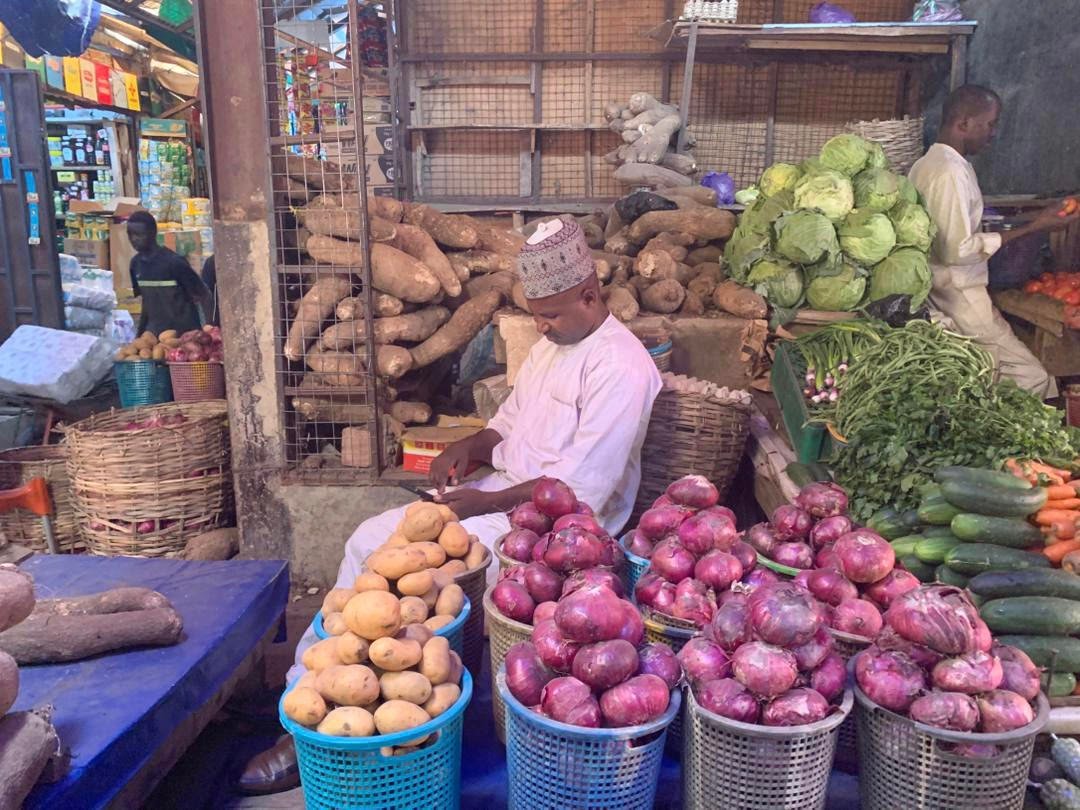
ABUJA, Nigeria – On a humid morning in Utako Market, Abuja, shoppers pause longer than usual at rice stalls, calculating savings that would have seemed impossible a year ago. A 50kg bag that once drained more than ₦70,000 from family budgets now sells for ₦55,000–₦60,000. Beans are cheaper. Yam piles are fuller. For millions of Nigerians battered by inflation, the market finally offers a measure of relief. But behind the relief lies a quieter crisis.
As prices fall for consumers, farmers across Nigeria are selling at losses so deep they threaten the future of food production itself. Fertiliser prices remain punishingly high. Fuel, labour and transport costs refuse to budge. Insecurity stalks farmlands. And the same market forces that bring down food prices today may be sowing the seeds of scarcity tomorrow.
In this report, Otamere Gladness traces the contradiction at the heart of Nigeria’s food economy: why cheaper food is hurting those who grow it, how farmers are slipping into debt, and what could happen if thousands decide that planting again is simply no longer worth the risk.
Relief at the Market, Shock at the Farm
For traders in Abuja, the price drops have been swift and startling.
Ugochukwu, who sells rice, beans and garri at Utako Market, says this festive season broke a long-standing pattern.
“This December is the first I’ve experienced that there was not an increment in prices of foodstuffs,” he said. “Rice dropped from ₦70,000 to ₦60,000, then to ₦55,000. Honey beans that sold for ₦2,200 last year now go for ₦1,000 to ₦1,500. The prices have dropped drastically.”
Nearby, yam trader Mubara gestures at neatly stacked tubers.
“The prices have crashed,” he said. “Not like before. It has crashed by 50%.”
Cheap Food, Costly Harvests: When Falling Prices Push Nigeria’s Farmers to the Brink
What is striking, both traders note, is that supply has not surged dramatically. There is no flood of produce overwhelming markets. Instead, they point to a combination of new harvests, weakened consumer purchasing power, policy shifts such as import waivers, and the lingering effects of earlier government interventions.
For households, the timing could not be better.
“Food Is a Basic Necessity”
Shoppers interviewed welcomed the respite, even as some expressed unease about its implications.
Ada, a regular buyer in Utako, described mixed emotions.
“Yes, the price has dropped. I am happy, though it is affecting the farmers,” she said. “But at a point it affected us too — many homes couldn’t afford the bare minimum.”
Mrs. Edurase, another customer, was blunter.
“The price hasn’t come down enough,” she said. “Food is a basic necessity, and it needs to be cheap. We eat every day — all our money can’t just go on food.”
Their views reflect a broader national dilemma: how to balance affordable food for consumers with sustainable incomes for producers.
The Numbers Tell a Stark Story
Official data back up what traders and shoppers are seeing — while exposing the imbalance farmers face.
According to the National Bureau of Statistics (NBS), food inflation fell sharply to 10.84% year-on-year in December 2025, down from 39.84% in December 2024. Garri prices dropped by nearly 30% year-on-year, while rice prices slid by 20–30% from their 2024 peaks.
Yet the costs of farming tell a different story. A 50kg bag of fertilizer now sells for ₦45,000–₦50,000, compared with ₦10,000–₦15,000 just two to three years ago. Fuel remains expensive. Labour costs have climbed. Transport costs rise with every spike in diesel prices.
For many farmers, the math simply does not add up.
“You Spend Millions and Get Losses”
Aminu Muhammad knows this reality intimately. A farmer and trader at Utako Market — and chairman of the Sokoto State indigenes association in the FCT — he says fertiliser prices are breaking farmers’ backs.
“One of the major problems is this fertilizer,” he said. “Two or three years ago we bought a bag for ₦10,000–₦15,000. Now it is ₦45,000–₦50,000. A bag of maize sells for only ₦17,000–₦18,000. So before you buy one bag of fertilizer you must sell three bags of maize. One bag of rice at ₦40,000–₦45,000 cannot even buy one bag of fertilizer.”
He describes losses that would cripple any business.
“Suppose you spend ₦10 million on a farm. You sell what you harvest for maybe ₦2 million or ₦3 million. That is ₦7–₦8 million loss,” he said. “Next year, if you have no other assets to sell to raise money, you just sit and watch.”
For farmers already operating on thin margins, repeated losses mean debt, asset sales, or complete withdrawal from agriculture.
Insecurity: The Cost No One Can Price
Beyond economics, insecurity looms as the most unpredictable cost of all.
“We want to go out and farm but there is no security,” Mr. Muhammad said. “Bandits will kidnap you and demand ₦10 million or more. Many villages in Zamfara and other states are now empty. Nobody is inside.”
Traders confirm that attacks in producing regions ripple quickly through markets. Ugochukwu recalled a recent spike in plantain prices after villages in the Middle Belt were attacked, cutting off supply overnight.
In such conditions, farming becomes not just unprofitable, but life-threatening.
Traders Push Back — and Point to Policy
While traders sympathise with farmers’ struggles, they reject blame for low prices.
“It’s not our fault,” Mubara said. “We buy and sell whatever the market gives us. The government is supposed to reduce the price of fertilizer for farmers. If fertilizer is cheap, they will produce more, and prices can stay reasonable. Right now, farmers are running at a loss — you spend ₦50,000 to produce something you sell for ₦30,000.”
Ugochukwu agrees government intervention is crucial but also urges farmers to adapt.
“They are stingy,” he said bluntly. “Farming is business — there are times you lose, times you gain. They need to change strategy, invest profits in better equipment, tractors, and allow easy access for traders instead of multiple settlements that scare people away.”
The tension highlights a deeper problem: without coordinated policy on inputs, security and market access, individual actors are left blaming one another while the system falters.
The Fear of Empty Fields
Perhaps the most worrying signal is what farmers say about the next planting season.
“Most of them are not encouraged to continue farming,” Mr. Muhammad said.
He plans to persist “by God’s grace,” but only because farming is a business he feels unable to abandon. Others may not have that choice.
Mubara warns that the consequences would be swift.
“If farmers reduce farming, prices of things are going to skyrocket,” he said. “It’s what I buy that I sell. I don’t have gain or loss.”
Ugochukwu echoes the logic.
“If farm produce is reduced, the price will definitely go up. Everybody will want it. Demand goes up, prices go up.”
A Fragile Future for Food Security
Nigeria, with a population exceeding 200 million, has long relied on its farmers to feed its cities. But the current price relief masks a fragile balance. Cheaper food today is being subsidised, in effect, by farmers’ losses.
If insecurity persists, fertiliser prices remain high and farmers continue to sell below cost, many may simply stop planting. The result would be fewer harvests, tighter supplies and another round of painful price spikes — undoing today’s gains and deepening hunger in the long run.
For now, markets are calm. But in the quiet calculations of farmers deciding whether to plant again, the future of Nigeria’s food security is being decided.
About the Author


 Koko Maxwella
 Edino Chubiyo Cornelius