
When Fear Reaches the Capital: How Banditry Is Choking Lives, Healthcare on Abuja’s Doorstep
 Juliet Jacob
(By Juliet Jacob, and Hussaini Ibrahim)
Once, Abuja was spoken of in hushed admiration — a carefully planned capital insulated from the chaos that stalked Nigeria’s hinterlands. Today, that illusion is collapsing. Beyond the manicured boulevards and fortified government districts, fear is tightening its grip on the Federal Capital Territory (FCT), creeping steadily from its rural fringes towards its heart. In Bwari Area Council, on Abuja’s north-western edge, the sound of nightfall has changed. Where crickets once filled the air, residents now listen for gunshots, hurried footsteps, and the low murmur of fear. Banditry — long associated with Nigeria’s troubled northwest — has breached the capital’s outer defences, reshaping daily life and quietly triggering a public health emergency that few policy discussions acknowledge.
In this report, Juliet Jacob and Hussaini Ibrahim,draws on testimonies from residents, security officials, health workers and experts across Abuja and Kano state to trace how insecurity is hollowing out not just safety, but access to healthcare itself.
Bwari: From Civil Servants’ Haven to Corridor of Fear
Bwari’s geography has become its curse. Sharing porous boundaries with Niger State, the area was once attractive to civil servants seeking affordable housing and farmers cultivating the fertile outskirts of the capital. Today, many of those same settlements are considered high-risk zones.
Between January 2021 and June 2023, the FCT recorded 40 kidnapping incidents involving 236 victims. By the first quarter of 2024, kidnappings nationwide had surged to nearly 1,000 cases, with spillovers increasingly felt in Bwari. At least 15 major attacks were recorded in the area that year alone.
By 2025, the scale of violence worsened dramatically. The National Human Rights Commission confirmed 2,266 insurgency-related deaths in the first half of the year, exceeding the total for all of 2024. Defence insiders told Africa Health Report that “unreported rural attacks around Bwari account for a troubling portion of the surge”.
A Trail of Violence
The incidents read like a grim calendar of terror. Between January 3 and 10, 2024, dozens were abducted in Kawu and Sagwari, including relatives of the Bwari Area Council chairman. On January 7, six Al-Kadriyar sisters were kidnapped; one of them, Nabeeha, was later killed in captivity — a tragedy that sparked national outrage and protests.
On February 1, gunmen abducted seven residents in Kuduru, demanding ₦290 million, alongside food and medical supplies. Months later, on June 30, police and Department of State Services operatives rescued two abducted girls in Gauraka Forest, but the operation exposed glaring patrol gaps along the FCT–Niger border.
The violence did not relent. On August 31, attackers killed a resident in Ushafa before abducting his family. On November 20, 2025, about 30 armed men attempted to seize a family in Guto, killing a policeman who responded to the distress call.
A defence official explained why Bwari has become a magnet for armed groups: “The terrain favours them. Rocky hills mask movement, and weak border patrols allow easy ingress and retreat into Niger and Kaduna.”
Why the Surge?
Security analysts point to a lethal mix of structural failures: porous borders, weak rural policing, economic desperation, the southward migration of armed groups from Zamfara and Kaduna, and unchecked arms trafficking.
Amnesty International estimates that 10,217 people have been killed by gunmen across seven northern states since May 2023. Mass displacement from Zamfara, Niger, Plateau, Benue and Kogi has pushed armed groups steadily closer to Abuja, transforming Bwari into a frontline.
But while the security implications dominate headlines, another crisis is unfolding quietly — one measured not only in bullets, but in untreated illnesses and avoidable deaths.
Healthcare Under Siege
Security analyst Abba Dukawa told Africa Health Report that banditry is “silently crippling access to healthcare” across the northwest — and now the FCT. “The main threats restricting healthcare access remain armed attacks, kidnappings and violence against health workers,” he said. “Many health centres have closed because medical staff cannot work under constant fear.”
He added that insecurity has paralysed humanitarian operations. “Health workers are reluctant to accept postings in high-risk locations. Repeated attacks on clinics and personnel — documented by the ICRC — continue to disrupt essential services.”
Fear, Dukawa warned, has become a medical barrier in itself. “Families are scared to travel to health centres. Many opt for home treatment or delay seeking care, leading to preventable deaths.”
He recommended secure medical corridors, stronger security deployment to health facilities, insurance cover for health workers, and community-led peace initiatives.
Renovated, Yet Abandoned
Across northern Nigeria, governments continue to renovate Primary Healthcare Centres (PHCs). But in insecure communities, fresh paint and new roofs mean little.
Although Katsina State has rehabilitated several PHCs, residents told Africa Health Report that insecurity and impassable roads have rendered most facilities unusable. Field checks confirmed empty clinics, halted vaccination campaigns and health workers who rarely report for duty.
Fatima, a resident of Funtua, said: “The PHC is renovated but nobody goes there. The roads are dangerous. Pregnant women now give birth at home.”
Hassan, from Kankiya, echoed the sentiment: “The centre looks new but is practically closed. Health workers stopped coming after threats.”
From the Chiranci axis, Zainab described a total collapse: “Children are no longer vaccinated. Nobody risks walking to the PHC. Bandits move everywhere.”
Health workers interviewed confirmed sporadic attendance, early closures, and facilities operating “in name only”.
Policing Reform: Hope or Symbolism?
In November 2025, President Bola Tinubu ordered the redeployment of 11,566 police officers from VIP escort duties to frontline policing — a move welcomed by some security experts.
Professor Emeka Nwosu of the Nigerian Institute of Advanced Legal Studies called it “a rational step”, noting Nigeria’s police-to-citizen ratio of 1:637.
The Inspector-General of Police, Kayode Egbetokun, confirmed increased deployments across the FCT. Police spokesperson SP Stephen said: “Patrols around markets, highways and residential areas have improved. We are recording a gradual reduction in crime along the Kubwa–Bwari axis. VIPs still have essential protection, but wasteful escorts are gone.”
Yet Nwosu cautioned: “Without proper equipment and advanced training, the policy may be symbolic rather than transformative.”
The Human Cost
Beyond statistics lie lives reshaped by fear. Children now walk to school in groups. Shops close before dusk. Farmers abandon land worth billions. Families flee villages only to watch violence inch closer.
Amaobi, a resident of Kubwa, said bluntly: “Abuja is under siege. The elite move with convoys, but ordinary people are exposed.”
In Sagwari, the mother of a January kidnap survivor told Africa Health Report: “We fled to the city centre, but the bandits keep coming closer. When will safety return?”
A Capital Under Pressure
Bwari’s crisis mirrors a broader national failure — one where shrinking state presence leaves citizens negotiating survival alone. As armed groups edge closer to Abuja, the capital’s symbolic status as a safe city is eroding.
For residents of Bwari, the question is no longer whether the violence will arrive. It already has. The only uncertainty now is how far it will spread — and how many lives, livelihoods and futures it will cost before decisive action follows.
About the Author

 Otamere Gladness
 Koko Maxwella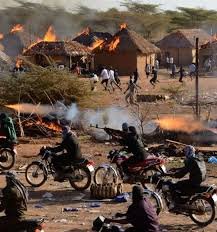
 Edino Chubiyo Cornelius