Korede Abdullah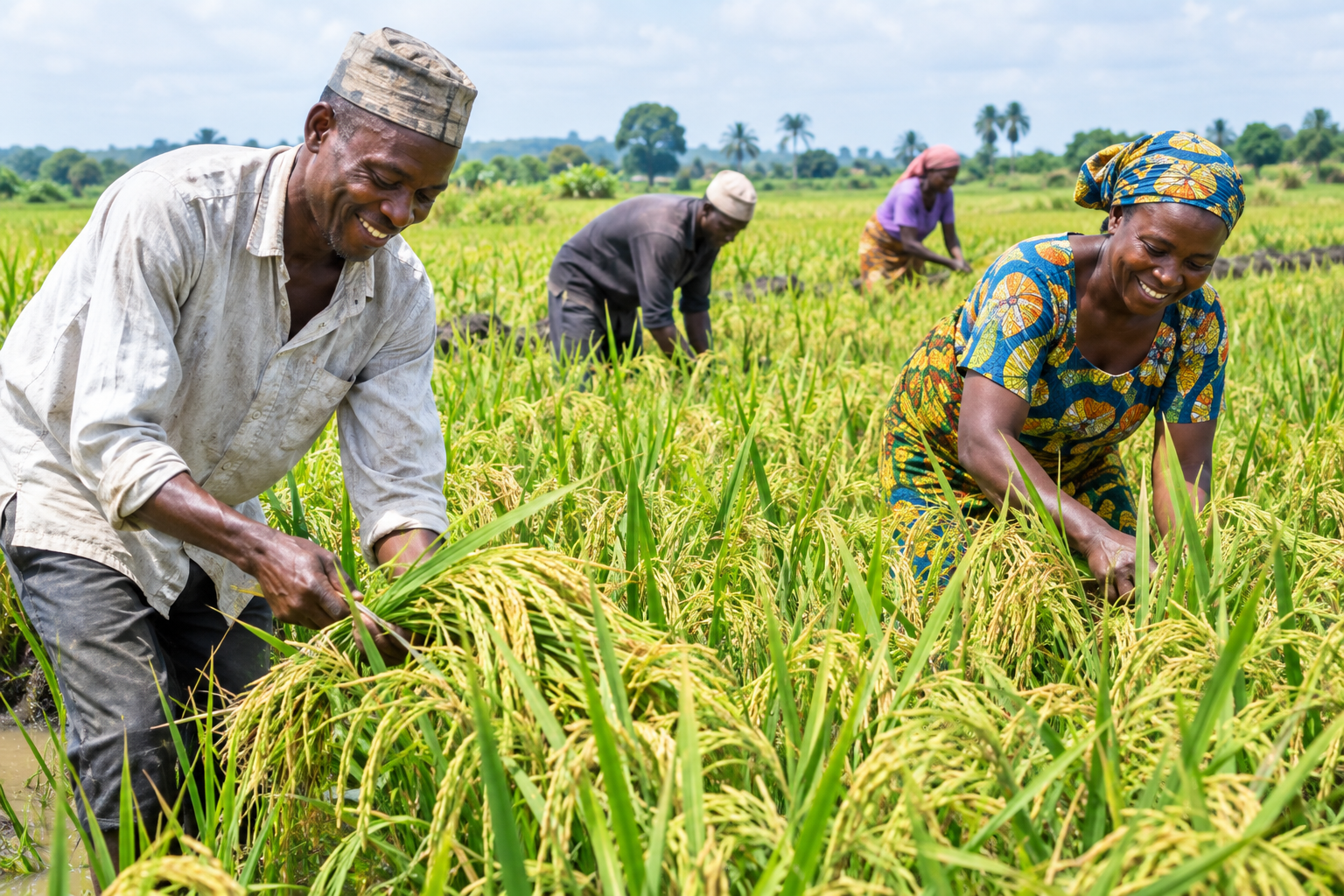
ABUJA, Nigeria – More than 100,000 farmers across 10 Nigerian states have accessed ₦61 billion in agricultural finance over eight years through the Global Project on Promotion of Agricultural Finance for Agri-based Enterprises in Rural Areas (GP AgFin Nigeria), the Deutsche Gesellschaft für Internationale Zusammenarbeit (GIZ) has said.
GIZ Sector Coordinator for Rural Development and Agricultural Transformation of Agri-Food System, Dr Andrea Ruediger, disclosed this on Thursday at the project’s National Close-Out Conference in Abuja.
The project, funded by the German Federal Ministry for Economic Cooperation and Development (BMZ) and implemented by GIZ, also developed 22 agricultural finance products, with 19 permanently integrated into partner financial institutions’ portfolios.
It produced eight knowledge products, trained more than 40 certified trainers and reached over 1,100 students in colleges of agriculture.
Ruediger described the completion of the project as “a launch” rather than an ending and urged stakeholders to sustain and scale its gains.
However, economist and Central Bank of Nigeria researcher Dr Michael Ononugbo said increased agricultural lending had not translated into a corresponding rise in productivity.
He said agriculture accounted for less than five per cent of private-sector credit from the banking system between 2017 and 2026, compared with 43 per cent for services and 38.97 per cent for industry.
According to Ononugbo, agricultural credit increased by about seven-fold, or 600 per cent, during the period.
“Access to finance opens doors, but impact changes lives,” he said, arguing that agricultural finance should be measured by its impact on productivity, incomes, employment, resilience and value chains.
He called for value-chain-specific financing, risk-sharing mechanisms, insurance, reliable data, digital innovation, market linkages and agricultural research.
Dr Karin Jansen, Head of Development Cooperation at the German Embassy in Abuja, said GP AgFin demonstrated how development cooperation could strengthen institutions and systems capable of sustaining results beyond a project’s formal lifespan.
About the Author


 Mirian Gom