
 Oluwatobi Adu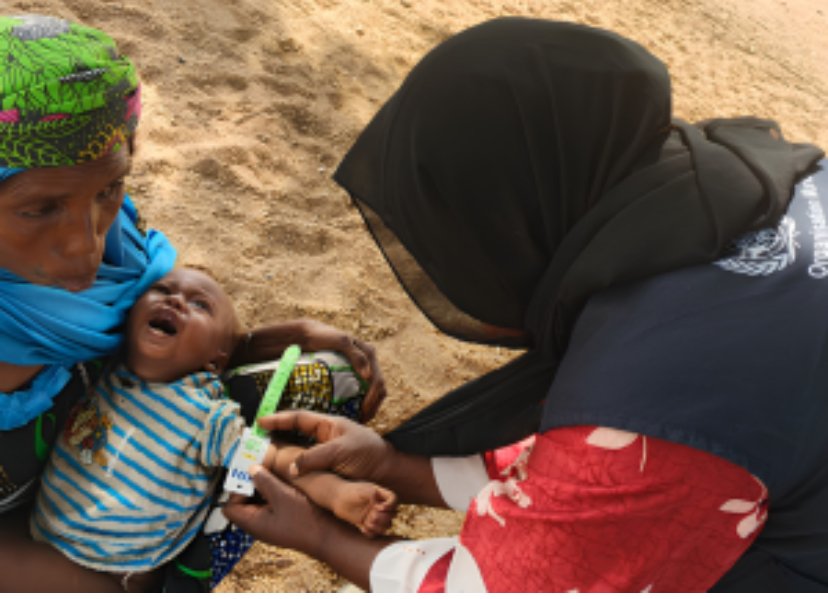
YOLA, Nigeria – large-scale nutrition outreach programme in Adamawa State has screened more than 36,000 children for malnutrition, helping health workers identify severe cases early and improve survival rates in vulnerable communities.
Health officials and the World Health Organization said the intervention is expanding access to life-saving treatment in hard-to-reach areas, where malnutrition remains a leading cause of child illness and death.
The programme was reviewed on Friday in Yola as health authorities assessed progress made since the deployment of mobile health teams in 2025.
According to the Adamawa State Government and WHO, 10 mobile health teams operating across 10 local government areas screened 36,727 children between September and December 2025.
The exercise identified 527 cases of severe acute malnutrition and 1,263 moderate cases, all of which were referred for treatment.
The programme’s impact is illustrated by the recovery of 18-month-old Dauda, who was diagnosed during an outreach visit in Maliki 2 settlement in Demsa Local Government Area.
“I did not know it was malnutrition,” his mother, Aisha Ibrahim, said.
“I was worried because he kept getting weaker.”
Health workers used a mid-upper arm circumference tape to identify the condition and immediately referred the child for treatment.
After four weeks of care, Dauda recovered.
Another child, Tikle, also regained his health after receiving treatment.
“My son, Tikle, gained weight and started playing with his friends about four weeks after we visited the health centre,” his mother, Salamatu Sani, said.
WHO State Coordinator Dr Yusuf Abdulhakeen stressed the importance of early intervention.
“Strengthening early detection and treatment for acute malnutrition is critical to improving child survival, particularly in underserved communities,” he said.
Olufunmilola Adegbite, Director and Head of Nutrition, said expanding community nutrition services through primary healthcare remains essential to reducing preventable child deaths.
About the Author


 Mirian Gom


 Korede Abdullah