Otamere Gladness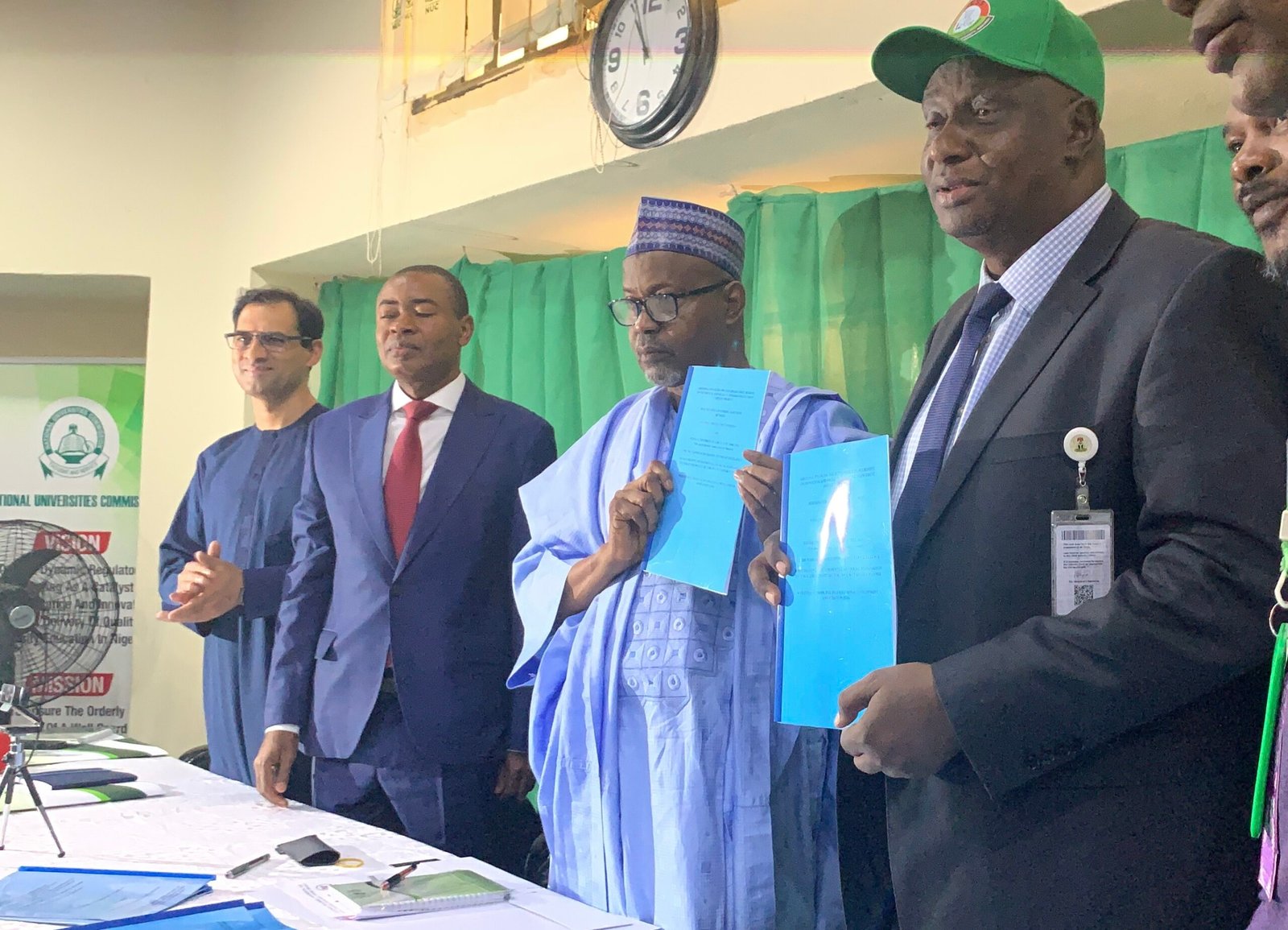
ABUJA, Nigeria – Vice-Chancellors of six Nigerian universities sign new performance contracts with the National Universities Commission, formally activating the Additional Financing phase of the Sustainable Procurement, Environmental and Social Standards Enhancement project aimed at transforming professional training across Nigeria.
The agreement, signed in Abuja on Wednesday, marks a major expansion of the SPESSE Project, a World Bank-supported initiative designed to strengthen procurement, environmental and social standards education in Nigeria’s universities and public institutions.
NUC Executive Secretary Abdullahi Yusufu Ribadu describes the signing ceremony as “a new chapter in our collective journey to strengthen Nigeria’s capacity in procurement, environmental, and social standards.”
The new financing phase begins barely three weeks after taking effect and extends the project implementation timeline to June 2029.
Under the initiative, six Centres of Excellence established across Nigeria’s geopolitical zones continue to address shortages of skilled professionals and specialised academic programmes in procurement and safeguards management.
Since its launch in 2021, the SPESSE project develops academic curricula covering certificate, diploma, undergraduate and postgraduate programmes while expanding digital infrastructure and securing more than 68 international partnerships.
Professor Ribadu says the project already records major sustainability gains, including the rollout of PhD programmes at three centres, while the remaining institutions prepare to begin doctoral studies in July 2026.
The NUC also unveils ambitious new performance targets for participating universities. These include producing at least 60 PhD graduates, enrolling no fewer than 60 foreign students, supporting 18 staff internships and facilitating at least 60 student exchange programmes.
Ribadu urges host universities to introduce scholarships to boost international enrolment, revealing that The Gambia already expresses interest in the programme.
The Additional Financing phase will further prioritise online learning, stronger management systems and long-term institutional sustainability beyond donor funding.
Education stakeholders view the initiative as a strategic push to position Nigerian universities as regional hubs for professional excellence, sustainable development and public sector reform.
About the Author


 Korede Abdullah
 Mirian Gom