 Mirian Gom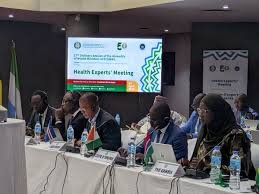
ABUJA, Nigeria – West African health leaders have warned that no single country can defeat malaria alone, calling for stronger regional collaboration to eliminate the disease.
The Director-General of the West African Health Organisation, Melchior Aissi, said coordinated action across borders remains critical to sustaining progress.
Speaking during the 27th Ordinary Session of the ECOWAS Assembly of Health Ministers, Aissi stressed the need for harmonised interventions, shared data systems and collective resource mobilisation.
“No country can eliminate malaria in isolation,” he said, urging member states to adopt a unified regional strategy.
While acknowledging milestones such as Cabo Verde’s malaria-free certification, Aissi cautioned that sustaining progress would require stronger political commitment, technical rigour and increased domestic financing.
He unveiled a regional strategic framework prioritising digital health systems, innovation, effective data use and community engagement to accelerate elimination efforts.
The framework also emphasises strengthening health governance and integrating malaria control into broader public health systems.
Speaking for development partners, Dionke Fofana called for deeper collaboration among countries, stressing the importance of aligning priorities and leveraging private sector participation.
He noted that despite progress, malaria remains a major public health threat in West Africa, requiring sustained investment and coordinated responses.
The Assembly is expected to review WAHO’s 2025 annual report, adopt a regional malaria elimination framework and consider strategic health priorities, including climate-related health risks and financing gaps.
Health experts say the region’s ability to eliminate malaria within the next decade will depend largely on how effectively countries work together to close funding, data and implementation gaps.
About the Author

 Otamere Gladness
 Korede Abdullah