TOXIC HEAT: The Hidden Peril in Nigeria’s Kitchens Where Convenience Turns Poisonous
 Oluwatobi Adu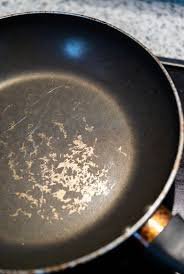
ABUJA, Nigeria – In kitchens across Nigeria, from the hum of Lagos apartments to the quiet corners of Abuja homes, a silent hazard simmers daily unseen, untested, and dangerously underestimated. The non-stick pot, prized for its convenience and ease, has become a staple in millions of households. Yet beneath its smooth surface lies a growing public health concern that experts warn could be contributing to a surge in chronic illnesses.
Marketed as modern solutions for faster, cleaner cooking, non-stick cookware—commonly referred to as Teflon or granite pots—has quietly embedded itself into everyday Nigerian life. But when overheated beyond 260–315°C or worn through scratches, these coatings can release toxic fumes and microscopic particles linked to a range of health complications. From “polymer fume fever”—a flu-like condition triggered by inhalation—to long-term exposure risks associated with PFAS, widely known as “forever chemicals”, the consequences are increasingly difficult to ignore.
Global health bodies, including the World Health Organization’s International Agency for Research on Cancer, have classified compounds like PFOA as possibly carcinogenic, while environmental regulators such as the US Environmental Protection Agency continue to raise alarms over their persistence in the human body and environment.
In Nigeria, where non-communicable diseases such as cancer, hormonal disorders, and fertility challenges are on the rise, experts warn that weak regulation of imported cookware and low public awareness may be fuelling a preventable health crisis. Oluwatobi Adu, writes
A Chef’s Breaking Point: When the Kitchen Becomes a Threat
For popular chef and content creator, Chef Ajoke, the danger was not theoretical—it was deeply personal.
What began as unexplained fatigue spiralled into months of fear, confusion, and repeated hospital visits with no clear diagnosis.
She recounts her ordeal:
“For the past five months, I have been in and out of the hospital. Every visit came with different test results, different explanations, and no clear answers. It was exhausting and terrifying.
I became a shadow of myself.
I would wake up in the middle of the night crying and praying, begging God to spare my life. I fasted constantly. I cried almost every day. I felt like I was slowly dying inside, even though I couldn’t explain exactly what was wrong.
My body began to change. I noticed excess fat all over, and I assumed I was simply gaining weight. But deep down, I knew something wasn’t right. I was weak. I collapsed several times. I kept taking different treatments, hoping something would work but nothing truly changed.”
Her turning point came unexpectedly—through a simple observation.
“Then last week, my aunt came to visit. She noticed the pot I was using and asked, ‘I hope you’re not using that pot for your customers?’
I told her no because the pots were small, so I only used them for personal cooking at home.
She immediately told me to stop using them and to observe my body for a month.”
What followed was a startling shift.
“I wasn’t fully convinced, but I listened.
Since the day I stopped using that pot, I have felt a difference. The weakness reduced. I stopped collapsing. I began to regain my strength. I started feeling like myself again.
It was that serious.
Now, I’m committed to taking my medications consistently and giving my body the care it deserves so I can fully recover.
This experience humbled me. It reminded me how fragile life is, and how sometimes, the smallest things can silently affect us in the biggest ways. God truly saved me.”
Her story raises an unsettling question: how many others are suffering without knowing the source?
Everyday Use, Everyday Risk: Nigerians Speak
Across households, non-stick cookware remains indispensable—valued for affordability and ease, but often used far beyond its safe lifespan.
In Jabi, Abuja, Mrs Blessing, a mother of two, admits she relies heavily on them:
“I mostly use non-stick pots because they are easy to cook with and food doesn’t get burnt quickly. Even when they get scratched, I still use them for a long time because buying new non-stick pots is expensive.”
Her awareness of the risks is limited:
“To be honest, I didn’t know that scratched pots could release harmful chemicals. Many of us just think the pot is old, but we don’t know it could affect our health.”
She reflects on symptoms she once dismissed:
“Sometimes after cooking, I feel headaches or cough a little, but I never thought it could be related to the pot. We usually assume it is stress or the heat from the kitchen.”
For others, the convenience outweighs concern.
Self-acclaimed personal chef, Miss Folashade, says:
“I own some sets of non-stick pots; in fact, all the pots I use at home are non-stick cookware. They are very easy to cook with jollof rice.”
Despite encountering online debates, she remained unconvinced:
“I didn’t know that scratched pots could release harmful chemicals. Though I saw some debate about it online, I didn’t take it seriously.”
Cost Remains A Major Barrier:
“The pots I use are terribly scratched, but to be honest I don’t think I will be changing them soon because it is quite expensive to buy a new one.”
What Science Says: Invisible Toxins, Elusive Diagnosis
Medical laboratory scientist, Miss Olotu Dorcas Ifuhemi, explains why the risks often go undetected.
“PFAS cannot be detected in a routine blood test of an individual. They require special blood tests done in research labs or environmental health investigations.”
She outlines how exposure occurs and spreads:
“The toxins from PFAS exposure can enter the body mainly through inhalation and circulate in the bloodstream,affecting multiple systems—respiratory, immune, endocrine, and reproductive—as well as organs like the liver and kidneys.
Diagnosis remains a major challenge:
“PFAS do not cause a unique, obvious set of symptoms. They persist in the body for years.”
Pharmacist Busola reinforces the concern:
“According to research, PFAS have health risks just like any other chemicals that are being consumed directly or indirectly.”
She links exposure to serious conditions:
“Development of growth that can be cancerous or non-cancerous, thyroid disease, and impaired immune system.”
Her advice is unequivocal:
“The best advice I would give anyone using this kind of cookware is to discard such utensils and go for stainless steel, ceramic cookware or cast iron pans. Avoidance is the best option.”
A Regulatory Blind Spot: Nigeria’s Growing Vulnerability
While the science is clear, enforcement remains weak.
Nigeria’s markets are flooded with imported cookware, often with little regulatory scrutiny regarding chemical safety standards. Consumers, driven by cost and availability, are left to navigate risks largely on their own.
At high temperatures, non-stick coatings can release fumes that trigger immediate symptoms—headaches, chills, coughing—while scratched surfaces shed micro-particles that accumulate silently in the body.
In a country already grappling with rising non-communicable diseases, this represents a hidden but significant public health threat.
The Way Forward: Awareness, Regulation, Responsibility
From Chef Ajoke’s recovery to the candid testimonies of everyday users, one reality is undeniable: the danger is not hypothetical—it is already here.
The path forward requires urgent, coordinated action.
Public health campaigns must educate Nigerians on safe cookware practices. Regulatory bodies must enforce stricter controls on imported kitchenware. And households must begin making informed choices—however gradual.
Simple steps can make a difference: replacing scratched pots, avoiding overheating, and switching to safer alternatives such as stainless steel, ceramic, or cast iron.
Because in the end, the kitchen—meant to nourish—must not become a source of harm.
The warning signs are already present.
The question is whether Nigeria will act before convenience continues to come at a cost too high to measure.
About the Author


 Korede Abdullah
 Mirian Gom