


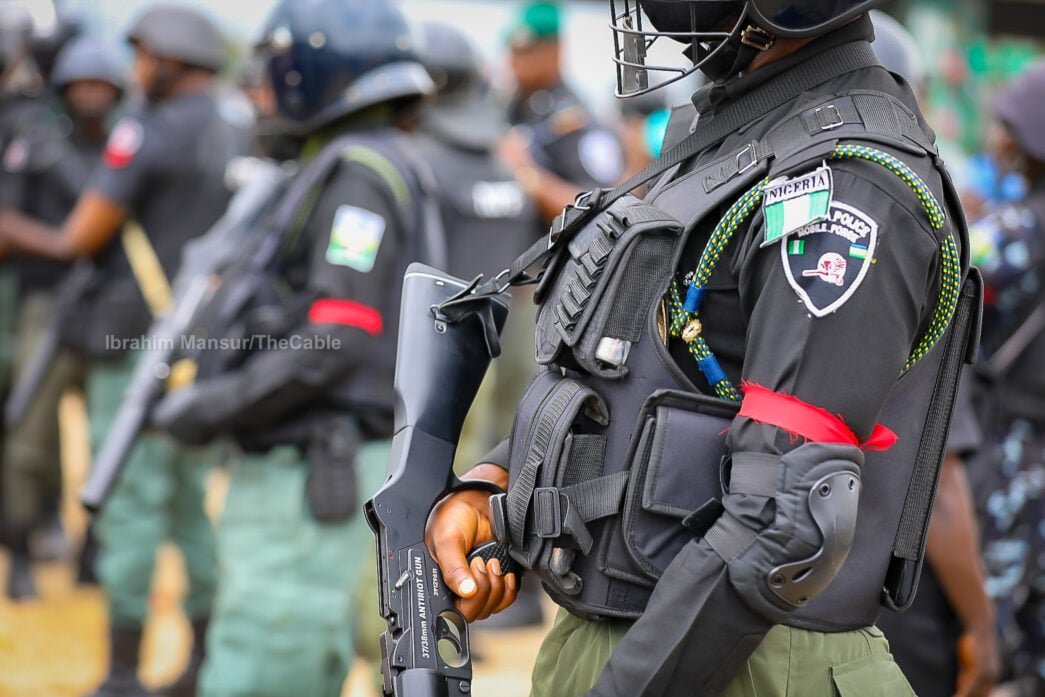
ABUJA, Nigeria – In a nation where the echoes of insecurity stretch from the forests of the north-west to the highways of the south-east, Nigeria is confronting an uncomfortable truth: the country’s security architecture is struggling to keep pace with its complex realities.
Banditry, kidnapping, communal clashes and organised crime have steadily reshaped the national conversation about policing. At the centre of that debate is a controversial yet increasingly urgent proposal — the creation of state police.
For decades, Nigeria has relied on a single, centralised police force commanded from the federal capital. But as crime statistics surge and communities increasingly demand protection closer to home, policymakers, legal experts and security analysts are asking whether decentralising policing could offer a more effective response.
For many observers, the discussion is no longer theoretical. It has become a test of how Nigeria adapts its democratic institutions to confront one of the most pressing governance challenges of the 21st century: security. Chukwu Obinna, writes.
A Nation Under Pressure
The numbers alone tell a troubling story.
According to the National Bureau of Statistics (NBS), Nigeria recorded an estimated 51.89 million crime incidents between May 2023 and April 2024, an astonishing figure that reflects the scale of insecurity affecting households across the country.
The same report revealed that Nigerian households paid roughly N2.23 trillion in ransom during the same 12-month period, underscoring the economic toll of kidnapping and criminal violence.
Meanwhile, the Nigeria Police Force (NPF) currently has about 370,000 officers serving a population of more than 220 million people, creating a police-to-citizen ratio of approximately 1:600, far below the internationally recommended benchmark of 1:450.
The strain on Nigeria’s security system is visible across the country. Military forces are now deployed in two-thirds of Nigeria’s states, supporting overstretched law-enforcement agencies in the fight against insurgency, banditry and organised crime.
Against this backdrop, the question many Nigerians are asking is simple: Can a single centralised police force effectively secure such a vast and diverse nation?
Understanding the Concept of State Police
Legal practitioner Iwunnakwe Promise believes the idea of state policing deserves serious attention within Nigeria’s federal system.
“In constitutional language, state policing refers to a law-enforcement institution created, funded and controlled by the state government,” he explained.
“This simply means a policing agency operating at the state level while still existing within a federal structure.”
Nigeria currently operates one of the most centralised policing systems among federal democracies. Under the existing framework, officers are recruited into the national police force and deployed across the country regardless of their state of origin.
The system was originally designed to promote national unity and maintain uniform policing standards across Nigeria’s ethnically and politically diverse regions.
But Promise argues that decentralised policing models are common in many federal systems around the world.
“The idea of state policing grew out of federal constitutional systems where power is deliberately divided between national and state governments,” he said.
“Security problems are often local, so policing that is closer to communities can respond more quickly to intelligence and local developments.”
In communities where social networks are tightly woven, familiarity can be a powerful security tool.
“In many societies, locals know their communities well — the families, visitors and new arrivals,” he explained.
“That level of familiarity can help security agencies detect unusual activities early.”
For supporters of decentralisation, this local knowledge could transform intelligence gathering, allowing authorities to intervene before crimes escalate.
The Constitutional Barrier
Despite growing calls for reform, Nigeria’s constitution presents a significant obstacle.
Section 214(1) of the 1999 Constitution states that there shall be only one police force for the federation, known as the Nigeria Police Force. It further specifies that no other police force may be established for any part of the country.
This provision effectively prevents state governments from creating their own police institutions without a constitutional amendment — a process that requires approval from both the National Assembly and a majority of state legislatures.
In response to mounting security challenges, several states have instead created regional security outfits designed to support federal agencies.
These include Amotekun Corps in the South-West, Ebube Agu in the South-East, and Hisbah Corps in parts of northern Nigeria.
While these organisations help with surveillance and intelligence gathering, they lack the legal authority of a formal police force.
“They assist the police but cannot independently carry out core policing duties such as criminal investigation, detention or prosecution,” Promise explained.
Nevertheless, the rise of these initiatives signals a broader shift in Nigeria’s security landscape — one in which states are increasingly seeking a more active role in protecting their communities.
Safeguards Against Political Abuse
One of the most persistent concerns surrounding state policing is the risk of political misuse.
Critics worry that governors could use state-controlled police forces to intimidate opponents or manipulate elections.
Promise acknowledges the risk but insists that strong institutional safeguards could mitigate such dangers.
“First, there would have to be an amendment to Section 214 of the constitution,” he said.
Beyond constitutional reform, he argues that independent oversight mechanisms would be essential.
One proposal involves the creation of state police commissions responsible for recruitment, discipline and operational oversight.
“The governor should not directly hire or fire the police leadership,” Promise said.
“The goal is to separate political authority from operational policing.”
Financial transparency would also be critical.
“If funding is controlled solely by the executive arm, there is a risk that policing decisions could be influenced by politics,” he added.
Under the proposed framework, police budgets would be subject to legislative approval and independent auditing, ensuring accountability and reducing opportunities for abuse.
The Global Development Lens
The debate over state police is also increasingly being framed within a broader international context.
The proposed reforms intersect with the United Nations Sustainable Development Goals (SDGs), particularly SDG 16, which calls for peaceful societies, access to justice and strong institutions.
Supporters argue that decentralised policing could contribute to several SDG targets.
Target 16.1, which aims to significantly reduce all forms of violence, is particularly relevant. With tens of millions of crime incidents recorded annually, strengthening community-level security could play a key role in prevention.
Target 16.3, which promotes the rule of law and equal access to justice, is also central to the discussion. In many rural communities across Nigeria, access to police services remains limited or non-existent.
A decentralised policing structure could help bridge that gap by ensuring officers are stationed closer to underserved communities.
Equally important is Target 16.6, which focuses on building effective and accountable institutions.
The proposed state police commissions align with this goal by introducing independent oversight into policing structures.
Finally, Target 16.a calls for strengthening national institutions to combat violence and crime.
Nigeria’s Inspector-General of Police has previously acknowledged that the country requires at least 190,000 additional officers to meet global policing standards — a shortfall that highlights the scale of institutional reform required.
For analysts, the debate over state police is therefore not merely about law enforcement.
It is about institutional design — how Nigeria structures its security institutions to protect citizens in an era of evolving threats.
A Question of Leadership
Even with constitutional reform and institutional safeguards, experts caution that the effectiveness of any policing system ultimately depends on leadership and accountability.
Nigeria’s security challenges are shaped not only by structural weaknesses but also by governance realities.
As Promise reflected, laws alone cannot guarantee justice or security.
“A constitution can distribute power like a clever machine,” he said.
“But the machine still runs on human character.”
For Nigeria, the debate over state police represents more than a policy discussion.
It is a defining moment in the country’s search for a security model capable of protecting its people while preserving democratic values.
Whether the solution lies in decentralisation, reforming the national police force, or a hybrid approach combining both, one fact remains clear: Nigeria’s security architecture is at a crossroads.
And the decisions made in the coming years may shape the country’s stability for decades to come.







Join the conversation