FG Plans Nationwide Internet Connectivity for Nigerian Schools
 Edino Chubiyo Cornelius
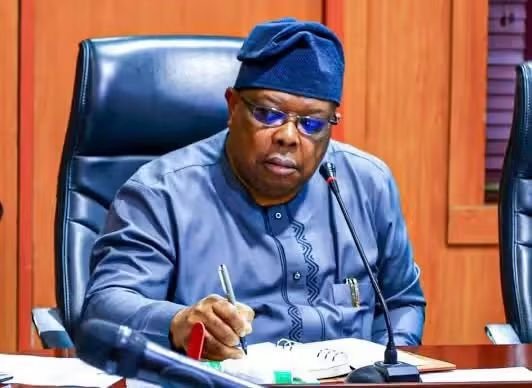
Education Minister, Dr. Tunji Alausa
ABUJA, Nigeria – Nigeria’s federal government has unveiled plans to connect all schools nationwide to reliable internet services, a move aimed at expanding digital learning and modern education tools.
Minister of Education Dr Tunji Alausa announced the initiative Tuesday after a high-level meeting with the Minister of Communications, Innovation and Digital Economy, Bosun Tijani.
The programme follows a directive from President Bola Tinubu to expand digital infrastructure across critical sectors, including education.
Alausa says nationwide connectivity will support digital learning, artificial intelligence tools and the gradual transition to Computer-Based Testing (CBT) for national examinations.
“By connecting our schools, we are opening the door to digital learning and emerging technologies such as AI while preparing Nigerian students to thrive in a knowledge-driven world,” Alausa says.
The government plans to deploy about 90,000 kilometres of fibre-optic broadband infrastructure and build 3,700 telecommunications towers, particularly in rural and underserved areas.
Officials say the project will integrate fibre networks, satellite connectivity and telecom infrastructure to ensure reliable internet access for schools across the country.
The initiative builds on earlier work by the Nigerian Research and Education Network (NgREN), which previously expanded broadband connectivity to universities under a World Bank-supported programme.
Two technical working groups have now been created to coordinate implementation across tertiary institutions and basic education schools.
Communications Minister Bosun Tijani says Nigeria already hosts several international submarine internet cables but lacks adequate inland fibre infrastructure to distribute connectivity nationwide.
“Most internet capacity enters Nigeria through submarine cables landing in Lagos, but without sufficient inland fibre networks it cannot reach schools and communities effectively,” Tijani says.
The government expects the first phase of the programme to deliver results within three months, enabling teachers and students to access digital platforms, global learning resources and AI-driven education tools.
About the Author

 Hope Ajayi
 Oluwatobi Adu
 Korede Abdullah