 Oluwatobi Adu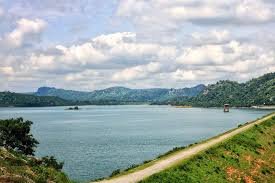
Lower Usuma Dam, a major water source for Abuja
ABUJA, Nigeria – On a warm afternoon in Kpana village, Jabi, Mrs. Blessing waits patiently beside her shop, plastic containers lined up like silent witnesses. The tap drips, then stops. She sighs and turns to a neighbour’s borehole—again. In Nigeria’s carefully planned capital, access to clean water has become a daily gamble, one that is reshaping health, livelihoods and dignity across the city.
This is the human face of Abuja’s water crisis—an emergency that rarely makes headlines but is steadily tightening its grip on households, markets and hospitals. From Kubwa to Gwarinpa, Life Camp to Jabi, residents speak of disrupted routines, mounting costs and growing anxiety as public water supply falters.
Africa Health Report’s findings, led by Oluwatobi Adu, reveals how failing infrastructure, power cuts and governance gaps are colliding with rapid population growth and climate pressure—leaving ordinary people to improvise their way through scarcity.
A Capital Without Water
Abuja was designed to symbolise order and possibility. Yet across the Federal Capital Territory, many communities receive water irregularly—or not at all—from the FCT Water Board. When taps fail, residents turn to boreholes, water vendors, mosques or neighbours with deeper pockets.
The situation worsened after repeated power disconnections by Abuja Electricity Distribution Plc, over unpaid bills running into months. Treatment plants slowed or shut down. Although electricity was conditionally restored in January 2026 after public pressure, the deeper problems remain low water levels at the Lower Usuma Dam, reduced transfers from Gurara, shortages of treatment chemicals, and ageing distribution networks prone to breakdowns.
For residents, the result is uncertainty. Water may arrive briefly at night—or not at all for days.
Health On the Line
Public health experts warn that water scarcity is more than an inconvenience; it is a direct threat to life.
In an interview with Africa Health Report, (AHR), public health analyst Musa Abdullahi Sufi did not mince words.
“Water scarcity directly threatens health by limiting access to safe drinking water, proper sanitation and hygiene,” he said. “When people don’t have enough clean water, they are forced to use unsafe sources, increasing exposure to disease-causing organisms and harmful chemicals.”
According to him, the consequences ripple through homes and hospitals alike.
“When there is scarcity of water in hospitals, it’s very dangerous. Water is key for sanitation and hygiene—both at home and in health facilities.”
Without water, basic routines collapse. People bathe less, wash clothes infrequently and neglect hand hygiene. Germs spread easily. “Imagine,” Sufi added, “disease would be much for sure.”
He listed the most common illnesses linked to unsafe water: diarrhoeal diseases such as cholera, dysentery and typhoid fever; parasitic infections like schistosomiasis and intestinal worms; and skin and eye infections caused by poor hygiene. These illnesses, he warned, hit children, pregnant women and the elderly hardest—sometimes with fatal consequences.
“In severe cases, water scarcity can increase child mortality and trigger outbreaks of preventable diseases,” he said.
Hygiene Breakdowns in Public Spaces
Water shortages do not stop at the household gate. Schools, markets, transport hubs and clinics suffer too.
“In public places where people meet, poor hygiene raises the risk of disease transmission,” Sufi explained. “Health facilities are especially affected because inadequate water compromises safe deliveries, infection prevention and patient care.”
He called for action at every level—government investment in infrastructure, community participation, and individual responsibility. Protecting water sources, maintaining boreholes, harvesting rainwater, promoting safe storage and encouraging handwashing with soap are all part of the solution.
“Access to clean water is not just about the environment,” he stressed. “It is a public health issue and a human right.”
The Environmental Angle
Environmentalist Damian Gbogbara, an eco-restoration advocate, believes the crisis reflects years of neglect.
“Before boreholes, communities relied on streams and wells managed collectively,” he said. “Many of those sources are now polluted or lost.”
Gbogbara argued that the government must treat water as a humanitarian necessity, not merely a commercial service. Investment in modern infrastructure, sustainable maintenance and fair pricing is essential. At the same time, communities must be empowered to protect local water sources, adopt rainwater harvesting and practise conservation.
“We can all do our part,” he said. “When government action and community responsibility meet, water scarcity reduces—and public health improves.”
Voices From the Neighbourhoods
The crisis is perhaps best understood through those living it daily.
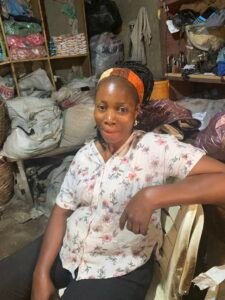
Mrs. Blessing says water from her tap now trickles slowly—if it comes at all. “Most times, I go to neighbours with boreholes,” she said. “If they don’t help, there is nothing we can do.”
Nearby, a hairdresser who works in Kpana but lives in Lugbe echoed the frustration. “We have been facing water scarcity in my area. The government should please do something about it.”

For Elijah Jonathan, a dry cleaner in Jabi-Kpana, water shortages strike at his livelihood.
“Anytime the tap water is not running, we have to source for water elsewhere,” he said. “Most times, big houses won’t allow us. For dry cleaning, we need high volumes of water—it becomes very difficult.”
He estimates that up to 90 per cent of residents rely on external sources during outages. His solution is simple: community backup boreholes and honest communication from authorities. “We can’t 100 per cent trust the water board alone,” he said.
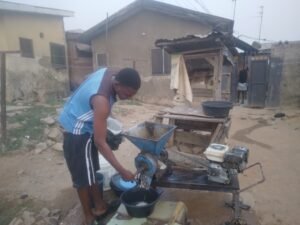
In Kubwa, Mummy Emmanuel wakes before dawn to fetch water from a mosque so she can grind pepper for customers.
“The stress of always looking for water is really affecting me,” she said. “It’s exhausting.”
Not everyone feels the pinch. Mr Bhadmosi, a Jabi resident, relies entirely on a private borehole. “I’m not aware of any water scarcity trend,” he said. “I give water to neighbours when they come.”
In Life Camp, Mrs. Mariam sees the writing on the wall. “People should start digging their own borehole as a future plan,” she advised—an option for many poorer households cannot afford.
Silence From Authorities
Efforts to obtain detailed responses from the FCT Water Board were unsuccessful. Officials cited an ongoing strike, and visits to the Jabi office yielded limited information. For residents, the silence deepens mistrust and uncertainty.
A City at A Crossroads
Abuja’s population continues to swell, while climate variability tightens water availability. Without urgent intervention—reliable power for treatment plants, investment in distribution networks, community boreholes, rainwater harvesting and transparent governance—the current disruptions could escalate into a full-blown public health emergency.
When taps run dry, inequality deepens. Those who can pay adapt; those who cannot suffer. Clean water, experts insist, is not a privilege of postcode or income. It is a right.
Until that right is secured, Abuja’s quiet water emergency will continue to shape lives—one empty container at a time.
About the Author

 Hope Ajayi
 Mirian Gom