
 Oluwafunbi Bello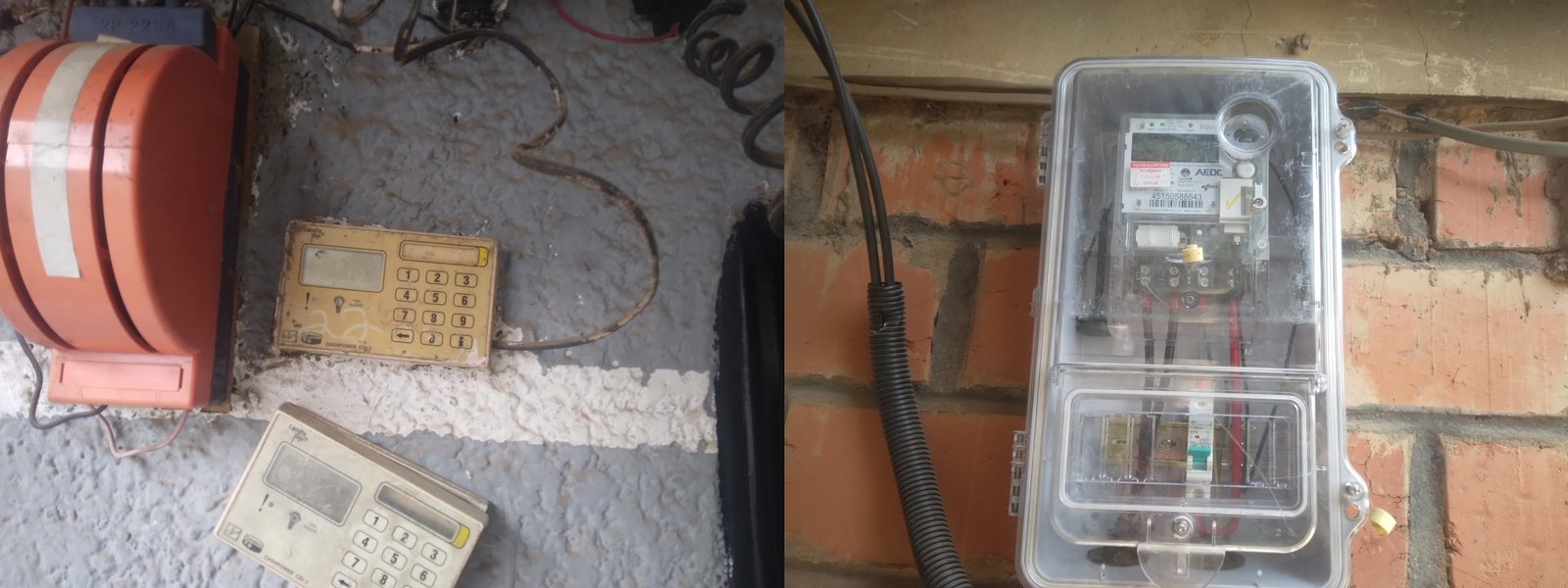
ABUJA, Nigeria – When Mrs. Omebi Ijeoma watched officials remove the old prepaid electricity meter from her Abuja home last December, she felt a flicker of relief. The new one came free, part of a long-awaited rollout promising fairness and transparency in power billing. There was no paperwork, no briefing—just a brief assurance that this was “the latest” meter.
Weeks later, the light still came on, but something else faded.
“For the same money, what I’m getting now is far less,” Mrs Omebi says, sitting in her living room where fans are rationed and appliances switched on sparingly. “My old meter used to give me about 18 units. This one barely gives half.”
Her household receives about seven hours of electricity a day. What changed, she says, was not supply but value. “They didn’t explain anything to me. No tariff, no band, nothing. They just said they were changing the meter.”
Mrs Omebi’s frustration is echoed across parts of Nigeria’s capital, where residents who received new prepaid meters under a free distribution scheme by the Abuja Electricity Distribution Company (AEDC) say they now pay more for less power. What was meant to end estimated billing has instead sparked a deeper unease: a sense that electricity, already unreliable, has become more expensive in ways consumers do not understand.
“I’m not satisfied at all,” Mrs Omebi says quietly. “If I had a choice, I would go back to the old meter. But I don’t.”
‘₦1,000 Can’t Do Anything Anymore’
In another part of the city, Blessing Ojonugwa scrolls through transaction alerts on her phone, each one marking another small purchase of electricity units. “₦1,000 now gives me about 2.2 units,” she says. “Before, it was around 18 units.”
Since her new meter was installed, she says daily life has shrunk. Appliances sit idle. Planning revolves around power. “I can’t even use things in the house,” she says. “To live normally, I have to buy up to ₦10,000 worth of units.”
Like Mrs Omebi, Blessing says the meter was free, and like many others, she does not know her electricity band—a classification tied to hours of supply that determines tariffs. She estimates she gets no more than five hours of power daily. She has not filed a formal complaint.
“I wasn’t charged for the meter, and I don’t even know the band I’m on,” she says. “But the new meter is way more expensive than the old one.”
Josh Emmanuel, who identifies himself as a Band A customer—supposedly the highest service tier—noticed the same pattern. “I get fewer units now than before,” he says, though he shrugs it off. “It didn’t bother me that much.”
Together, their stories form a portrait of a rollout that may be technically sound but emotionally jarring—an intervention that arrived without explanation, leaving households to decipher changes through dwindling units and rising costs.
Inside AEDC’s Explanation
At AEDC’s Wuse Zone 4 office, an official, Tony Ibe, confirms the company has distributed more than 10,000 meters since November under a free programme designed for customers who could not afford meters or had waited years for one.
“Right now, there is a programme we are running where meters are being given out free,” he says. “For those who have waited for a long time, they are given meters at no cost.”
Mr. Ibe explains that electricity tariffs in Nigeria are structured around “bands,” determined by hours of daily supply. “If you have close to 20 hours or even up to 24 hours, you are on Band A,” he says. “Band B and Band C depend on the number of hours you have.”
If a meter is configured for a higher band than a customer’s actual supply, he says, the result can be fewer units per naira. “In that case, the customer should come to our office for review or correction.”
He also points to tariff adjustments approved by the Nigerian Electricity Regulatory Commission (NERC). “The increase in unit cost is due to tariff changes,” he says.
Yet for residents, these explanations arrived too late—or not at all.
The Cost of Silence
“They didn’t tell us anything about bands or tariffs,” Mrs. Omebi insists. “They just changed the meter.”
That gap between policy and perception may be the programme’s greatest flaw. In a city where trust in public utilities is fragile, silence breeds suspicion. Even when systems work as designed, the absence of clear communication can make fairness feel like fraud.
Mr. Ibe maintains that AEDC’s customer care runs the clock. “People can come and complain, and we respond immediately,” he says. “Even on Sundays.”
But at AEDC’s Kubwa office, officials declined further comment despite a formal request and press identification—an encounter that mirrors residents’ experience of closed doors and unanswered questions.
Beyond the Meter
Nigeria’s electricity sector is a web of reforms, subsidies, and contested tariffs. For policymakers, meters are tools—devices to measure consumption accurately and end estimated billing. For households, they are arbiters of daily comfort, deciding how long lights stay on and which appliances remain luxuries.
The free meter scheme aims to expand coverage and restore confidence. Instead, for some Abuja residents, it has exposed a deeper problem: reforms introduced without explanation risk alienating the very people they are meant to help.
As the rollout nears completion, residents like Mrs. Omebi continue to do mental arithmetic each time they buy units, measuring not just kilowatts but trust. “We just want to understand what is happening,” she says. “If things have changed, tell us.”
Until that happens, the promise of free meters may remain overshadowed by a darker question echoing through Abuja homes: why does the light cost more, even when it shines less?
About the Author

 Hope Ajayi

 Mirian Gom
 Korede Abdullah