 Oluwafunbi Bello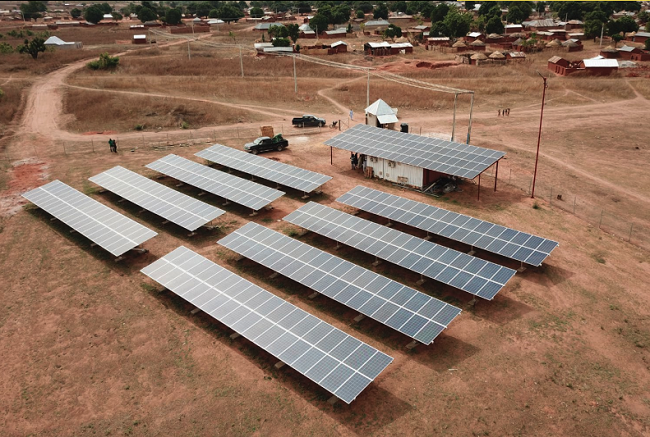
A solar mini-grid system.
ABUJA, Nigeria – More than 4,000 households in Nigeria’s Federal Capital Territory now receive uninterrupted electricity as a Nigeria–Korea solar partnership powers two long-neglected rural communities, officials say.
A 1-megawatt solar mini-grid commissioned in Rubochi and Ikwa communities of Kuje Area Council delivers clean electricity to homes, schools and health facilities, marking a major boost for rural electrification efforts. The project, operational for five months, supplies 900 kilowatts to Rubochi and 100 kilowatts to Ikwa under the Nigerian-Korean Energy Project led by the Rural Electrification Agency and supported by the South Korean government.
Nigeria’s Minister of Power, Adebayo Adelabu, speaking through Permanent Secretary Mahmuda Mammam, on Thursday says the initiative goes beyond infrastructure.
“Access to reliable and sustainable electricity is not a privilege, but a catalyst for socio-economic transformation,” he says.
Adelabu adds that decentralised renewable energy offers a practical solution to Nigeria’s electricity access gap, particularly in rural areas.
The FCT Minister, Nyesom Wike, represented by Chief of Staff Chidi Amadi, describes the project as evidence of strong bilateral ties with South Korea and alignment with President Bola Tinubu’s Renewed Hope agenda.
South Korea’s Chargé d’Affaires, Namgoong Tak, says Seoul funded the project as an in-kind grant, supporting Nigeria’s solar energy strategy and the Presidential Power Initiative.
REA Managing Director Abba Aliyu says the mini-grid integrates solar generation, modern distribution, smart metering and household appliances.
“This is the activation of opportunity, productivity and dignity for thousands of Nigerians,” he says.
Community leaders report improved security, longer business hours and better healthcare delivery, signalling a shift from decades of energy poverty to sustainable growth.
About the Author


 Oluwatobi Adu
 Hope Ajayi
 Mirian Gom