
 Mirian Gom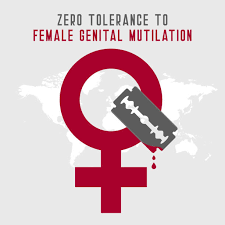
Port Harcourt, Nigeria – The Rivers State Government renews its determination to eradicate Female Genital Mutilation (FGM), admitting that the harmful practice still persists in several rural communities despite years of advocacy and legal prohibition.
Speaking on Wednesday at the opening of the Rivers State Sexual Assault and Referral Centre (SARC) to mark the International Day to End FGM, Permanent Secretary of the Ministry of Social Welfare and Rehabilitation, Mrs Lauretta Davies-Dimkpa, says the administration of Governor Siminalayi Fubara is intensifying interventions to confront deep-rooted cultural resistance.
“Every three months, we engage survivors directly and train community facilitators,” Davies-Dimkpa says. “Just last week, we visited Ahoada West, Ahoada East, Abua-Odual and Emuoha — areas where FGM is still practised in 2026. In some communities, speaking against it is considered taboo.”
Her remarks underline the cultural barriers confronting state officials, as FGM remains entrenched despite national and international campaigns describing it as a violation of human rights.
Also speaking, Inyingi Irimagha, Coordinator of the South-South Sexual and Gender-Based Violence Prevention and Information Hub, calls for urgent funding to strengthen response mechanisms. She warns that Rivers State’s SARC lacks comprehensive services.
“Other states provide legal, medical and psychosocial services under one roof. In Rivers State, we lack medical and counselling support. Infrastructure exists, but services are incomplete,” Irimagha says.
FGM, defined as the partial or total removal of female genitalia for non-medical reasons, has no health benefits and poses severe risks, including haemorrhage, infection, childbirth complications and newborn deaths.
This year’s theme, ‘Zero Tolerance for Female Genital Mutilation’, reinforces global efforts to end the practice permanently.
About the Author


 Hope Ajayi
 Korede Abdullah
 Oluwatobi Adu