 Chukwu Obinna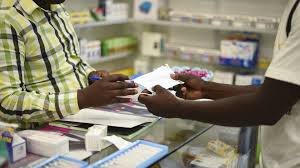
ABUJA, Nigeria – On a sweltering afternoon last month, a visibly distressed mother stepped into Ibe’s Pharmacy, clutching a crumpled prescription in one hand and her three-year-old daughter in the other. She was looking for medication to treat rheumatism. Chukwu Obinna, writes.
Mr Ibe Ezema, the pharmacist on duty, paused. Gently, he asked a routine but critical question: what exactly had the child been diagnosed with?
The mother hesitated, then replied: filariasis — a mosquito-borne parasitic disease that attacks the lymphatic system.
The silence that followed was heavy. A life-threatening infectious disease had been confused with a musculoskeletal condition, sending a desperate parent in search of entirely the wrong treatment for a vulnerable child.
“It happens almost every day,” Ezema said later, shaking his head. “This one just stood out because it involved a child.”
Across town, at Kaydith Pharmacy Ltd, another pharmacist, Obi Emmanuel, tells a strikingly similar story. “At least two people daily,” he said, “come in with prescriptions or drug requests that raise serious safety concerns — wrong medications, incomplete doses, or drugs likely bought from unregistered sources.”
Taken together, these accounts point to something far larger than isolated misunderstanding. They reveal a hidden epidemic — the quiet but relentless spread of counterfeit, substandard and misused medicines across Nigeria, exploiting poverty, weak regulation and dangerous gaps in health literacy.
Poverty as a Business Model
“What drives it is simple,” Ezema said. “People don’t have money. And piracy understands that.”
In Nigeria’s informal drug markets — from roadside stalls to open markets — counterfeiters thrive by undercutting licensed pharmacies. Patients, pressed by shrinking incomes and rising healthcare costs, bypass regulated outlets in favour of cheaper alternatives they believe they can afford.
“When you don’t have money, you go where you think things will be cheaper,” Ezema explained. “Unfortunately, that is where fake medicines are most common.”
The price difference is often dramatic. But the savings come at a lethal cost. Many of these products contain little or none of the stated active ingredient; others are improperly stored, expired or dangerously formulated.
For Emmanuel, the most troubling trend is not just fake drugs, but incomplete treatment. “A patient is prescribed antibiotics for five days,” he said. “They come back and say they can only afford three days.”
The implications are severe. Incomplete antibiotic courses increase the risk of treatment failure, prolonged illness and the emergence of antibiotic-resistant bacteria — a threat that extends beyond the individual patient to the wider community.
“This is how resistance grows,” Emmanuel warned. “And once resistance sets in, even genuine drugs stop working.”
When Cheap Becomes Deadly
The confusion between genuine generics and counterfeits further complicates the landscape. Ezema pointed to common antibiotics as an example.
“Augmentin is a branded amoxiclav,” he said. “There are unbranded versions with the same components — amoxicillin combinations — but different prices. The branded one often works faster, but the unbranded one can still be effective if it’s genuine.”
The problem, he explained, is that patients buying from unregistered markets cannot tell the difference between a legitimate generic and a counterfeit product. Decisions are made purely on price, not quality or safety.
“The cheaper it is,” Ezema said, “the higher the risk.”
Among all counterfeit medicines circulating, he identified one category as especially dangerous: contraceptives.
“Someone takes prevention and still gets pregnant,” he said bluntly. “Because what they took was fake.”
The consequences ripple far beyond the shock of an unplanned pregnancy. Fake contraceptives strip women of reproductive control, undermine family planning and expose them to health, economic and social risks they took deliberate steps to avoid.
“This is not just about medicine,” Ezema added. “It is about dignity and choice.”
Fake Drugs, Real Consequences
Counterfeiters are strategic. They target medicines with the highest demand — and the highest potential harm when they fail.
“Recently, we heard about fake Amatem in circulation,” Ezema said, referring to a commonly used antimalarial. “Fake Augmentin too.”
In a country where malaria remains endemic and bacterial infections are widespread, the circulation of fake antimalarials and antibiotics is particularly deadly. Patients believe they are being treated, delay seeking further care, and often arrive at hospitals only when their condition has become critical.
Worse still, these failures erode public trust in medicine itself. When treatment does not work, patients may assume the diagnosis was wrong, the hospital incompetent or the illness incurable — rather than suspecting the drug was fake.
A Dangerous Knowledge Gap
The mother seeking rheumatism medication for a child with filariasis represents a broader crisis of health literacy. Limited understanding of diseases, treatments and medication quality leaves patients dangerously exposed.
This gap intersects catastrophically with poverty. Patients who cannot afford licensed pharmacies — and do not understand the risks of unregulated vendors — become easy prey for counterfeit networks.
Licensed pharmacists, meanwhile, are caught in an uneven battle. They comply with regulations, maintain cold chains, verify suppliers and absorb rising costs. Unregistered vendors do none of this.
“It’s unfair competition,” Emmanuel said. “And it’s costing lives.”
Holding the Line
Ezema insists that his pharmacy sources drugs only from trusted suppliers. “That is our responsibility,” he said. “To make sure what we sell is original.”
But professional vigilance has limits. Pharmacists cannot protect patients who never walk through their doors — those driven away by prices they cannot afford or lured by false bargains elsewhere.
“We see the damage after,” Emmanuel said. “When something has already gone wrong.”
What Must Change
The testimonies of Ezema and Emmanuel expose a crisis driven by three forces: economic hardship, poor health literacy and weak enforcement.
Education is critical — but it must be practical. Patients need to know how to identify licensed pharmacies, why completing treatment matters and how to distinguish legitimate generics from dangerous fakes.
Enforcement must also intensify. Illegal drug markets cannot continue operating openly without consequence, especially when counterfeit contraceptives, antimalarials and antibiotics are involved.
Most importantly, affordability must be addressed. As long as genuine medicines remain out of reach, counterfeiters will find customers.
“People are not choosing fake drugs because they want to,” Ezema said. “They are choosing them because they feel they have no option.”
A Crisis Hiding in Plain Sight
Two patients a day. Every day. At every pharmacy.
Unintended pregnancies caused by fake contraceptives. Drug-resistant infections fuelled by incomplete antibiotics. Children treated for the wrong disease. Counterfeiters profiting from desperation.
This is not a looming threat. It is a present reality.
The mother who walked into Ibe’s Pharmacy that afternoon deserves a system that protects her, not one that punishes her poverty. Nigeria’s most vulnerable citizens deserve access to medicines that heal, not products that deceive.
Until affordability, education and enforcement are addressed together, the poisoned prescriptions will keep circulating — silently, steadily, and with devastating effect.
About the Author

 Korede Abdullah
 Mirian Gom