
Christmas Ashes: How Yuletide Fires Turn Lagos Homes and Livelihoods into Rubble
 Korede Abdullah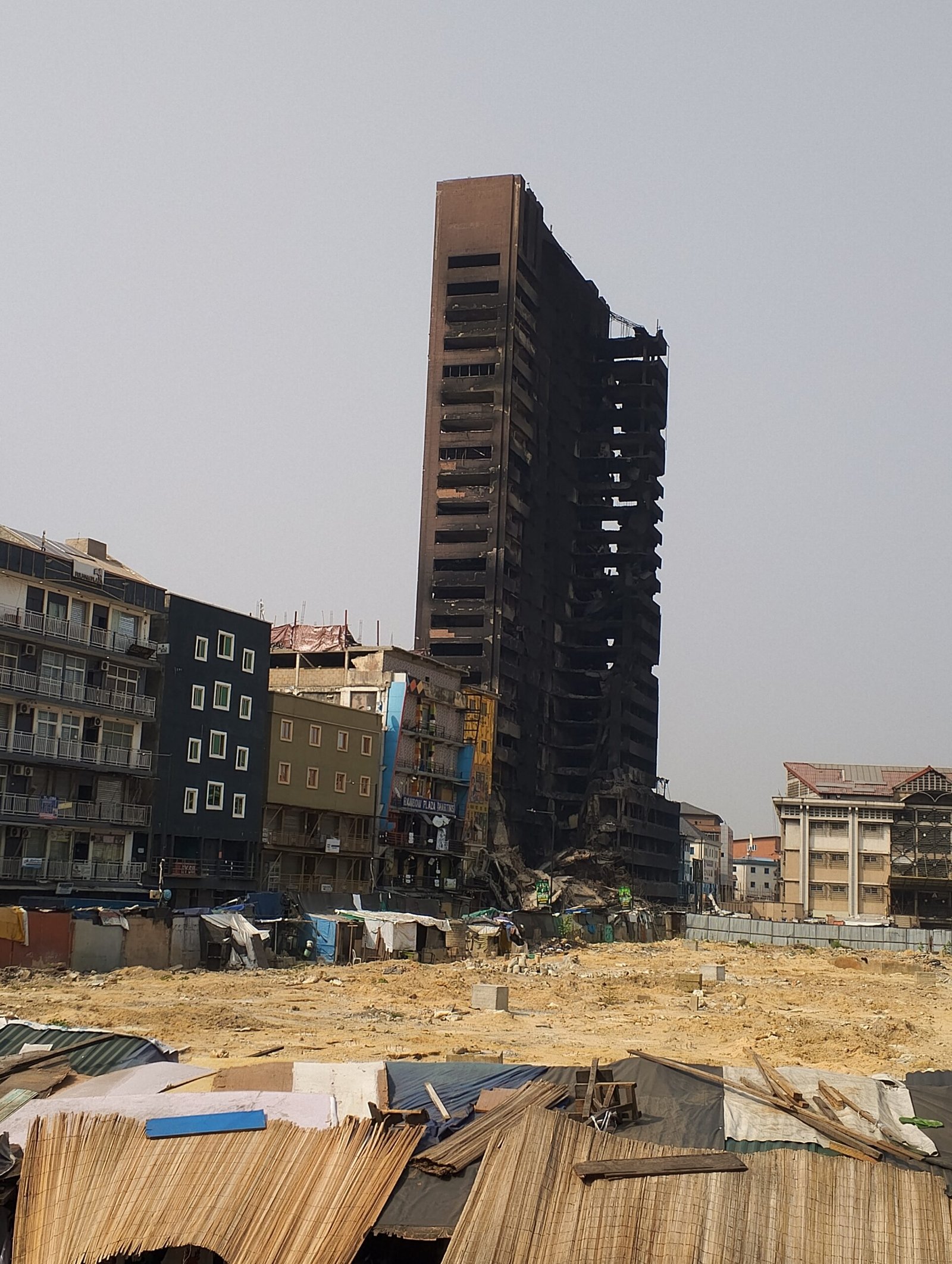
Remains of Chibest Unique Best Concept Limited, a clothes and fashion boutique located at Divine Plaza, Ijegun Road, Ikotun, Lagos. (Photo credit: Korede Abdullah/AHR,2026)
LAGOS, Nigeria – In a city where celebration and catastrophe often collide, the Christmas and New Year fires of 2025 left Lagos counting its dead, tallying billions in losses and confronting old questions about safety and enforcement. In this report, Korede Abdullah traces the human stories, official responses and troubling patterns behind the infernos that turned festive hope into ashes.
A New Year That Never Came

For Mrs. Mirabel Chinansa, the promise of a new year ended before it began.
On the night of December 31, 2025, she locked up her fashion boutique—Chibest Unique Best Concept Limited—at Divine Plaza along Ijegun Road, near Ikotun Roundabout, Lagos. The shop had just been restocked for the lucrative New Year rush, the shelves filled after months of careful planning and sacrifice.
With prayers on her lips, she headed to a crossover church service, unaware that before dawn, her life’s work would be reduced to smoke and rubble.
“Just a day before the fire, we had fully stocked the shop with new clothes and fashion items,” she told Africa Health Report in an exclusive interview, her voice heavy with disbelief.
By the time the new year arrived, her business no longer existed.
Inferno at Ikotun Roundabout
The fire broke out late on Wednesday, December 31, ripping through the storey building beside Ikotun Roundabout. As worshippers prayed their way into 2026, frantic phone calls reached Mrs. Chinansa.
“Before we could get there, the fire had already escalated,” she said.
By the time she arrived, flames had consumed her boutique entirely. Nothing was salvaged. Fire extinguishers, she explained, were stored inside the shops—rendered useless once the blaze intensified.
₦600 Million in Ashes
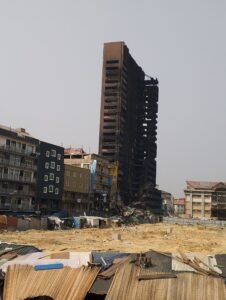
Standing before the charred remains of her livelihood, Mrs. Chinansa estimated her losses at over ₦600 million. The figure represents more than merchandise—it reflects years of labour and the livelihoods of workers who depended on the business.
“It is emotionally draining and financially crippling,” she said.
Yet amid the devastation, she expressed gratitude that no lives were lost.
“Thankfully, there were no casualties. No life was lost, and no one was reported injured,” she added, appealing to government authorities and emergency agencies for relief and stronger enforcement of fire safety standards in commercial centres.
Her story would soon echo across Lagos.
When Christmas Turned to Mourning
If Ikotun mourned property, Lagos Island mourned lives.
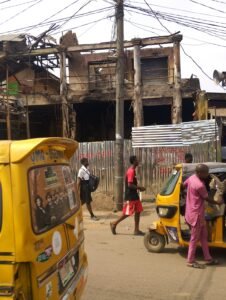
On Christmas Eve, December 24, 2025, fire tore through the 25-storey Great Nigeria Insurance (GNI) building on Martins Street, transforming what should have been a night of celebration into a scene of horror.
The blaze did not merely scar the skyline—it exposed the deadly consequences of congestion, unsafe commercial conversions and weak compliance with safety regulations in Africa’s largest city.
Death Toll and Disputed Numbers
By early January 2026, official figures placed the death toll at 12 after more bodies were recovered from the rubble.
But witnesses told Africa Health Report that the true number may be higher.
Some claimed that as many as 15 bodies were retrieved by rescuers privately hired by desperate families. Images of three brothers and the husband of a pregnant woman circulated widely on social media, identified as among those trapped inside, deepening public grief and anger.
Voices from the Fire Scene
Eyewitnesses recalled chaos as flames raced upward from the fourth floor.
“We heard a loud bang, then thick smoke started pouring out,” said Ibrahim Lawal, a trader who stored textiles in the building.
“People were shouting from above, throwing documents and bags down. Before help came, the fire had already climbed several floors.”
Investigators say the fire spread rapidly because highly combustible materials—textiles, clothing and stored goods—were crammed into spaces designed as offices, not warehouses.
Rescue Efforts Under Extreme Conditions
Emergency responders confirmed that about seven floors partially collapsed, trapping occupants and complicating rescue efforts.
The Lagos State Fire and Rescue Service said eight males, including a firefighter, were rescued with injuries, while five others—three males and two females—were treated for minor injuries and discharged at the scene.
“The heat was extreme, and access was difficult because of congestion and the building’s height,” a Deputy Head of the Lagos State Fire Service told this newspaper, noting that residual fires reignited hours after initial containment.
From Rescue to Recovery
As hopes of finding survivors faded, operations shifted from rescue to recovery.
The Federal Government, through the National Emergency Management Agency (NEMA), deployed heavy-duty equipment supplied by the China Civil Engineering Construction Corporation (CCECC) to clear debris.
NEMA’s Lagos head, Olatunde Muhammed, described the operation as complex due to structural instability.
“Significant progress has been recorded with the controlled removal of debris and recovery of four bodies,” he said, adding that remains were handed to the Lagos State Environmental Health Monitoring Unit for forensic identification, while military and police secured the area.
Government Response and Demolition Order
During a visit to the site, Lagos State Governor Babajide Sanwo-Olu ordered the demolition of the GNI building, calling the disaster a grim reminder of unsafe commercial practices.
He announced the closure of nearby markets to allow emergency operations and warned that surrounding structures might also be removed.
“Improper generator use, shops built close to electricity transformers and poor compliance with safety standards are risks we can no longer ignore,” the governor said, pledging to personally oversee recovery and rehabilitation.
When this reporter visited the scene, all surrounding buildings had been cordoned off.
Economic Ruin Beyond the Flames
Beyond human tragedy, the fires inflicted deep economic wounds.
“Everything I own was inside—goods worth millions,” said Funke Adeyemi, an imported clothing dealer. “Insurance did not cover us, and now we are stranded.”
Similar losses were reported at Arena Shopping Plaza and other parts of Lagos during the Yuletide, where electrical faults, unsafe cooking practices and overcrowded living spaces triggered fires that displaced families and wiped-out livelihoods.
A Pattern of Failure and Stark Statistics
Fire safety experts say the GNI inferno reflects a pattern of regulatory failure.
“You cannot convert a high-rise office building into stacked warehouses without upgrading fire detection, suppression and escape routes,” an urban safety consultant said.
Official figures underscore the scale of the crisis. Lagos recorded 1,922 fire incidents in 2025, the highest in Nigeria, followed by the Federal Capital Territory with 338 and Kaduna with 50, according to The Development Report.
Data from Global Forest Watch estimate that fires cost Nigeria ₦6 trillion in losses between 2013 and 2017 alone.
Between Reforms and Reality
Authorities insist progress is underway.
Lagos State Fire and Rescue Service Controller-General Margaret Adeseye said the agency responded to 2,617 emergency calls in 2025, including 1,685 fire incidents, rescuing 473 victims alive.
Properties worth ₦118.3 billion were saved against losses of ₦19.72 billion, she said, crediting improved capacity and a new Fire and Rescue Service Law signed by Governor Sanwo-Olu.
Yet as Lagos clears the ashes of Christmas 2025—from the ruins of the GNI building to Mrs. Chinansa’s burnt boutique in Ikotun—victims share a single plea: that lives and livelihoods lost during celebrations must finally compel action.
Without stricter enforcement, safer urban planning and collective responsibility, the Yuletide may continue to arrive not with joy, but with sirens, smoke and sorrow.
About the Author

 Mirian Gom

 Oluwatobi Adu