
WHO Launches Global Traditional Medicine Library to Boost Research
 Oluwafunbi Bello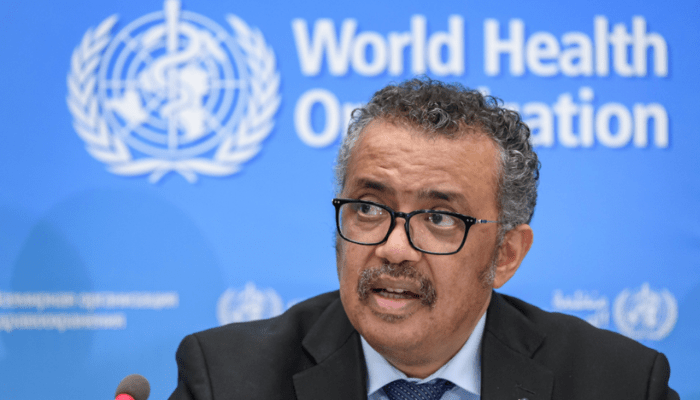
WHO-DG, Dr Tedros Adhanom Ghebreyesus
ABUJA, Nigeria – The World Health Organisation (WHO) launches a first-of-its-kind digital Traditional Medicine Global Library, consolidating more than 1.6 million resources to expand access to trusted knowledge and accelerate research worldwide.
The platform, unveiled on Monday at the close of the second WHO Global Summit on Traditional Medicine in New Delhi, brings together scientific studies, Indigenous knowledge and policy resources on traditional medicine.
WHO says the library features advanced tools, including Evidence Gap Maps and an AI-powered assistant, TMGL GPT, designed to help researchers, policymakers and health professionals identify credible evidence and research priorities.
Innovation takes centre stage at the summit with the launch of Health & Heritage Innovations (H2I), an initiative supporting breakthrough ideas that integrate traditional medicine with technologies such as artificial intelligence, genomics and digital health.
From more than 1,000 submissions, 21 finalists are selected to enter a year-long acceleration programme offering scientific guidance, regulatory support and access to policymakers and investors.
WHO also announces the Strategic and Technical Advisory Group on Traditional, Complementary and Integrative Medicine (STAG-TM), a new body of 19 independent experts tasked with shaping research priorities and standards.
At its inaugural meeting, the group prioritises evidence generation, digital innovation, knowledge preservation and workforce capacity building.
Countries endorse the Delhi Declaration, with 26 Member States committing to integrate traditional medicine into primary healthcare, strengthen regulation, invest in research and build interoperable data systems. “Through the Delhi Commitment, countries have agreed not only on why traditional medicine matters, but on how to act,” WHO Director-General Dr Tedros Ghebreyesus says.
He adds that traditional medicine can help address noncommunicable diseases, inequitable access to care and climate change while supporting culturally grounded, person-centred health systems.
About the Author

 Oluwatobi Adu
 Korede Abdullah