


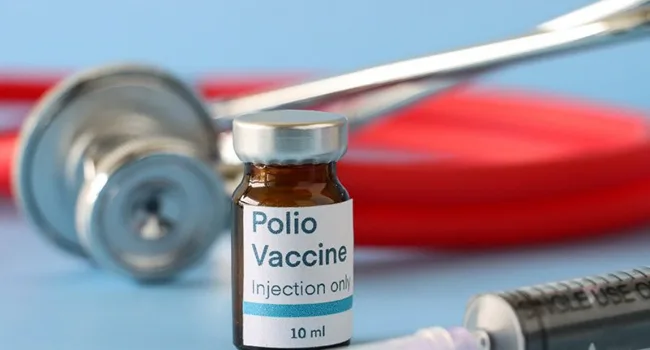
KATSINA, Nigeria – The Katsina State Government is targeting 2,688,730 children aged between zero and 59 months in a polio vaccination campaign scheduled to begin on Saturday, November 7, 2026.
The exercise will cover 28 of the state’s 34 local government areas, 299 wards and more than 17,000 settlements, according to the State Primary Health Care Agency.The State Health Educator and Health Promotion Officer of the agency, Dr Mukhtar Mahmud, announced the campaign on Thursday, November 5, during a mass mobilisation dialogue at the State Polio Emergency Operations Centre in Katsina. Six local government areas — Bindawa, Dutsi, Kankia, Kusada, Safana and Sandamu — will not be covered in this round of vaccination.
Mahmud said vaccination teams would use house-to-house visits, transit teams, fixed posts and temporary vaccination points to reach eligible children. The campaign will administer the novel Oral Polio Vaccine Type 2 (nOPV2), bivalent Oral Polio Vaccine (bOPV) and fractional Inactivated Polio Vaccine (fIPV), in line with approved health guidelines.
He said the exercise would include two days of directly observed vaccination, four days of house-to-house administration and two days of mop-up activities to reach children missed during the initial rounds. The campaign will also incorporate maternal, newborn and child health services through the Maternal, Newborn and Child Health Week and the SARMAAN II Project.
Mahmud urged parents, journalists, social media influencers, National Youth Service Corps members and U-Reporters to support the campaign by sharing accurate information, countering vaccine-related misinformation and encouraging families to present eligible children for immunisation. He said community participation would be essential to reaching the target and protecting children against polio.
The campaign’s success will depend not only on the number of children reached but also on ensuring that eligible children are not missed, particularly in hard-to-reach communities and settlements affected by access or security challenges.





Join the conversation