



MAKURDI, Nigeria – More than 1,000 children displaced by insecurity in Benue State have been enrolled in learning programmes supported by the United Nations Children’s Fund (UNICEF), as the agency steps up efforts to restore access to education for children affected by the humanitarian crisis.
UNICEF Education Specialist at its Enugu Field Office, Believe Eke, disclosed this on Thursday in Makurdi during the presentation and validation of the Benue State Education Needs Assessment Report.
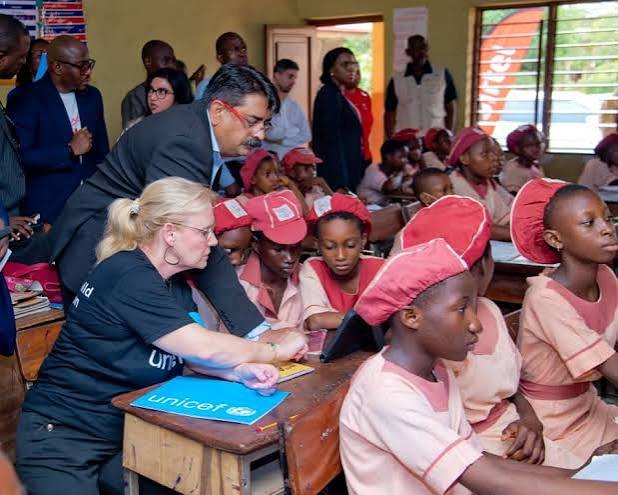
Eke said UNICEF was also training learning facilitators, distributing educational materials and renovating damaged classrooms to provide safer and more accessible learning opportunities for displaced children. He cited the renovation of classrooms at the Abagana Internally Displaced Persons (IDP) camp, where roofs had been damaged, as part of the intervention.
The agency is also providing psychosocial support to teachers and learners to help them cope with the effects of displacement. “Because of the crisis, these children are not where they want to be. While we are providing learning, we are also providing psychosocial support to help them cope with their experiences,” Eke said.
He said an assessment conducted in July 2026 by UNICEF, the Benue State Ministry of Education and Knowledge Management, and the State Universal Basic Education Board identified insecurity, inadequate classrooms, poor sanitation and limited learning opportunities as major barriers to education in affected communities.
The assessment also highlighted the need for flexible learning arrangements for displaced children who cannot attend conventional schools.
Earlier, the Commissioner for Education and Knowledge Management, Margaret Adamu, represented by the Permanent Secretary, Helen Nambativ, said the report would guide education planning and resource allocation in the state.
She said its findings would help the government and development partners address gaps in access, equity and learning outcomes, while urging stakeholders to turn the recommendations into practical interventions.




Join the conversation