


ABUJA, Nigeria – The Nigerian Meteorological Agency (NiMet) is working with development partners to strengthen climate-based agricultural advisories ahead of the 2027 farming season, in an effort to help farmers make better decisions on planting, crop management and other weather-dependent activities.
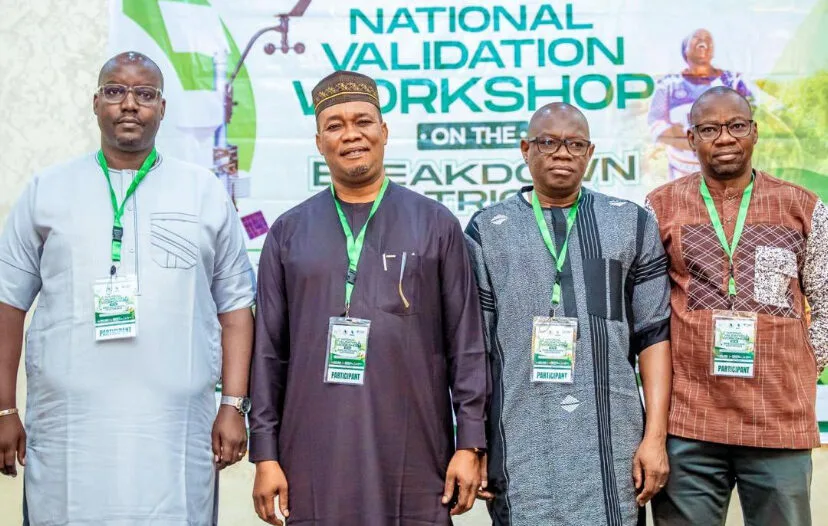
The initiative was discussed at a two-day National Validation Workshop on Breakdown Matrices held from November 4 to 5 in Abuja. The workshop brought together NiMet, the African Centre of Meteorological Applications for Development, the AGRHYMET Regional Climate Centre, and the Alliance of Bioversity International and CIAT under the ACCORD Project, funded by the Gates Foundation.
Speaking at the workshop, NiMet’s Director-General and Chief Executive Officer, Professor Charles Anosike, said climate forecasts must provide more than general weather information; they should guide practical decisions that improve agricultural production and protect farmers’ livelihoods. “The value of climate forecasts lies in their ability to inform decisions, improve agricultural practices and protect livelihoods,” he said.
Anosike described the Breakdown Matrices as a link between seasonal climate predictions and practical farming recommendations. He stressed that advisories must be scientifically sound, relevant to local conditions and presented in language farmers can understand.
Representatives of the partner organisations also highlighted the need to translate seasonal climate scenarios into recommendations suited to different agro-ecological zones and crop requirements.
The initiative is expected to support NiMet’s 2027 Seasonal Climate Prediction by strengthening the agency’s capacity to provide timely and inclusive agricultural advisories. It is also intended to improve the use of climate information in farming decisions, strengthen preparedness for weather-related risks and connect early warning systems with practical action. However, the effectiveness of the initiative will depend on whether the advisories reach farmers in accessible formats and early enough to influence decisions on the farm.





Join the conversation