
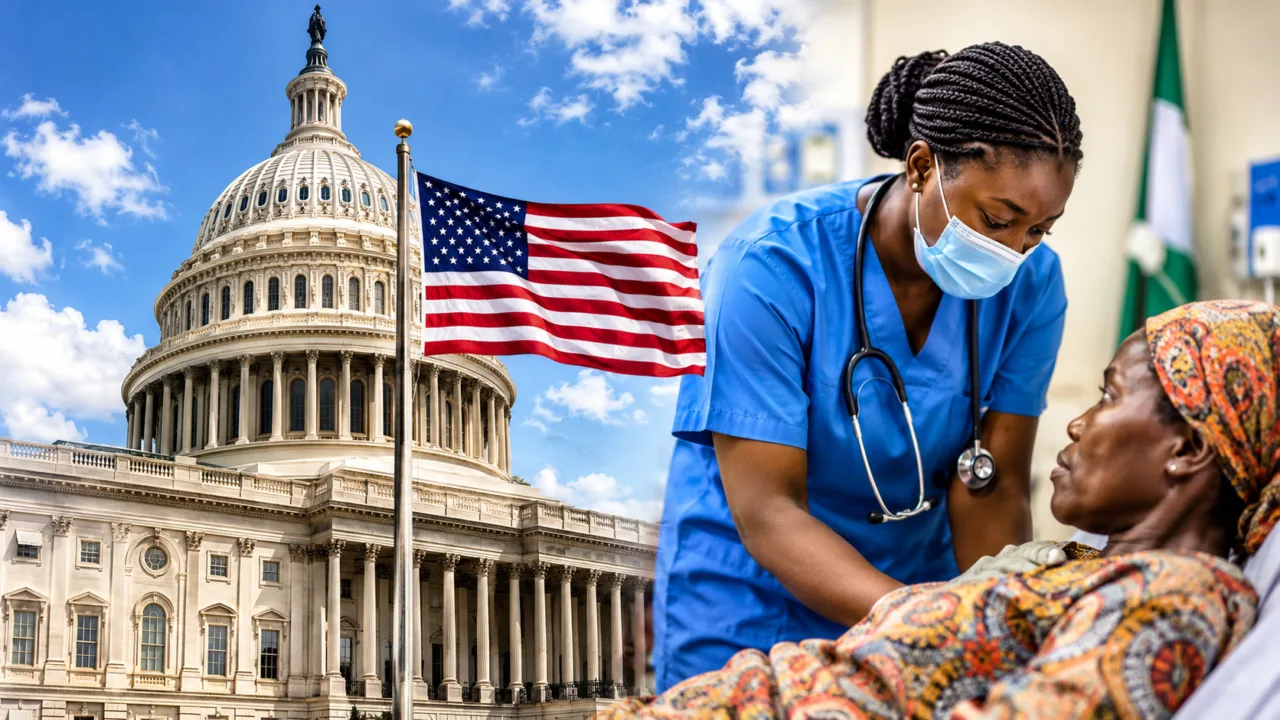
ABUJA, Nigeria – The new Democratic majority in the US Congress could challenge Trump’s aid restrictions and press for more reliable health funding for Nigeria. Keeping HIV treatment, tuberculosis testing and other essential services running will also depend on whether Abuja and the states deliver on their own funding pledges. Mirian Gom writes.
The Democratic Party’s capture of both chambers of the US Congress gives lawmakers an opportunity to challenge aspects of President Donald Trump’s foreign assistance policies. But for Nigeria, where changes in US aid have disrupted essential health programmes, the bigger question is whether the shift in Washington will lead to more predictable funding and a more sustainable health system.
The new majority can scrutinise how the Trump administration spends money that Congress has approved and press for more predictable disbursements. For Nigeria, that could buy time to strengthen domestic health financing while keeping essential services running. Under a five-year health agreement with the United States, the Federal Government and the states have a role in turning that opportunity into funding that reaches hospitals, primary health centres and community programmes.
Trump’s Aid Restructuring and The Vulnerability of Nigeria’s Health Response
Shortly after returning to office in January 2025, Trump ordered a 90-day pause on new US development assistance obligations and disbursements while his administration reviewed existing programmes. The overhaul led to the cancellation of numerous awards and shifted much of the remaining aid administration to the State Department. Waivers allowed some life-saving services to continue, but gaps remained in activities that help people get diagnosed and stay in care.
The consequences extended beyond medicines and medical supplies. US assistance also supports laboratory services, disease surveillance, health workers and community outreach. A programme can retain access to medicines while losing the staff, transport or community networks it needs to get those medicines to patients. Nigeria’s HIV response illustrates that vulnerability
According to UNAIDS, external partners historically financed more than 80 per cent of the national response. After the US funding pause, the Federal Government allocated an additional $200 million to protect HIV treatment. Prevention services for key populations continued to face difficulties and plans to expand some harm-reduction programmes were dropped after external funding was lost. The emergency allocation helped protect patients already receiving treatment. Sustaining the wider response also requires funding for testing, prevention and outreach.
Hiv And Tuberculosis: The Programmes At Stake
The US President’s Emergency Plan for AIDS Relief (PEPFAR) has supported HIV testing, treatment, laboratory services and efforts to prevent mother-to-child transmission. UNAIDS estimates that Nigeria recorded 67 per cent fewer new HIV infections in 2024 than in 2010. The funding disruptions of 2025 exposed how easily that progress could be undermined if testing and outreach decline, particularly among people who face barriers to accessing care.
Nigeria accounted for an estimated 4.8 per cent of new tuberculosis (TB) cases worldwide in 2024, according to the World Health Organisation. It was among eight countries that together accounted for about two-thirds of the global total. US assistance supports TB control through bilateral programmes and contributions to the Global Fund. For Nigeria, continuity means keeping community referrals, specimen transport and laboratory testing working, alongside treatment and follow-up. People living with HIV face a higher risk of developing active TB, making integrated screening and care especially important.
The restructuring also has implications for malaria prevention, maternal and child health, and reproductive health. KFF reports that the Trump administration froze or eliminated funding for most global family planning and reproductive health activities from early 2025, even as Congress continued to approve funds for them. In Nigeria, the wider concern is that programmes can share staff, laboratories and referral networks. Disruption to one part of that system can affect several services at once.
The nearly $2 billion agreement: Nigeria’s opportunity or another funding vulnerability?
Nigeria and the United States signed a five-year health memorandum of understanding on 19 December 2025. The Federal Government put the expected US grant funding at nearly $2 billion from April 2026 to December 2030, while the US State Department put its intended commitment at nearly $2.1 billion. Nigeria pledged to devote at least six per cent of actual annual federal and state expenditure to health. The Federal Government projects that this could mobilise nearly $3 billion in domestic financing over the agreement period.
The agreement covers HIV, TB, malaria, maternal and child health, and investments in laboratories, disease surveillance and frontline health workers. It forms part of Trump’s America First Global Health Strategy, which places greater emphasis on bilateral agreements and domestic financing. Nigeria has good reason to fund more of its own health priorities. The risk is that external support could recede before domestic funding reaches the services that depend on it.
Both governments should publish what they expect to spend each year, what has been released and which programmes will receive it. Nigerians should be able to see how much reaches the states and how the agreement will support community organisations that serve people public facilities struggle to reach. The agreement also needs a plan for keeping essential services open if US appropriations or Nigerian budget releases fall short.
What Can The New Democratic-Controlled Congress Actually Change?
Congress has the power to appropriate funds and scrutinise how the executive branch spends them. In fiscal year 2026, it appropriated about $6 billion globally for PEPFAR, including $4.7 billion for bilateral HIV programmes and $1.3 billion for multilateral support, according to KFF. US bilateral TB funding stood at about $390 million. Those appropriations coexisted with cancelled awards and changes to how aid was delivered. For Nigeria, the figures show why a funding decision in Washington matters only when it translates into money available to programmes.
With control of both chambers, Democrats can use committee hearings to examine the effects of cancelled awards, demand reports on disbursements and negotiate conditions that protect treatment and prevention. Abuja can use that opening to seek a clear timetable for payments under the bilateral agreement and answers about who will cover services if funding is delayed.
The Trump administration retains substantial influence over programme implementation, and legislation can face Senate procedural hurdles or a presidential veto. A Democratic majority alone cannot restore every cancelled USAID award. For Nigeria, the more immediate gain would be stronger oversight of the new arrangements and greater certainty about the services they will fund.
Nigeria Must Turn the Aid Transition into A Domestic Financing Reform
The bilateral agreement gives Nigeria a chance to address longstanding weaknesses in health investment and budget execution. The Federal Government and the states should identify how they intend to meet the six per cent commitment and publish what they budgeted, released and spent. They should also report whether that spending kept medicines in stock, laboratories operating and community services available. State governments are central to that effort because of their role in hospitals, disease prevention and primary healthcare.
Nigeria should also strengthen procurement, expand health insurance coverage and invest in the health workforce. Local production of essential medicines and diagnostic supplies can reduce exposure to disruptions abroad. These investments should support existing national and state health plans, with clear responsibilities for financing and service delivery.
Federal and state governments should also agree on how to finance the work of civil society organisations and community health networks before external awards expire. Those organisations help people access HIV prevention, identify suspected TB cases and connect pregnant women with care. Greater national ownership will depend in part on whether Nigeria can sustain these services as funding arrangements change.
Beyond America’s Political Transition
The Democratic victory gives Nigeria an opportunity to press for predictable US support and clearer reporting under the bilateral agreement. Abuja and the states must use the same period to make their own commitments credible through timely releases, transparent spending and continuity plans for programmes most exposed to funding delays.
For Nigerians, the test is whether people living with HIV can collect their medicines on schedule, laboratories can keep testing for TB and primary health centres can continue serving mothers and children. The election gives Nigeria room to negotiate. Keeping those services available through the next change in Washington will depend on what Nigeria budgets and what it spends.

Join the conversation