
 Mirian Gom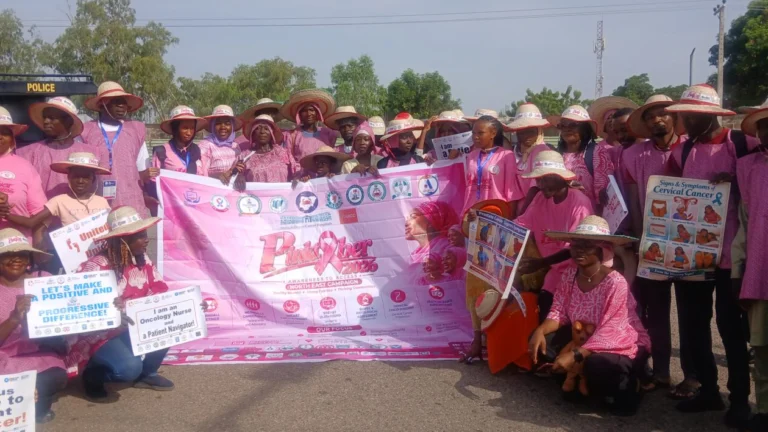
YOLA, Nigeria – A new cancer research initiative is investigating genetic mutations linked to aggressive breast tumours in young women across Northeast Nigeria, aiming to improve diagnosis and guide treatment decisions.
Chief Executive Officer of the Cancer Consciousness Initiative and Programme Lead of the Teleoncology Hub, Dr Hannatu Ayuba, disclosed this on Saturday in Yola, Adamawa State. She spoke during a Mega Rally Cancer Walk organised as part of the 2026 Pinktober Cancer Awareness Campaign.
Ayuba, a consultant radiation and clinical oncologist at the National Hospital, Abuja, said the study would examine tumour characteristics and genetic mutations among women in the region. “We are seeing more young women these days with aggressive tumours, women less than 40 years old, particularly from this axis,” she said.
The campaign, themed “Awareness to Access”, was launched in Adamawa State, with further activities planned for Borno, Taraba and Bauchi states.
Ayuba said Roche Pharmaceuticals had pledged support for more than 600 immunohistochemistry tests. Babcock University in Ogun State would also support polymerase chain reaction (PCR) testing for selected biomarkers.
The initiative will preserve samples under strict cold-chain conditions before transporting them for specialised genetic analysis. It is also establishing referral pathways for women with breast lumps to access ultrasound scans, biopsies, laboratory tests and multidisciplinary treatment teams.
The campaign initially planned to screen 500 women but has reduced its target to 300 across the participating states because of funding constraints, Ayuba said.
At the event, Dr Garba Joshua, a consultant radiologist and head of the Radiology Department at Modibbo Adama University in Yola, urged women to seek medical attention when they notice unusual breast changes.
He advised women to watch for breast lumps, changes in breast shape and abnormal nipple discharge, particularly bloody discharge, and report these signs promptly to healthcare professionals.
The research could improve understanding of breast tumour characteristics in the region. However, its findings and potential impact on treatment will depend on the test results and subsequent clinical assessments.
About the Author


 Oluwatobi Adu

 Hope Ajayi