 Mirian Gom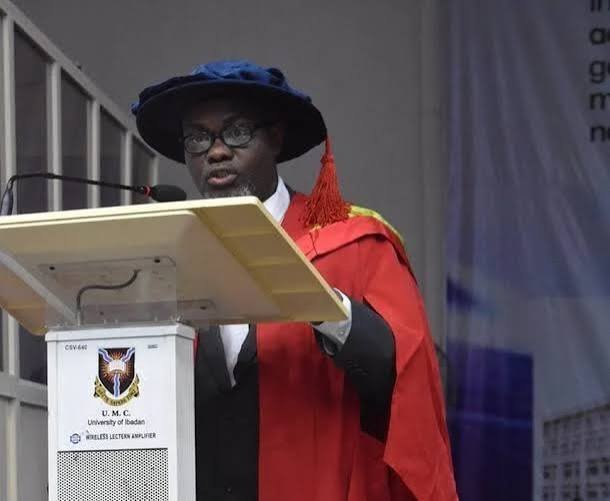
Vice-Chancellor, Professor Akeem Lasisi
OSUN, Nigeria – Female students account for more than two-thirds of the student population at the Federal University of Health Sciences, Ila-Orangun, Osun State, a trend the vice-chancellor says reflects changing attitudes towards girls’ education and professional opportunities.
Vice-Chancellor Professor Akeem Lasisi disclosed this on Monday at a press briefing ahead of the university’s maiden convocation, attributing the higher number of female students partly to the gradual removal of cultural barriers that have historically limited girls’ access to education.
According to figures presented at the briefing, the university has 3,332 students across four faculties, including 2,245 females, representing 67.38 per cent, and 1,087 males, representing 32.62 per cent.
Lasisi said the pattern was not necessarily unique to the institution, noting that some medical schools across Nigeria also have more female students or near-equal numbers of men and women. “Our society is evolving. We are evolving towards giving males and female equal chance. It is not about our school alone,” he said.
Lasisi said cultural assumptions about the suitability of certain professions for men or women should not determine access to education.
He cited nursing as an example of a profession often associated with women, arguing that such perceptions were cultural interpretations rather than reasons to restrict opportunities. “Once we break the cultural barriers, females will compete,” he said.
He added that the institution would assess prospective students on merit and their performance in the Joint Admissions and Matriculation Board (JAMB) process.
Lasisi also expressed confidence in the performance of female medical practitioners graduating from the institution, saying professional competence should be assessed through training, performance and adherence to established standards.
The vice-chancellor said the university would graduate 138 students during its maiden convocation. The graduands completed four-year programmes in Human Nutrition and Dietetics, Pharmacology, Microbiology and Biochemistry.
About the Author



 Oluwatobi Adu