 Korede Abdullah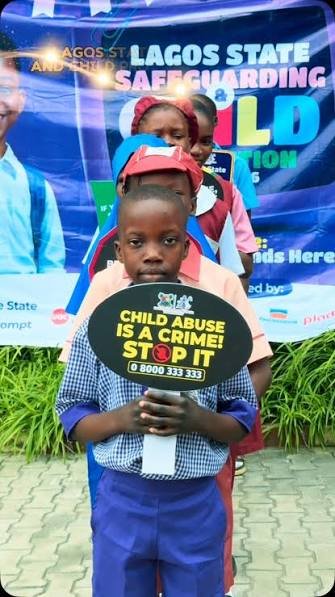
LAGOS, Nigeria- A child can find the courage to disclose abuse and still remain vulnerable if the adults around them fail to act. As Lagos intensifies its 2026 Safeguarding and Child Protection Week under the theme “My Silence Ends Here”, Korede Abdullah examines the barriers that keep children silent and whether Nigeria’s protection systems are strong enough to turn disclosure into safety, justice and recovery.
A Scar That Should Never Have Been There
Sometimes, the evidence of abuse cannot be hidden.
Ten-year-old Kolapo, a pupil of Islamic Primary School, Bode, Ibadan, Oyo State, was left with a permanent scar after her aunt allegedly pressed a hot iron against her back as punishment for bedwetting.
Her teacher, Mrs Fatima Agboola, also said Kolapo was given household tasks she considered excessive for her age.
Agboola became concerned after seeing the injury and learning how it happened. “She pressed a hot iron on her back, and the injury has left a permanent scar,” Agboola told Africa Health Report.
The aunt reportedly told the teacher that the punishment was meant to stop Kolapo from bedwetting.
But Agboola said the explanation could not justify the injury. “Children need protection and understanding. When a child makes a mistake, the response should be to guide the child, not to inflict an injury that may remain with her for the rest of her life,” she said.
Kolapo’s case leaves a troubling question: how many children suffer abuse without a trusted adult ever seeing the signs?
Why Children Stay Silent
That question sits at the heart of Lagos’ 2026 Safeguarding and Child Protection Week, held under the theme “My Silence Ends Here.”
The five-day programme is expected to reach more than 1,500 children across the state’s six education districts. It aims to help children recognise unsafe situations, understand reporting channels and know where to seek help.
But encouraging children to speak is only the first step.
A child may fear punishment, rejection, threats or disbelief. Speaking out can become even harder when the alleged perpetrator is a parent, relative, caregiver, teacher or another trusted adult.
Some children may also lack the words to explain what is happening. Others may not understand that grooming, exploitation, inappropriate touching or other behaviour amounts to abuse.
That is why adults must remain alert. A child-protection system cannot depend on children identifying abuse, finding a reporting channel and navigating the response alone.
The Numbers Behind Child Abuse
Data from the Lagos State Domestic and Sexual Violence Agency (DSVA) shows the scale of the challenge.
The agency has provided protective and psychosocial services to more than 3,600 children, including 2,213 girls who experienced various forms of domestic or physical abuse.
DSVA Executive Secretary Titilola Vivour-Adeniyi said the figures reinforce the need for prevention, awareness and early intervention.
Yet reported cases are unlikely to reflect the full scale of abuse. Fear, family pressure and dependence on alleged perpetrators can keep children and their families from reporting cases.
The DSVA has also handled more than 8,000 abuse cases in a single year, providing legal guidance, psychosocial and medical support, rescue interventions and temporary accommodation where necessary.
The figures reveal both the scale of reported abuse and the pressure on institutions expected to respond. But what happens after a child finally speaks?
When a Child Speaks, What Happens Next?
For Vivour-Adeniyi, disclosure must lead to protection rather than another source of trauma.
An adult who receives a disclosure should listen, establish the child’s immediate safety and connect the child with appropriate protection services. “When a child makes a disclosure, the appropriate response is to listen, ensure the child’s immediate safety and connect the child with the relevant protection and support services,” she said.
The response can shape what happens next.
A child who is blamed, threatened or repeatedly questioned may become more frightened and less willing to seek help again.
Teachers, parents, relatives, caregivers and neighbours therefore have a role to play. They must recognise changes in behaviour and respond appropriately when a child raises a concern.
Depending on the case, the response may involve medical care, psychosocial support, social services, law enforcement and legal assistance. And protection cannot end when the initial complaint is recorded.
A Reporting Channel Is Not Enough
For Edoamaowo Udeme, Executive Director of the Network Against Domestic Violence Foundation, reporting systems are only effective when children trust them.
A child may be told to report abuse but remain silent if they believe nothing will happen or fear the situation could become worse. “A reporting mechanism is meaningful only when children trust it and institutions are prepared to act when a complaint is made,” Udeme said.
That requires more than telephone numbers and complaint desks.
Schools and other institutions need clear reporting procedures, designated personnel, confidentiality safeguards and prompt referral systems.
They must also be able to protect children from further contact with an alleged perpetrator while a case is assessed.
Udeme said support must continue after disclosure. “Protecting a child does not end when a report is made. The child must be supported, protected from further harm and given access to the services needed for recovery,” she said.
What Nigerian Law Says
Nigeria’s legal framework already provides protections against child abuse.
Human-rights lawyer Wahab Olawale said Section 11 of the Child Rights Act 2003 protects children from physical, mental and emotional injury, abuse, neglect and maltreatment. It also prohibits cruel, inhuman or degrading treatment or punishment.
Section 32 criminalises the sexual abuse and exploitation of children. Section 39 provides measures aimed at the physical and psychological recovery and social reintegration of children who have experienced neglect, exploitation, abuse or degrading treatment.
But a law cannot protect a child who cannot access it.
Olawale said legal protections must translate into practical safeguards in homes, schools and communities.
That means cases must be reported, investigated and prosecuted where appropriate. Children affected by abuse must also receive medical, psychological and social support.
The challenge, therefore, is not simply whether Nigeria has laws against child abuse. It is whether those laws work when a vulnerable child needs them most.
Child Protection Needs More Than One Institution
Child abuse can create several needs at once.
A child may require medical treatment, psychological support, legal assistance, police intervention or temporary accommodation away from an unsafe environment.
Vivour-Adeniyi stressed that no single institution can tackle gender-based violence and child abuse alone. “Gender-based violence cannot be addressed by one institution,” she said.
Effective child protection therefore depends on cooperation among health workers, law enforcement agencies, lawyers, social workers, schools and civil-society organisations.
Lagos’ wider response to sexual and gender-based violence has also included support for male survivors.
The DSVA reported 920 gender-based violence cases involving male survivors during a recent one-year tracking period.
The figure reinforces the need for child-protection systems to recognise that both girls and boys can experience abuse and need appropriate support.
Accountability Must Follow Protection
At a Governor’s Commendation Night organised during the 2026 Domestic and Sexual Violence Awareness Month, Governor Babajide Sanwo-Olu, represented by Mrs Tawakalitu Toriola, said violence remained prevalent in homes, schools, workplaces and communities.
He urged survivors to report cases and preserve evidence.
According to the state, the DSVA has supported survivors through legal assistance, shelter and rescue operations over the past five years. More than 700 people have been charged to court, while over 160 convictions have been secured.
The figures show that institutional action can extend beyond awareness campaigns.
But effective child protection must begin much earlier.
It starts when a warning sign appears, when a teacher notices an injury, when a child makes a disclosure or when a report reaches an institution.
Beyond “My Silence Ends Here”
The most important question for Lagos’ safeguarding campaign may not be whether children are encouraged to speak.
It is whether the adults listening is prepared to act.
Kolapo’s scar shows what can happen when punishment crosses into abuse. The experiences documented by child-protection officials show why many children struggle to disclose abuse. Nigeria’s legal framework also demonstrates that children have a recognised right to protection.
The bigger challenge is implementation.
Parents and caregivers must recognise warning signs. Teachers need to know how to respond to disclosures. Schools need functioning safeguarding procedures. Health workers need clear referral pathways. Law-enforcement agencies must investigate appropriately.
Most importantly, children must know that seeking help will not expose them to further harm. “My Silence Ends Here” can become more than a campaign slogan only when a child who finally speaks finds a system ready to listen — and strong enough to protect.
For children like Kolapo, the real test of safeguarding is not how loudly adults tell them to speak.
It is what happens after they do.
About the Author

 Oluwatobi Adu
 Hope Ajayi