
 Hope Ajayi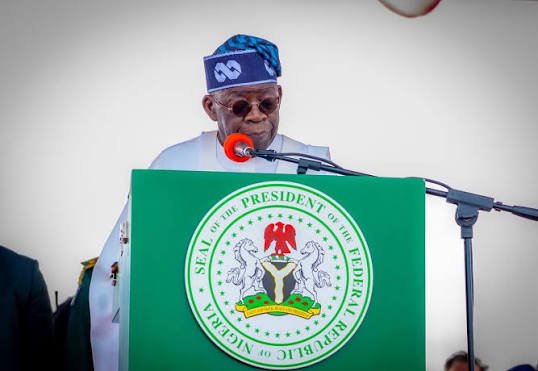
President Bola Tinubu
ABUJA, Nigeria – President Bola Tinubu has declared that Nigeria has moved beyond the most difficult phase of his administration’s economic reforms, saying the government’s focus is now shifting towards jobs, lower living costs and what he described as shared prosperity.
Tinubu made the declaration on Thursday in his Independence Day address marking Nigeria’s 66th anniversary, saying the reforms introduced since 2023 had addressed what he described as longstanding economic distortions. “The emergency treatment is over. The foundation has been repaired. The central economic task before us has changed,” Tinubu said. “Now, our purpose is simple: shared and widespread prosperity.”
The President said Nigeria’s economy had grown by more than four per cent in 2026, while inflation had fallen substantially from its peak, foreign reserves had been rebuilt, and the foreign exchange market had stabilised.
He also said Nigeria recorded more than $6 billion in non-oil export revenue in 2025, describing it as the country’s highest such revenue on record. These figures and characterisations were part of the President’s address.
Tinubu said the next phase of government policy would focus on reducing the cost of producing and transporting goods.
He listed increased agricultural production, mechanised farming, irrigation, improved access to seeds and fertiliser, storage facilities and better transportation infrastructure among the measures being pursued.
The President also cited roads, railways, ports, electricity and access to finance as areas requiring continued investment to reduce production and distribution costs. “When a farmer produces more cheaply, when fewer crops are lost between the farm and the market, when a manufacturer spends less on electricity, when a truck reaches its destination faster, and when the business environment fosters fair competition, all those savings will ultimately find their way into the price of goods in the market,” he said.
About the Author


 Korede Abdullah
 Oluwatobi Adu