FG Deploys 15 Ambulances to Ogun, Other States to Boost Emergency Medical Response
 Korede Abdullah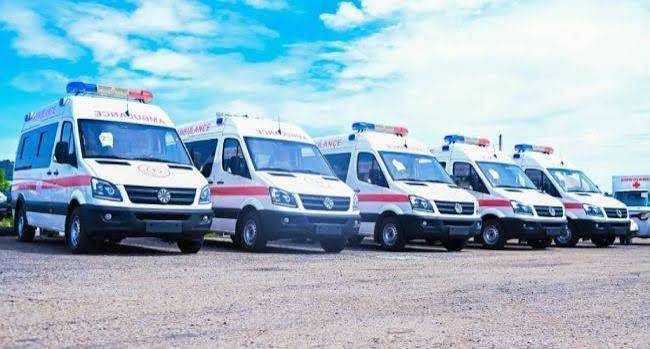
OGUN, Nigeria – The Federal Government has deployed 15 ambulances to Ogun State and other selected states under the National Emergency Medical Services and Ambulance System (NEMSAS), as part of efforts to improve emergency healthcare delivery and reduce preventable deaths across Nigeria.
The Minister of State for Health and Social Welfare, Dr. Iziaq Kunle Salako disclosed this on Friday during the distribution of Advanced Trauma Life Support (ATLS) and tricycle ambulances at the Federal Medical Centre (FMC), Abeokuta.
Salako said Ogun State received three Advanced Life Support (ALS) ambulances, one Basic Life Support (BLS) ambulance and nine tricycle ambulances, which will be distributed across selected federal and state health facilities to enhance emergency response capacity.
According to the minister, the Federal Government procured 145 tricycle ambulances, six boat ambulances, 15 BLS ambulances and 79 ALS ambulances during the first phase of the programme, alongside laptops, printers and communication equipment to support efficient emergency coordination.
Salako said the intervention integrates emergency transportation, trained personnel, communication systems, referral pathways and definitive hospital care into a coordinated national emergency response framework.
He noted that President Bola Tinubu considers emergency medical care a critical component of national health security and has prioritised investments aimed at improving emergency services across the country.
He warned against diverting the vehicles for non-emergency purposes. “These ambulances are not hearses for moving corpses or going to the market to purchase goods, including drugs and other hospital consumables,” he said.
The minister also disclosed that the Federal Government is working with the National Assembly to harmonise laws governing emergency medical services and first responders to strengthen coordination nationwide.
“Every siren must symbolise hope, every response must reflect preparedness, and every rescued life must stand as evidence of a health system that is becoming stronger, more humane and more responsive to the needs of the Nigerian people,” he said.
About the Author


 Mirian Gom