
 Hope Ajayi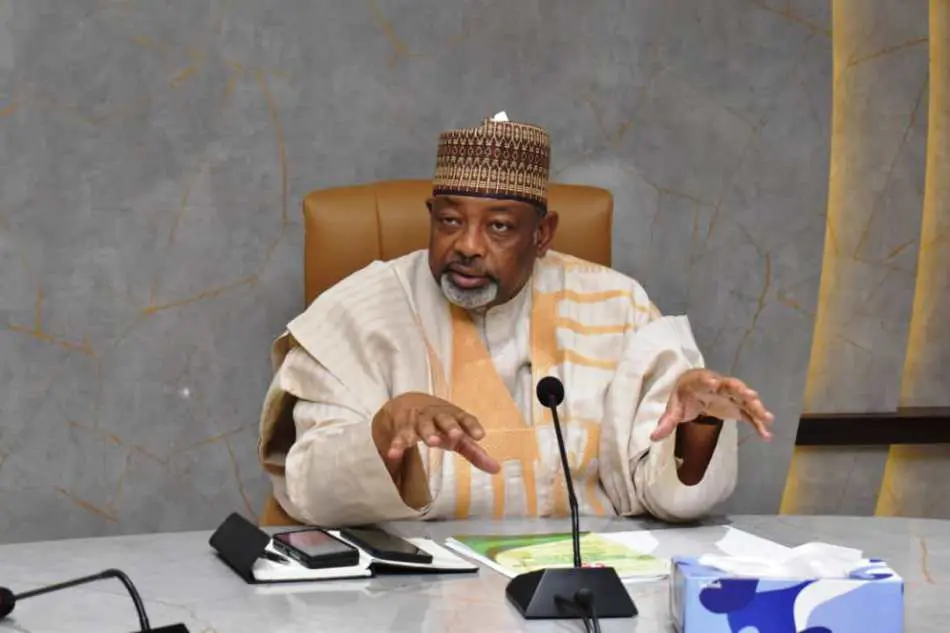
Minister of Agriculture, Abubakar Kyari
ABUJA, Nigeria – The Federal Government has unveiled an ambitious agricultural mechanisation plan aimed at producing between 2,000 and 4,000 tractors annually through a proposed mega assembly plant as part of efforts to modernise farming, boost food production and reduce reliance on imported agricultural machinery.
Minister of Agriculture and Food Security, Senator Abubakar Kyari, announced the initiative on Wednesday in Abuja during a national policy dialogue on agricultural mechanisation. He said the new National Agricultural Mechanisation Policy and Investment Strategy would shift Nigeria from government-led tractor procurement to a sustainable, private sector-driven mechanisation system.
Kyari explained that the policy would enable farmers to access agricultural equipment through leasing services and other innovative financing models while ensuring machinery remains operational and accessible.
“The real test is whether those machines become productive economic assets, maintained, financed, utilised, monitored and accessible to our farmers,” the minister said.
He disclosed that the Federal Government had already commenced the procurement and deployment of 2,000 tractors, alongside more than 9,000 agricultural implements and spare parts under the Renewed Hope National Agricultural Mechanisation Programme.
According to Kyari, establishing a local tractor assembly plant will strengthen domestic manufacturing, create jobs and significantly reduce Nigeria’s dependence on imported farm machinery.
The minister urged private investors, financial institutions, state governments and development partners to collaborate in expanding agricultural mechanisation nationwide.
“The Federal Government provides policy, standards, coordination and investment architecture. The states are to support land access, infrastructure and implementation, while the private sector is to invest, innovate and deliver services,” he said.
Kyari added that the initiative would create opportunities for young people, women and persons with disabilities as tractor operators, technicians, entrepreneurs and agricultural service providers.
Permanent Secretary of the Ministry of Agriculture and Food Security, Dr Marcus Ogunbiyi, said Nigeria must urgently bridge its mechanisation gap to improve farm productivity and reduce the physical burden on farmers.
He noted that the new policy extends beyond tractors to include equipment leasing, maintenance services, spare-parts manufacturing, digital fleet management, irrigation systems, operator training, post-harvest technology and agro-processing.
“A tractor without an operator is an idle asset. A machine without maintenance is a depreciating investment. Equipment without finance cannot reach the farmer,” Ogunbiyi said.
The government said the strategy is expected to strengthen Nigeria’s agricultural value chain, improve food security and accelerate the country’s transition towards climate-smart, technology-driven agriculture.
About the Author

 Mirian Gom

 Korede Abdullah
 Oluwatobi Adu