
 Oluwatobi Adu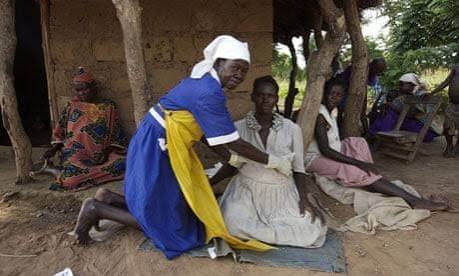
ABUJA, Nigeria – She was only 19. Hindatu had barely begun adulthood when pregnancy complications ended her life, days after losing her premature baby. Behind her family’s grief lies a story that is painfully familiar across Nigeria—one shaped by poverty, missed antenatal care, delayed treatment and a health system that too often fails women when they need it most. In this report, Oluwatobi Adu follows Hindatu’s final journey to reveal how preventable maternal deaths continue to expose the human cost of weak healthcare, social inequality and the barriers that deny many women a safe pregnancy and childbirth.
“We Lost the Baby… Then We Lost Hindatu”
For Malam Musa Badamasi, the memories remain painfully clear.
His voice still breaks when he speaks about his niece, Hindatu.
To protect the family’s privacy, his name has been changed.
“I still find it hard to believe that Hindatu is no longer here. She was just 19 years old.
She was the first child of my brother. Her father was a single father, but he died last year after he fell sick.
Our family is very poor. We couldn’t send her to school because there was no money. She never had the chance to go to school.
Life was not easy for her. She does not get better things to eat. Her husband was working as a gateman here in Abuja, and there was barely enough to take care of her.”
When Hindatu became pregnant, she moved in with her uncle.
Like many women facing financial hardship, she never attended antenatal care.
When labour started prematurely, the family sought help from a traditional birth attendant because it was the only option they believed they could afford.
“She never attended antenatal care. When she started having early contractions, we took her to a traditional health attendant. That was what we could afford at the time.
She gave birth prematurely, but the baby died after three days.
Then we lost Hindatu too. She died from complications. She was only 19.”
The loss was compounded by abandonment.
“Her husband ran away when she became pregnant. He did not take responsibility for her or the pregnancy, so she was left with us.”
Badamasi often wonders whether education could have changed her future.
“Sometimes, I just think about what her life could have been if she had gone to school. Maybe things would have been different.
I want Nigerians to try and educate the girl child. Don’t force them into early marriage. Let them go to school. Let them learn something and have a chance to make something out of their lives.
Hindatu was only 19. She had her whole life ahead of her. Losing her like this is something our family will never forget.”
Africa Health Report sought to speak with the traditional birth attendant who attended to Hindatu during labour, but efforts to reach the attendant through the family were unsuccessful. The family said the baby was born prematurely but could not establish what caused the early delivery.
When Delays Become Deadly
For obstetrician and gynaecologist, Dr. Kawthar Adeoti Adesope, Hindatu’s story reflects patterns doctors encounter far too often.
Many maternal deaths, she says, are caused not by a single complication but by a chain of delays.
“From my experience, the major reasons include late arrival at the hospital, excessive bleeding after delivery, high blood pressure during pregnancy (pre-eclampsia/eclampsia), infections, and prolonged labour.”
By the time some women reach hospital, critical opportunities have already been lost.
“When women come late, they are often already in critical condition. At that stage, even with medical intervention, it may be difficult to save their lives.”
Adesope says antenatal care plays a crucial role in identifying risks before they become life-threatening.
Premature labour, for example, can result from infections or pregnancy-related complications that regular check-ups may detect early.
But access to healthcare is only part of the challenge.
Hospitals themselves often struggle with shortages of beds, blood for transfusion, medicines, monitoring equipment and trained personnel.
“Lack of equipment and staff makes our work very challenging. Sometimes we do not have enough delivery beds, blood for transfusion, drugs, or monitoring machines.”
She also notes that many families fail to recognise warning signs such as persistent headaches, swelling of the face or legs, bleeding, fever, convulsions or reduced foetal movement.
Instead of seeking skilled care immediately, some rely on traditional remedies until complications become severe.
For Adesope, reducing maternal deaths requires stronger health facilities, earlier antenatal care, improved transportation, greater community awareness and stronger family support for pregnant women.
“Simple changes include regular antenatal visits, early hospital delivery, community education on danger signs, better transportation to health centers, and improving hospital facilities and staffing.”
A National Crisis Behind One Family’s Tragedy
Hindatu’s story mirrors broader challenges confronting maternal healthcare across Nigeria.
According to UNFPA Nigeria Representative Muriel Mafico, many women still face multiple barriers to safe childbirth, including poverty, delays in seeking care, difficulty reaching health facilities, shortages of skilled health workers and weak primary healthcare systems.
Financial barriers remain especially significant.
Nearly 60 per cent of healthcare spending in Nigeria is paid directly out of pocket, meaning families often bear the full cost of treatment themselves.
For low-income households, those costs can determine whether a woman receives skilled medical care—or none at all.
Access to trained birth attendants also remains uneven.
Figures from the National Demographic and Health Survey cited by UNFPA show that the proportion of women assisted by skilled birth attendants during delivery increased from 38 per cent in 2013 to 45 per cent in 2024.
While that represents progress, it also means that more than half of Nigerian women still gave birth without skilled assistance in 2024.
The disparities are equally stark.
Skilled birth attendance reached 88 per cent in the South-East, compared with only 24 per cent in Adamawa, highlighting major inequalities in access to maternal healthcare.
The shortage of health workers further compounds the crisis.
According to Mafico, Nigeria faces an estimated 30,000-midwife shortfall, with rural communities among the hardest hit.
To address the gap, UNFPA says it is supporting the recruitment and training of community midwives, strengthening primary healthcare services and upgrading about 90 public health facilities through donor-supported programmes.
More Than a Medical Emergency
Maternal deaths are rarely caused by medical complications alone.
They often emerge from the intersection of poverty, gender inequality, weak education systems and limited access to healthcare.
Girls who leave school early are more likely to marry young.
Women living in poverty are less likely to afford antenatal care.
Families without financial security may delay seeking treatment until complications become life-threatening.
When hospitals are understaffed or under-equipped, those delays become even more dangerous.
Each missed opportunity increases the risk that pregnancy—a natural part of life—ends in tragedy.
The Lives Nigeria Can Still Save
Hindatu’s death cannot be undone.
Neither can the loss of her baby.
But experts say similar tragedies are largely preventable.
Expanding access to affordable antenatal care, increasing skilled birth attendance, strengthening primary healthcare, improving emergency obstetric services, investing in more midwives and reducing out-of-pocket healthcare costs could save thousands of lives.
Equally important are broader social investments—keeping girls in school, discouraging child marriage, improving nutrition and ensuring families understand the warning signs that require urgent medical attention.
For Hindatu’s family, those reforms come too late.
For thousands of other young women, they could mean the difference between life and death.
Because the greatest tragedy is not simply that women continue to die during pregnancy and childbirth—it is that so many of those deaths are preventable.
About the Author


 Mirian Gom
 Korede Abdullah