 Mirian Gom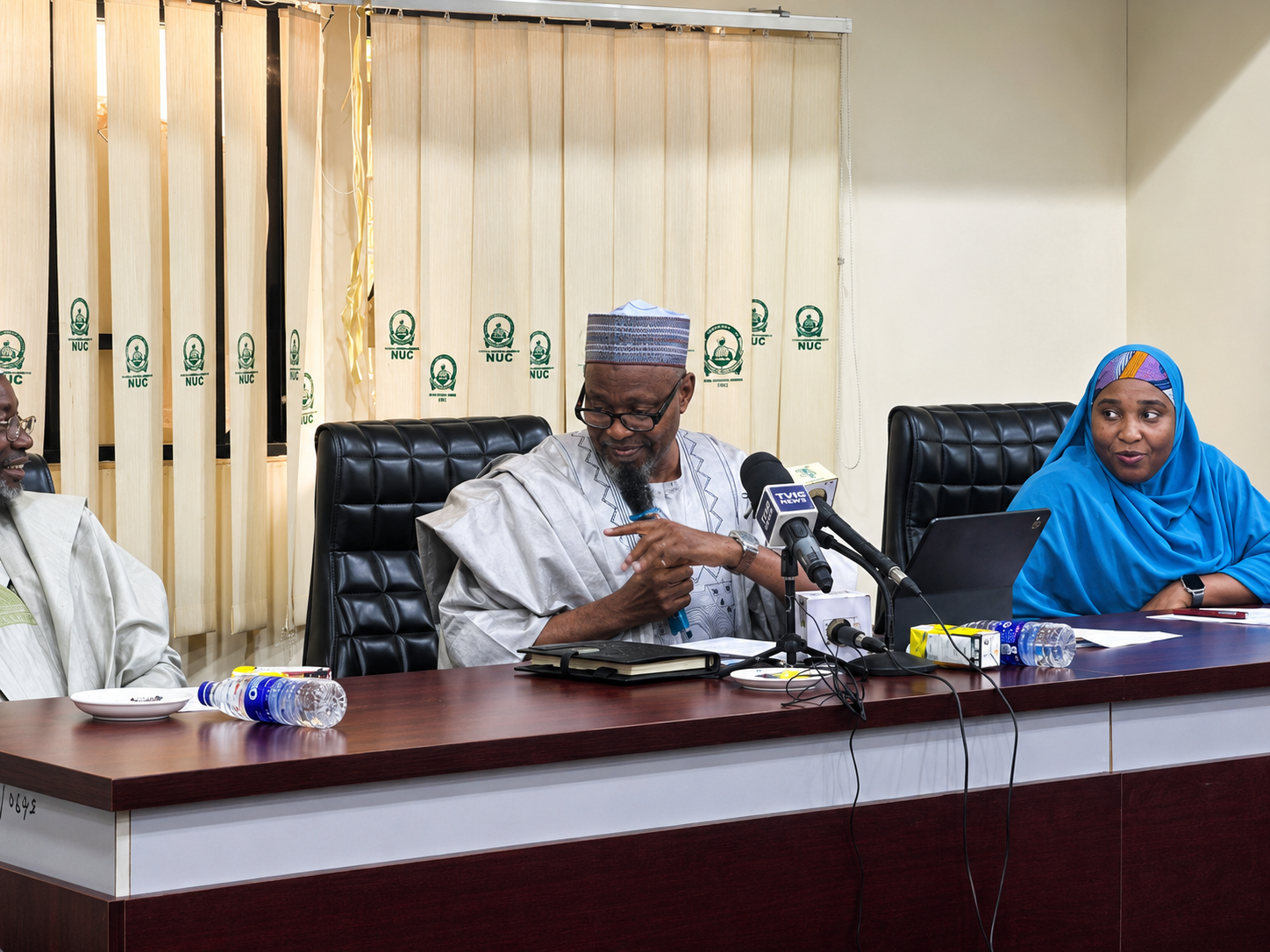
Governor Umar Namadi, NUC Executive Secretary Abdullahi Ribadu, and Minister of State for Education, Professor Suwaiba Said Ahmad
ABUJA – The National Universities Commission (NUC) has approved the Jigawa State University of Medical and Allied Health Sciences, a move aimed at expanding Nigeria’s healthcare workforce as the country grapples with a persistent shortage of doctors and other medical professionals.
speaking on Thursday in Abuja, the Minister of State for Education, Professor Suwaiba Said Ahmad, described the university as a strategic investment in Nigeria’s health and education sectors.
“We are still lacking enough medical personnel to cater for the needs of Nigerian citizens,” she said.
She said the institution would increase the training of doctors, nurses, pharmacists, laboratory scientists and other allied health professionals, while urging its leadership to prioritise quality teaching, relevant research and community service.
NUC Executive Secretary Abdullahi Yusuf Ribadu said, “This is the first time in the Nigerian University System that a state government has acquired an existing private university,” he said.
Ribadu noted that Nigeria’s doctor-to-population ratio remains below the benchmark recommended by the World Health Organization, with the migration of healthcare workers continuing to worsen the shortage.
He said the commission would notify the Joint Admissions and Matriculation Board (JAMB), the Tertiary Education Trust Fund (TETFund), the National Youth Service Corps (NYSC) and the Nigerian Education Loan Fund (NELFund) of the institution’s new legal status, enabling eligible students to benefit from federal interventions available to public universities.
“We have to verify that you have the requisite facilities in terms of infrastructure and qualified staff before you can start those programmes,” Ribadu said, adding that the commission would continue to monitor the institution to ensure compliance with quality assurance standards.
Governor Umar Namadi revealed that Jigawa currently sponsors nearly 200 medical students abroad, a financial commitment the state hopes to reduce by training more health professionals locally.
“We needed a home-grown system that can take care of our needs,” Namadi said, explaining that the university would support the state’s expanding network of hospitals and primary healthcare centres with a steady supply of skilled medical personnel.
About the Author