Edino Chubiyo Cornelius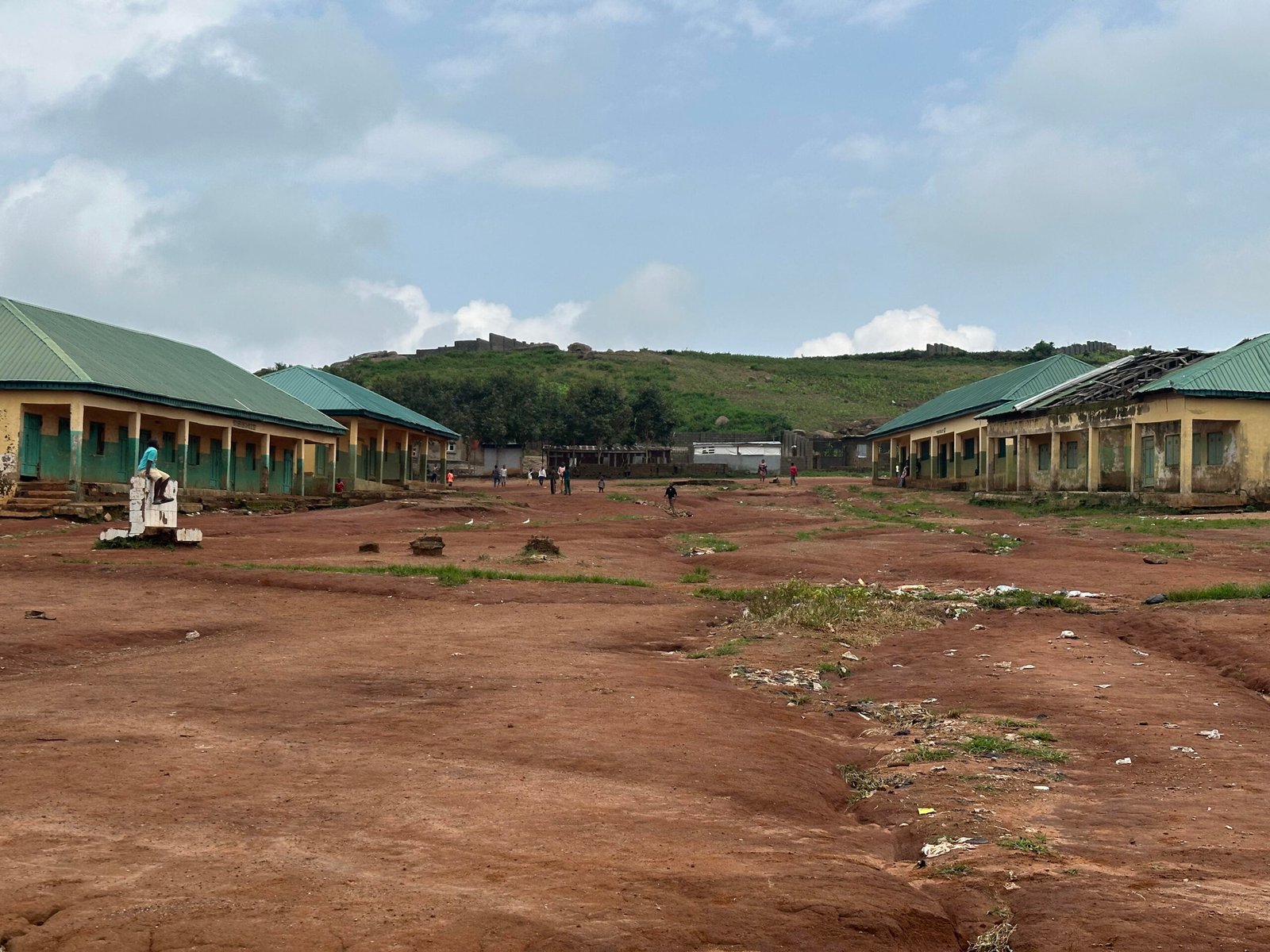
ABUJA, Nigeria – After security forces rescued abducted pupils and teachers from a school in Oyo State, attention has once again turned to the safety of Nigeria’s schools. More than a decade after the Chibok abduction shocked the world, many public schools still operate without perimeter fences, controlled entry points or dedicated security personnel. In this report, Edino Cornelius visits one such school in Abuja and examines why experts say governments must prioritise prevention rather than waiting for the next attack.
A Decade of School Attacks, Yet Many Schools Remain Defenceless
When security operatives rescued pupils and teachers abducted from a school in Oyo State in May 2026, the operation was widely celebrated as another successful response to a growing security challenge.
Yet the rescue also revived an uncomfortable question: Why are many Nigerian schools still so easy to attack?
More than 12 years after Boko Haram abducted 276 schoolgirls from Government Girls Secondary School, Chibok, Borno State, in April 2014, thousands of schools across Nigeria continue to operate without basic protective infrastructure such as perimeter fencing, controlled access gates and trained security personnel.
The Chibok abduction, which triggered the global #BringBackOurGirls campaign, was expected to become a turning point for school security.
Instead, attacks have continued.
In February 2018, insurgents abducted 113 schoolgirls from Government Girls Science and Technical College, Dapchi, Yobe State.
In December 2020, more than 300 boys were kidnapped from Government Science Secondary School, Kankara, Katsina State.
Between February and March 2021, armed groups abducted 279 girls from Government Girls Secondary School, Jangebe, Zamfara State, while hundreds of students were also kidnapped in Niger and Kaduna states.
The attacks have persisted in recent years.
In March 2024, nearly 287 pupils were abducted from Kuriga in Kaduna State.
On May 15, 2026, armed men kidnapped 48 pupils, their principal and a teacher from a school in Oriire Local Government Area of Oyo State before they were later rescued.
Only weeks later, terrorists reportedly attacked Government Day Secondary School in Lassa, Borno State, abducting more than 50 students and teachers while they were sitting for their NECO examinations.
A similar attack was also reported at a government school in Kogi State, where candidates writing the same examination were allegedly taken into the forest by gunmen.
Despite these repeated attacks, many public schools remain physically exposed.
One School That Anyone Can Walk Into
One such example is LEA Primary School, Katampe, Abuja.
During a visit to the government-owned school, Edino Cornelius observed that the premises have no perimeter fence, no controlled entrance and no visible security architecture restricting access.
Anyone can enter or leave the school compound without being challenged.
For pupils and teachers, the situation reflects a wider national concern about whether governments are investing enough in preventing attacks rather than responding after they occur.
“Anyone Can Enter Our School”
The Headmistress, Mrs. Iwu Anyanwu Chinyere, admitted the school’s greatest security weakness is its openness.
“Yes, the school has no perimeter fence, making it completely open. Anyone can come in and go out freely, and that is not a good situation.”
She said repeated theft forced her to personally employ night guards because no official security personnel had been deployed.
“Because there is no official security at night, I pay from my own money to keep security personnel around the school.”
According to her, worsening insecurity means governments can no longer delay investment in school safety.
“With the increasing cases of kidnapping, schools need to be secured. Something needs to be done immediately.”
Teachers Want Prevention, Not Promises
Teachers interviewed said the school’s openness exposes children to avoidable risks.
Mrs. Joy Ukwueze described the environment as unsafe.
“The school lacks adequate security, and the environment is completely open. There is a need to secure the premises to reduce the risk of pupils going missing or being exposed to danger.”
She believes perimeter fencing and improved access control would reassure both teachers and parents.
Parents Say Every School Day Comes with Anxiety
For many parents, reports of repeated school kidnappings have changed how they view education.
Mrs. Mariam Okafor said she worries every morning her daughter leaves for school.
“Ever since school kidnappings became common, I have been worried about my children. Schools should have trained security personnel and proper protection.”
PTA Calls for Action Before Another Tragedy
PTA Chairman Mr. Illorin argued that governments must abandon a reactive approach.
“Kidnapping is not new in Nigeria, but it has become more disturbing because schoolchildren are now among the targets.”
He called for perimeter fencing, controlled entry points and trained security personnel in schools, particularly those in isolated communities.
Experts Say Security Starts at the Gate
Security consultant Dr Ona Ekhomu said preventing attacks begins with basic physical protection.
“Perimeter fencing, controlled access points and trained security personnel are not optional. They are essential layers of protection.”
He added that governments, school authorities, communities and security agencies must work together to conduct regular security risk assessments and prepare schools for emergencies.
“Waiting until an incident happens before taking action leaves children unnecessarily exposed.”
From Chibok to Katampe: Have the Lessons Been Learned?
The vulnerability observed at LEA Primary School, Katampe, mirrors conditions in many public schools across Nigeria, especially in rural and underserved communities.
Although governments have introduced various school safety initiatives since the Chibok abduction, implementation has remained inconsistent, leaving many schools without even the most basic protective infrastructure.
Education experts argue that intelligence gathering alone cannot guarantee safety.
Physical security measures—including perimeter fencing, controlled access, trained personnel, emergency response plans and community surveillance—must become standard features of every school.
The Cost of Waiting
The successful rescue of abducted pupils in Oyo State demonstrated that Nigeria’s security agencies can respond effectively after an attack.
But rescue should never become the country’s primary strategy for protecting schoolchildren.
About the Author


 Mirian Gom