Nigeria Sets New Standards for Public Schools, Mandates Perimeter Fences, Solar Power
 Mirian Gom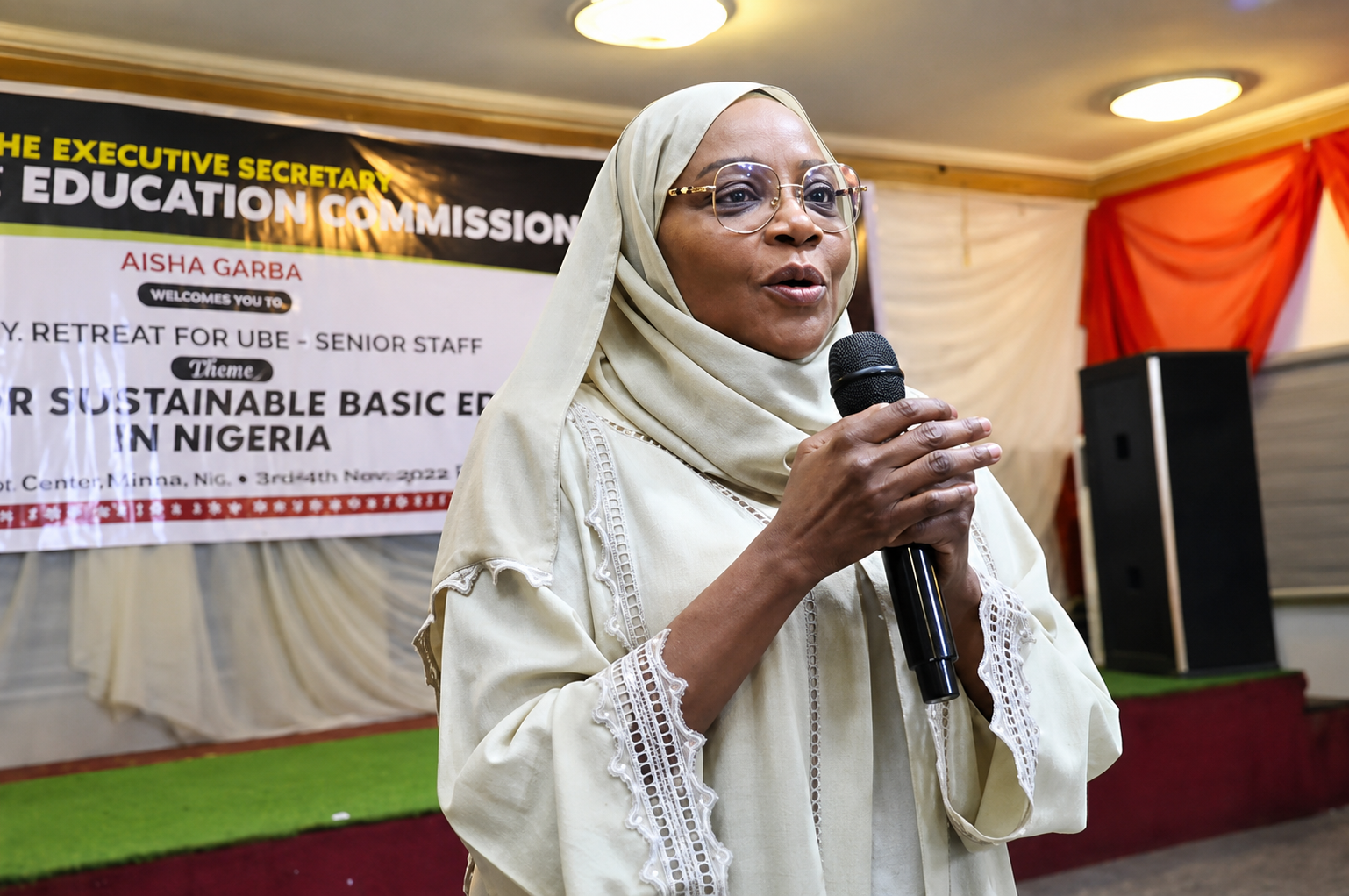
Executive Secretary, UBEC, Aisha Garba
ABUJA, Nigeria – The Universal Basic Education Commission (UBEC) has introduced new minimum infrastructure standards for public basic schools across Nigeria, declaring that every school must have perimeter fencing, solar-powered electricity, functional toilets and other essential facilities before being approved for use.
Executive Secretary of UBEC, Hajia Aisha Garba, announced the directive on Thursday during a media luncheon with education correspondents in Abuja, saying the commission is shifting from routine school construction to building safe, inclusive and technology-driven learning environments.
“We can no longer build schools without perimeter fences, gates, lighting and other critical facilities. Schools must provide a safe and conducive environment for teaching and learning,” she said.
Garba noted that the reforms are being implemented under UBEC’s 2025–2031 Strategic Blueprint, aligned with the Federal Government’s Renewed Hope Agenda, to improve learning outcomes and strengthen Nigeria’s basic education system.
She said that UBEC has facilitated the mobilisation of more than ₦100 billion in previously unaccessed matching grants by states and the Federal Capital Territory to support education infrastructure.
According to her, the investments have led to the construction of over 4,600 classrooms, renovation of more than 6,100 classrooms, provision of 2,780 toilets, 678 boreholes, and the distribution of over 334,000 pieces of school furniture nationwide.
Garba said UBEC has also invested over ₦20.4 billion in teacher professional development to improve classroom instruction, school leadership and accountability through the Effective Schools Programme and stronger School-Based Management Committees.
She further revealed that more than 7.8 million instructional materials have been distributed nationwide to improve literacy, numeracy and foundational learning.
“Education is a shared responsibility. Together, we can ensure every Nigerian child has access to safe, inclusive, equitable and quality basic education regardless of background or location,” she said.
About the Author

 Oluwatobi Adu
 Hope Ajayi
 Korede Abdullah