
 Mirian Gom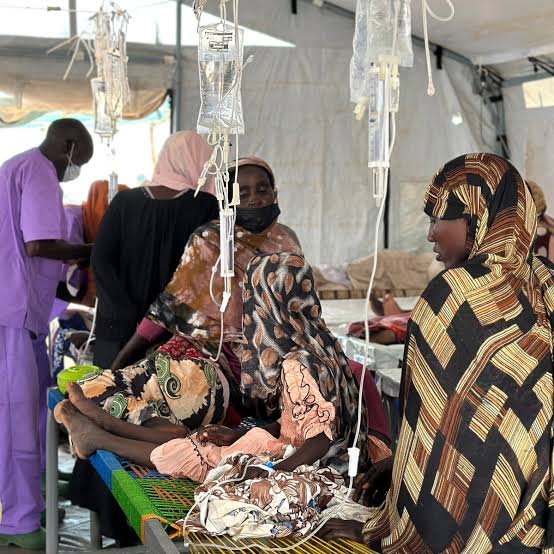
SUDAN – A worsening Sudan cholera outbreak has killed at least 120 people and left 1,102 others with suspected infections since May, as conflict and a collapsing healthcare system fuel the spread of the deadly waterborne disease, the World Health Organization (WHO) says.
The latest outbreak, officially declared this week by Sudanese authorities in the conflict-ridden West Kordofan State, marks the country’s third cholera wave in three years. Health officials warn the disease could spread rapidly as the rainy season intensifies, further limiting access to clean water and humanitarian assistance.
According to the WHO on Wednesday, the outbreak has emerged just two months after Sudan declared its previous cholera epidemic over in March. Between July 2024 and March 2026, more than 124,400 people contracted the disease and about 3,500 died, according to government figures.
WHO Representative in Sudan, Dr Shible Sahbani, says cholera, once considered a cyclical disease in the country, has become a near-constant public health emergency because of the ongoing conflict.
“Cholera used to come in a cyclic manner every three years. Now we are facing continuous outbreaks due to the conflict, constraints in access and limited supplies,” Sahbani tells reporters.
The outbreak appears to be spreading beyond West Kordofan after nearly 300 suspected cases and three deaths were reported in neighbouring North Kordofan. The United Nations has also warned that renewed fighting around the state capital, El-Obeid, could worsen the humanitarian crisis.
Sahbani says approximately 40 per cent of Sudan’s health facilities are no longer operational, while most of the remaining hospitals provide only limited services because of shortages of medical supplies, staff and funding.
“Forty per cent of health facilities are non-functional, and the remaining almost 60 per cent are only partially functioning, meaning they are providing only a few services or not enough to patients in the area,” he says.
About the Author