


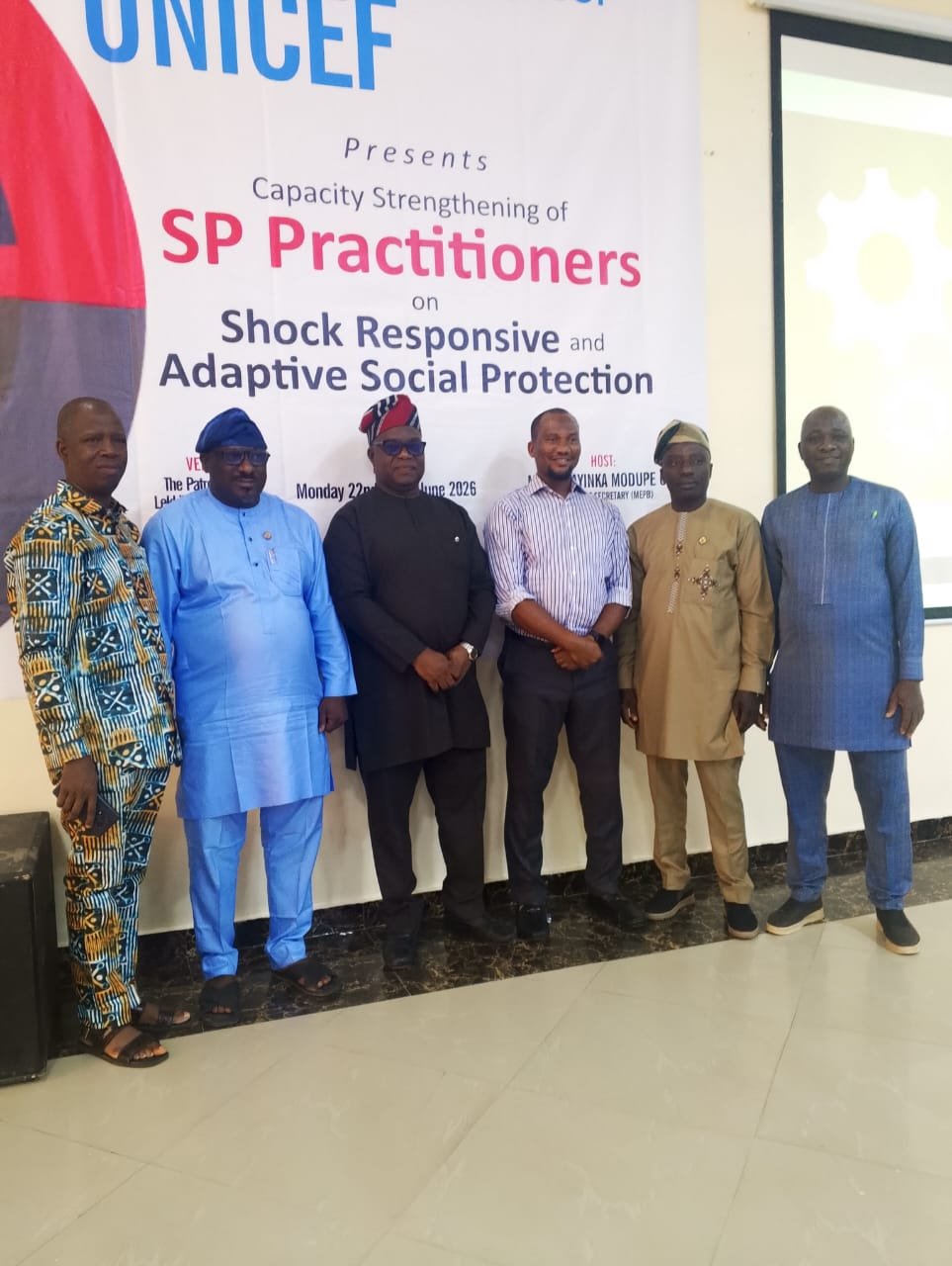
LAGOS, Nigeria – UNICEF has warned that economic shocks, climate disasters and health emergencies are pushing vulnerable families deeper into poverty, urging Lagos State to build stronger social protection systems capable of responding quickly to crises.
The United Nations agency said traditional welfare programmes must evolve as economic volatility, flooding, food insecurity and public health emergencies become increasingly frequent.
Speaking to Africa Health Report on Thursday, UNICEF Social Policy and Programme Manager, Muhammed Okorie said adaptive social protection had become an urgent necessity.
“Shocks are becoming more frequent, more intense, and more complex,” he said.
Okorie explained that economic hardship often affects children most severely by limiting access to healthcare, nutrition and education.
According to him, social protection systems should be redesigned to respond rapidly during emergencies.
“Adaptive social protection is designed to enable governments to quickly adjust to such changes. It strengthens government capacity to respond effectively to shocks through improved planning, targeting, benefit delivery and support mechanisms,” he said.
He described Lagos State’s Single Social Register as a critical tool for identifying vulnerable households and recommended expanding it to capture indicators such as malnutrition and out-of-school children.
The UNICEF official identified weak data systems, inadequate funding and poor coordination as major barriers to effective social protection.
He urged policymakers to move away from what he described as a reactive approach to crises.
“The goal should be to move beyond traditional safety nets that merely catch people when they fall. Instead, social protection systems should function like a trampoline—helping people bounce back stronger,” Okorie said.
Join the conversation