
Trading Degrees for Survival: Why Nigerian Youths Still Need Education in a Changing Economy
 Oluwafunbi Bello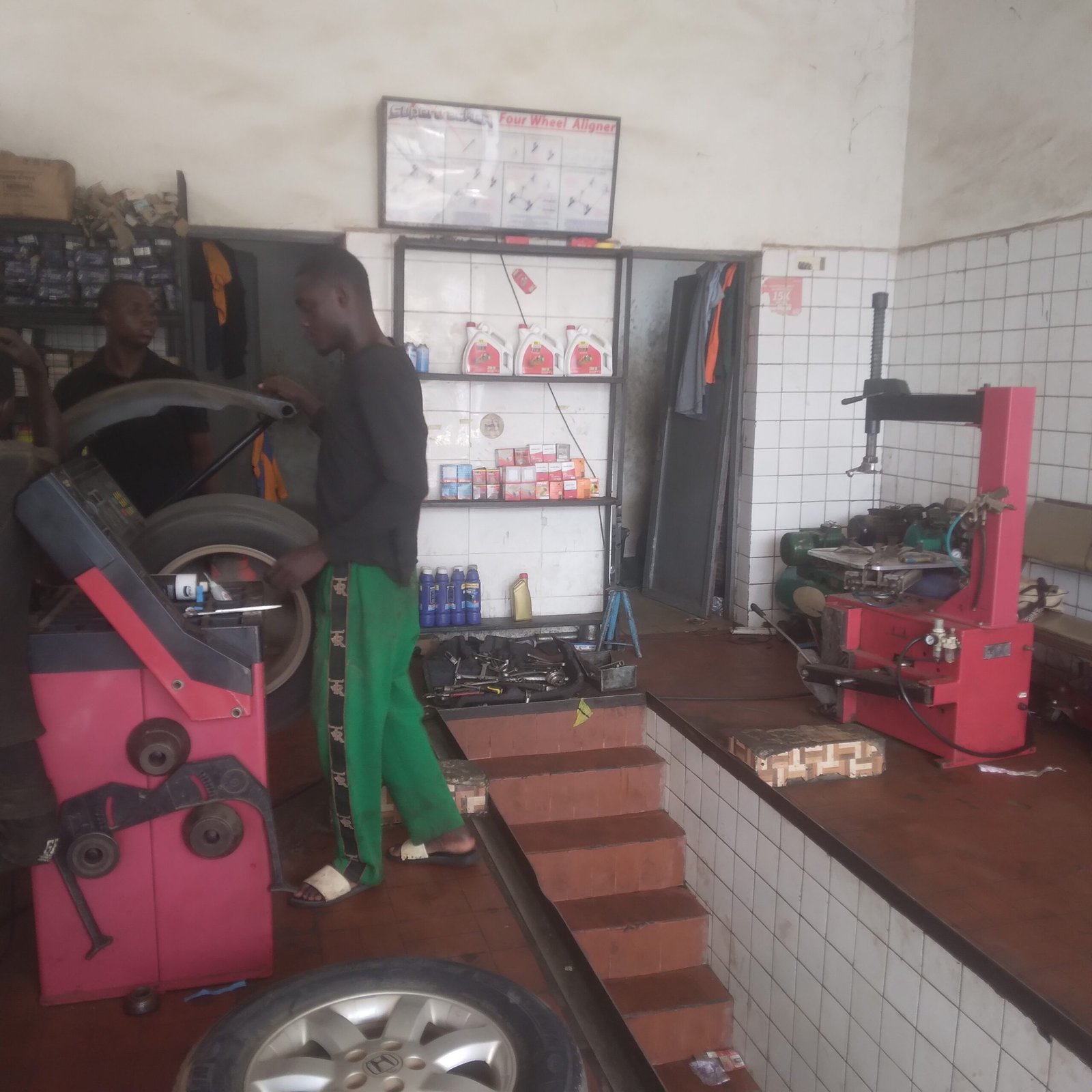
Umaru Muazu repairs a vehicle at a workshop in Kubwa, Abuja. He says practical experience has helped him earn a living, but formal education could have strengthened his technical expertise.
ABUJA, Nigeria – Bent over the exposed engine of a vehicle in a busy mechanic workshop in Kubwa, Abuja, 24-year-old Umaru Muazu carefully loosened a set of bolts before pausing to reflect on a decision he still questions. While his apprenticeship has given him a livelihood in a country where millions struggle to find work, he believes skipping formal technical education may have cost him something equally valuable — a deeper understanding of the profession he now depends on for survival.
For three years, Muazu has worked as a mechanic after completing his apprenticeship under a master technician. Like many young Nigerians facing a harsh economic reality, he chose practical skills over further schooling. Yet despite earning a steady income, he says experience alone has not been enough. Oluwafunbi Bello, writes.
“I have been a mechanic for three years now after I graduated from my boss where I learnt my work,” he said. “Even though I’ve been doing well, I at times really wish I studied this mechanic job in school where I can understand the vehicle parts more.”
The lack of formal technical training nearly landed him in trouble.
“There was a time I almost made a mistake with a customer’s car, and I thank God the person was understanding,” he recalled. “I would have been in trouble when I almost burnt the vehicle’s brain box.”
Muazu’s experience mirrors a growing dilemma facing Nigerian youths: whether to invest years pursuing certificates and degrees or acquire skills that can generate immediate income.
A Generation Under Economic Pressure
The debate is unfolding against the backdrop of worsening economic hardship.
According to the latest World Bank estimates, more than 63 per cent of Nigerians were living below the national poverty line in 2025, representing roughly 140 million people. The institution also estimated that an additional seven million Nigerians fell into poverty during the year despite improvements in broader economic indicators.
At the same time, Nigeria continues to face the challenge of creating jobs for the approximately 3.5 million people entering the labour force annually. Weak job creation and limited opportunities have left many young people searching for alternative routes to economic survival.
While official unemployment measurements have changed under new labour-force methodologies, concerns over underemployment, informal work, and graduate joblessness remain widespread. Labour statistics show that youth unemployment continues to outpace overall unemployment rates, while informal employment dominates the workforce.
Faced with rising living costs, many young Nigerians are increasingly turning to apprenticeships, vocational training, content creation, online businesses, and self-taught digital skills.
For some, the classroom is no longer seen as the surest route to prosperity.
When Skills Replace Degrees
Across Abuja, Lagos, Kano, and other major cities, vocational centres, and apprenticeship programmes are witnessing increased interest from young people eager to earn money quickly.
Many graduates spend years searching for employment after leaving university, while some artisans, traders, and entrepreneurs begin earning incomes much earlier.
The contrast has fuelled scepticism about the value of higher education.
Yet experts caution against interpreting this shift as evidence that education itself has become irrelevant.
Instead, they argue that it reflects growing frustration with an education system that often struggles to align learning with labour-market demands.
For Abuja resident Mrs. Agbo Happiness, the consequences of inadequate training are already visible.
She recounted her experience with an electrician who repeatedly failed to properly repair her fan.
“Since I took my fan to one electrician to fix the plug for me, I’ve been taking it back almost every week and now he said I should go and buy another one,” she said.
“I don’t even know what to do or say about it all again, so I stopped taking it to him.”
Her frustration highlights a broader concern among consumers and industry experts alike: while practical skills are essential, the absence of structured technical education can sometimes compromise quality, professionalism, and safety.
The Real Problem Is Relevance
Economist Niyi Emmanuel believes the growing disillusionment among young Nigerians stems less from education itself and more from the disconnect between academic learning and economic realities.
“Our universities are still largely theoretical, and that is part of the frustration among youths,” he said. “But education remains important because it provides structure, deeper understanding, critical thinking and professional standards that informal learning alone may not give.”
According to Emmanuel, the rise of entrepreneurship, digital work, and self-learning should serve as a wake-up call for policymakers rather than a reason to abandon formal education.
“Digital skills, innovation, and entrepreneurship should be integrated into schools so students can graduate with both certificates and practical competence,” he added.
His observations come as Nigeria’s economy undergoes significant transformation.
The services sector, particularly information technology, finance, and digital services, is increasingly driving economic growth, creating demand for workers with both technical expertise and analytical skills.
Experts say the challenge is ensuring that educational institutions evolve quickly enough to prepare students for these emerging opportunities.
Bridging the Gap Between Classrooms and Workplaces
Increasingly, many young Nigerians are attempting to combine education with skills acquisition.
University students now run online businesses, learn software development, graphic design, fashion design, and digital marketing while pursuing academic qualifications.
For education consultant Joseph Sunday, this hybrid approach may offer the most practical solution.
“Curriculum review is overdue,” he said. “We need schools that prepare students for real-life challenges and employment opportunities. When education becomes practical and relevant, young people will regain confidence in it.”
He argues that Nigeria’s education system was largely designed for a labour market that no longer exists — one where graduates could reasonably expect stable government or corporate employment after graduation.
Today’s economy rewards adaptability, innovation, and specialised skills.
Without reform, experts warn, the gap between education and employment may continue to widen.
Beyond Survival
Attempts to obtain comments from officials of the Federal Ministry of Education on measures being taken to strengthen practical and entrepreneurial learning in tertiary institutions were unsuccessful as of press time.
Nevertheless, the concerns raised by young Nigerians like Muazu point to a larger national conversation about the future of education and work.
For many youths, economic survival cannot wait for policy reforms.
The pressure of rising food prices, transportation costs, rent, and family responsibilities often makes immediate income more attractive than long-term educational investment.
Yet the same economic realities are exposing the limitations of relying solely on informal learning.
Back in Kubwa, Muazu remains determined to continue his education someday.
Despite the success he has achieved through apprenticeship, he believes there are lessons that workshops alone cannot provide.
“I still want to go to school because experience alone is not enough,” he said. “There are things education will teach you that you cannot easily learn outside.”
As Nigeria struggles to reduce poverty, create jobs, and prepare its workforce for a rapidly evolving global economy, the debate is no longer about choosing between skills and education.
The challenge is ensuring that young people have access to both.
While skills may help Nigerians survive today’s economic realities, education remains one of the strongest foundations for long-term opportunity, innovation, and national development.
About the Author


 Mirian Gom
 Korede Abdullah

 Oluwatobi Adu