
A Pay Rise or Poverty Trap? Why Nigeria’s ₦100,000 Minimum Wage Debate Exposes a Deeper Economic Crisis
 Korede Abdullah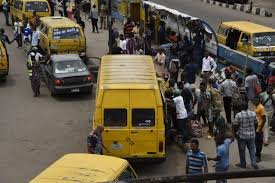
LAGOS, Nigeria – For millions of Nigerian workers, payday no longer brings relief. Salaries that once covered rent, food, transport and school fees are increasingly exhausted within days, leaving households scrambling to survive until the next month. Against this backdrop of soaring prices and shrinking purchasing power, a proposal to raise the national minimum wage to ₦100,000 has ignited a fierce national debate over what it truly costs to live in Africa’s largest economy. Korede Abdullah, writes.
The discussion began after the Chairman of the Nigeria Governors’ Forum and Governor of Kwara State, AbdulRahman AbdulRazaq, suggested that state governments were considering a new minimum wage benchmark of ₦100,000 in response to worsening economic conditions.
“State governments recognise the urgent need to improve workers’ welfare in response to the current economic realities facing Nigerians,” he said.
But as inflation continues to erode incomes and poverty deepens across the country, workers, economists and labour unions are asking a difficult question: can any wage increase keep pace with Nigeria’s cost-of-living crisis?
When a Salary No Longer Buys Survival
The debate comes less than two years after the implementation of the current ₦70,000 minimum wage, a figure many workers now say has been overtaken by economic realities.
Since the removal of fuel subsidies and the liberalisation of the foreign exchange market, Nigerians have faced some of the steepest increases in living costs in decades.
Food prices have surged.
Transport fares have multiplied.
Rent has become unaffordable for many urban households.
Healthcare costs continue to rise.
For many workers, the gap between income and expenses grows wider every month.
Governor AbdulRazaq said consultations are ongoing between state governments, the Federal Government and organised labour to determine a sustainable wage structure.
“We are actively engaging with the Federal Government and organised labour to arrive at a wage structure that is fair to workers and sustainable for government finances,” he said.
The challenge, however, extends beyond balancing budgets.
It is about determining what constitutes a living wage in a country where inflation has dramatically reduced purchasing power.
Labour Says ₦100,000 Is Already Too Little
For organised labour, the governors’ proposal does not go far enough.
The Nigeria Labour Congress (NLC) argues that inflation has rendered even ₦100,000 inadequate for basic survival.
NLC spokesperson Benson Upah dismissed the proposal as unrealistic when measured against current living costs.
“We consider it thoughtful of the Kwara State Governor for proposing this, but certainly, ₦100,000 falls far below or behind the realistic figure.”
According to Upah, recent economic reforms have fundamentally altered household spending patterns.
“Given the realities around the exchange rate, inflation, raised tariffs, surge in the pump price of petrol and associated costs, the realistic figure would be ₦1 million.”
While such a figure may appear politically unattainable, labour leaders argue that it reflects the true scale of economic pressure facing workers.
They point to increasing allocations from the Federation Account and improved government revenues as evidence that workers should not shoulder the burden of economic reforms alone.
A Nation Growing Poorer Despite Working Harder
The wage debate is unfolding amid one of Nigeria’s most severe poverty crises in recent history.
According to the National Bureau of Statistics’ Multidimensional Poverty Index, approximately 133 million Nigerians live in multidimensional poverty, lacking adequate access to healthcare, education, sanitation, nutrition and other essential services.
More than 63 per cent of Nigerians experience multiple forms of deprivation.
The burden is particularly severe in northern Nigeria, where about 65 per cent of poor Nigerians reside.
Rural communities account for more than three-quarters of those living in poverty.
Children are among the worst affected.
The report shows that approximately 73 per cent of Nigerians living in multidimensional poverty are children under the age of 18, while more than 80 per cent experience educational deprivation.
For economists, these figures reveal that the wage debate is about more than salaries.
It is about whether economic growth is translating into improved living standards.
Nurses, Teachers and Civil Servants Feel the Pressure
Among those feeling the impact most acutely are public sector workers.
Ademola Alabi, former Chairman of the National Association of Nigerian Nurses and Midwives (NANNM), Ekiti State chapter, said many workers now spend most of their salaries on food and transportation alone.
“The ₦100,000 proposal is an improvement, but it still falls short of what many families require to live decently.”
According to him, inflation has reduced wages to survival income.
“Many workers exhaust their salaries shortly after payment due to rising costs of food, transport, rent and healthcare.”
He warned that prolonged hardship could affect workforce productivity.
“Workers should not bear the burden of economic challenges alone.”
Alabi called for stronger economic reforms alongside wage adjustments, including improved revenue management, reduced waste and stronger anti-corruption measures.
Without such reforms, he said, salary increases may provide only temporary relief.
Activists Push for More Radical Solutions
The debate has also attracted civil society voices.
Human rights activist and former presidential candidate, Omoyele Sowore, has argued that ₦500,000 should be considered a realistic minimum wage, particularly for workers in essential sectors such as healthcare, education and security.
His intervention has widened the gap between government proposals and labour expectations.
While some economists dismiss such figures as fiscally unsustainable, supporters argue they reflect the true cost of living in major Nigerian cities.
The disagreement highlights a broader challenge facing policymakers: how to improve incomes without triggering further inflation or placing unsustainable pressure on public finances.
More Than a Wage Problem
Public affairs analyst Ibrahim Yusuf believes the controversy reflects deeper structural weaknesses within the economy.
“The unfolding wage debate reflects deeper structural weaknesses in the economy rather than a simple salary dispute.”
According to him, inflation, unemployment and low productivity have combined to create a cycle of economic vulnerability.
“Rising inflation, unemployment and weak productivity have combined to widen inequality and deepen deprivation across the country.”
Yusuf warned that salary adjustments alone cannot solve the crisis.
“Unless urgent policy reforms address food inflation, energy costs and revenue leakages, any wage adjustment will only offer temporary relief.”
His assessment echoes the concerns of many development experts who argue that wages must be considered within a broader economic framework.
Improving agricultural productivity, stabilising energy supplies, creating jobs and reducing inflation may ultimately have a greater impact on living standards than salary reviews alone.
Between Hope and Hardship
The proposal for a ₦100,000 minimum wage has become a symbol of a larger national dilemma.
Workers want wages that reflect the realities of daily life.
Governments must balance worker welfare with fiscal sustainability.
Businesses fear higher labour costs in an already difficult operating environment.
Meanwhile, millions of Nigerians continue to struggle under the weight of rising prices and shrinking incomes.
The central question is no longer whether wages should increase.
It is whether any salary adjustment can keep pace with a cost-of-living crisis that continues to push more families towards poverty.
Until inflation is brought under control and broader economic reforms take root, many experts believe Nigeria’s wage debate will remain less about prosperity and more about survival.
For millions of workers, the difference is becoming increasingly difficult to ignore.
About the Author


 Mirian Gom


 Oluwatobi Adu