Mirian Gom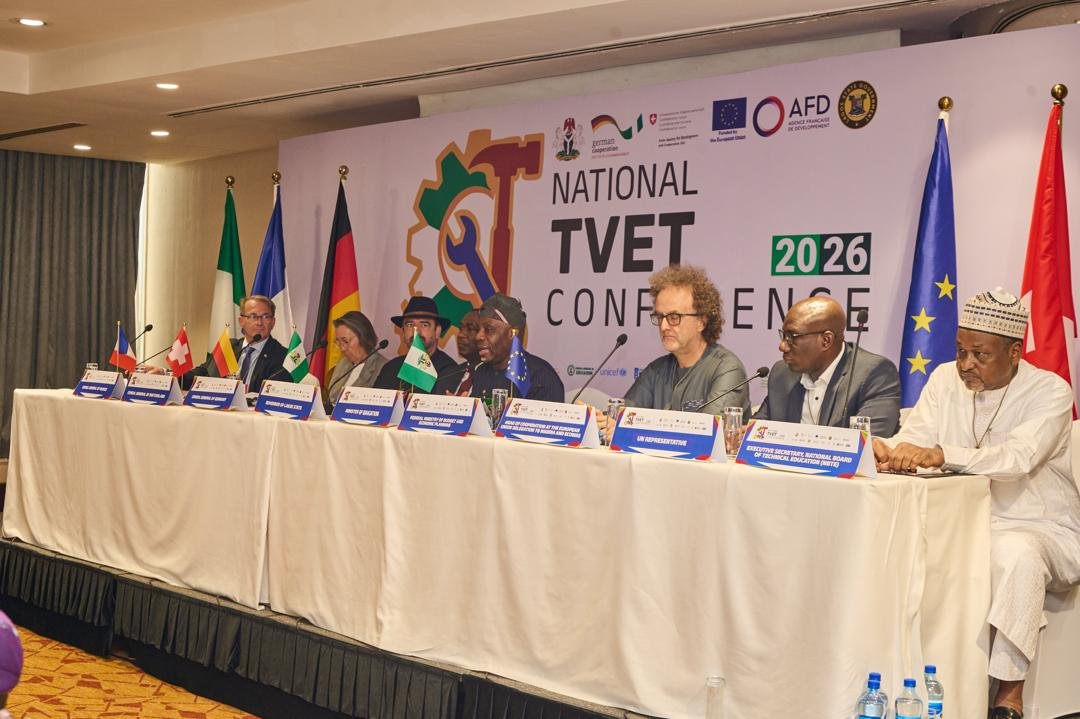
LAGOS, Nigeria – More than 150,000 Nigerians are undergoing technical and vocational training under a sweeping Federal Government programme aimed at tackling youth unemployment, closing critical skills gaps and preparing the workforce for emerging industries including artificial intelligence, cybersecurity and renewable energy.
The initiative, unveiled on Monday at the National TVET Conference 2026 in Lagos, marks one of Nigeria’s most ambitious skills development drives in recent years as the government seeks to transform Africa’s most populous nation into a skills-driven economy.
Minister of Education, Dr. Maruf Tunji Alausa, said the Technical and Vocational Education and Training (TVET) programme has become a cornerstone of President Bola Tinubu’s economic reform agenda, with more than 1,600 accredited centres now training young Nigerians nationwide.
“Under the leadership of President Bola Ahmed Tinubu and the Renewed Hope Agenda, Nigeria is repositioning education to produce innovators, entrepreneurs, technicians and job creators rather than job seekers,” Alausa said.
According to Alausa, the programme is being implemented through the Nigeria Education Sector Renewal Initiative (NESRI), which is strengthening the National Skills Qualification Framework, expanding competency-based learning and improving quality assurance systems to ensure graduates acquire skills that match industry needs.
The minister said thousands of instructors and quality assurance officers have been deployed across training centres to maintain standards and improve employability outcomes.
“The next phase is about scale, quality and stronger engagement with industry,” Alausa said, adding that closer collaboration between employers and training institutions will be critical to ensuring graduates transition directly into the workforce.
Representatives from Germany, Switzerland, the European Union, UNESCO, UNICEF, GIZ and the SKYE II Programme commended Nigeria’s progress in skills development and pledged continued support for ongoing reforms.
About the Author


 Korede Abdullah
 Hope Ajayi