
Choked at Hormuz: How a Distant Maritime Crisis Is Quietly Tightening Africa’s Food Noose
 Korede Abdullah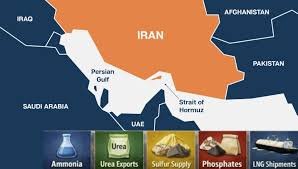
LAGOS, Nigeria – From the wheat fields of Eastern Europe to the bakeries of Lagos, the world’s food system is bound together by invisible threads of trade, shipping routes, and fragile geopolitics. But when one of those threads’ snaps — at a narrow waterway thousands of kilometres away — the shockwaves can ripple into kitchens, farms, and markets across Africa.
In March 2026, rising tensions in the Middle East pushed the Strait of Hormuz — a vital artery for global trade — to the brink of disruption. What might appear to be a distant geopolitical standoff is, in reality, a slow-burning crisis with immediate consequences for Africa’s food security.
In this report, Korede Abdullah, examines how a maritime chokepoint is tightening its grip on a continent already walking a nutritional tightrope.
A Crisis Begins at Sea
Everything depends on that narrow passage.
The Strait of Hormuz, wedged between the Persian Gulf and the Arabian Sea, carries a significant share of the world’s energy and agricultural inputs. Roughly one-third of global seaborne fertiliser shipments — about 16 million tonnes — transit through this corridor annually, accounting for up to 30 per cent of global exports.
Now, with shipping movements slowed and routes increasingly uncertain, the consequences are cascading far beyond the Middle East.
For Africa — a continent heavily reliant on imports — the disruption is exposing deep structural vulnerabilities. Countries already battling inflation, currency instability, and climate shocks now face an additional layer of uncertainty: whether essential food supplies will arrive at all.
Wheat Dependence Raises Alarm
Few countries illustrate this fragility more starkly than Nigeria.
According to projections by the United States Department of Agriculture’s Foreign Agricultural Service, Nigeria is expected to import 7.2 million metric tonnes of wheat in the 2026/2027 marketing year. The surge is driven by growing urban demand for wheat-based staples such as bread, pasta, and noodles.
This dependence has created a dangerous exposure.
A disruption in global shipping routes — especially one as strategic as the Strait of Hormuz — translates almost immediately into higher import costs, delayed shipments, and potential shortages.
Across Africa, where nearly 80 per cent of wheat is imported, the implications are even broader: rising food prices, shrinking access, and deepening inequality.
Aid Routes Under Severe Pressure
The humanitarian system is already straining under the pressure.
The World Food Programme warns that disruptions in the Strait could push an additional 45 million people into acute food insecurity. Its supply chains — lifelines for millions — are being stretched to breaking point.
Shipping costs have surged by approximately 18 per cent. Aid deliveries are being delayed, rerouted, or redirected through alternative hubs such as Dubai, adding both time and cost.
In some cases, humanitarian cargo is now forced onto longer land corridors — a logistical gamble that risks further delays in regions where time often determines survival.
Shipping Backlog and Global Standstill
What is unfolding is not merely a slowdown — it is a systemic bottleneck.
Maritime traffic through the Strait has thinned to a trickle, triggering a domino effect across global supply chains. Container shortages are worsening. Freight charges are climbing. Insurance premiums are spiking.
The result is a near standstill in the flow of goods between Asia, the Middle East, and Africa.
For African economies, this is more than an inconvenience. It is a chokehold on trade — delaying not just food imports, but also the agricultural inputs needed to produce food locally.
Fertiliser Flows Threatened at a Critical Moment
Timing, in agriculture, is everything.
The disruption comes at the onset of the March–April planting season in the Northern Hemisphere — a critical window for farmers preparing their fields. Fertiliser shortages at this stage could derail an entire growing cycle.
The implications are stark: reduced yields, tighter food supplies, and a further spike in global prices.
For African farmers, many of whom rely heavily on imported fertilisers, the risks are immediate and severe.
A ‘Twin Shock’ to Agriculture
The crisis is unfolding as what experts describe as a “twin shock”.
On one side, fertiliser supplies are tightening. On the other, fuel prices are rising — pushing up the cost of transportation, irrigation, and mechanised farming.
Together, these pressures are inflating the cost of food production from farm to market.
Dr. Israel Ojo, an Agricultural Economist at the Ekiti State University captures the gravity of the moment:
“The disruption creates a dual shock—restricted access to food imports and limited availability of inputs for local production.”
He warns that shipment delays, rising freight costs, and supply shortages are already biting.

“The disruption has the potential to create a backlog in global shipping, raising insurance premiums and causing container scarcity,” he said, adding that the impact is coming at a crucial planting period.
Farmers Face Difficult Choices
On the ground, the crisis is no longer abstract.
In Ifo, Ogun State, farmer Kabir Arewa is already recalculating his future.
“The price of fertiliser has gone beyond what we can afford. As of March 2026, the prices for a 50kg bag of fertiliser is now between ₦60,000 and ₦65,000, depending on the type and brand. This is what we used to buy at ₦45,000 to ₦50,000. Some of us may reduce the size of our farms this year,” he said.
The decision is not merely economic — it is existential.

“We may reduce our farms or stop planting completely if this continues,” he lamented.
Reduced planting today means reduced harvest tomorrow — a delayed crisis already taking root.
Food Prices Set to Rise
In urban centres, the warning signs are already visible.
For baker Tairu Alabi, the numbers no longer add up.
“We are already seeing increases from suppliers… it is only a matter of time before those costs reflect in the price of bread,” he said.
Bread — one of the most accessible staples — may soon become less affordable for millions.

Alabi points to a convergence of pressures: rising energy costs, expensive imports, and disrupted supply chains.
“Prolonged disruption could lead to reduced production or even temporary shutdowns for smaller bakeries.”
Search for Alternatives and Urgent Action
As the crisis deepens, global agencies are scrambling for alternatives.
The World Food Programme is expanding supply routes, shifting cargo through ports in Turkey and Pakistan and relying more heavily on overland corridors. But these are stopgap measures — costly, slower, and limited in scale.
At the same time, the United Nations is calling for urgent international coordination to ensure safe passage through the Strait.
The stakes are global, but the burden is uneven.
Countries already facing fragility — from Sudan to Yemen — stand at the frontlines of the crisis. Yet the ripple effects are being felt across Africa, where food systems are tightly interwoven with global markets.
Experts say the long-term solution lies closer to home.
Dr. Ojo stresses the need for structural change:
“Without urgent and coordinated action, the country could face rising inflation, reduced agricultural output, and worsening food insecurity.”
Diversifying supply chains, investing in local agriculture, and strengthening regional trade are no longer policy options — they are imperatives.
A Crisis Far from Home, But Close to the Plate
The Strait of Hormuz may be thousands of kilometres away, but its disruption is already echoing across Africa — in the price of bread, the cost of fertiliser, and the decisions farmers must make about whether to plant at all.
This is the paradox of globalisation: the closer the world becomes, the more vulnerable it is to distant shocks.
And for millions across Africa, the question is no longer whether the crisis will arrive — but how hard it will hit when it does.
About the Author


 Edino Chubiyo Cornelius
 Chukwu Obinna
 Mirian Gom