

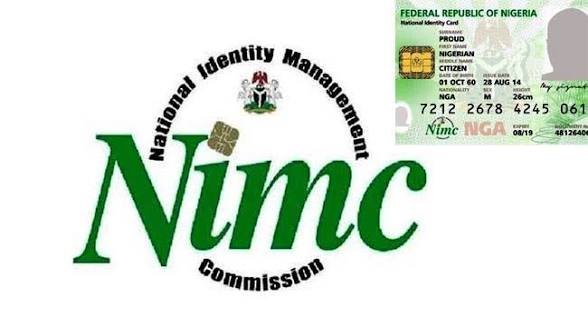
ABUJA, Nigeria – When the Federal Government linked every mobile phone line to the National Identification Number (NIN), Nigerians were promised a powerful weapon against kidnapping, terrorism, cybercrime and identity fraud. Yet years later, ransom negotiations still take place over telephone calls, online fraud remains widespread and violent criminals continue to exploit gaps in law enforcement. Now, with the National Identity Management Commission (NIMC) unveiling a major overhaul of Nigeria’s digital identity system, questions are once again being asked: Can a smarter NIN finally deliver the security benefits citizens were promised? In this report, Edino Cornelius examines why the original framework fell short, what has changed under the upgraded system and whether technology alone can help reverse Nigeria’s worsening security crisis.
A Promise Yet to Be Fully Realised
The National Identification Number (NIN) was introduced to provide every legal resident in Nigeria with a unique identity. Beyond serving as a means of identification, it was designed to become the backbone of a national database capable of improving public service delivery, expanding financial inclusion and strengthening national security.
That ambition gathered momentum when the Federal Government made it mandatory for all Subscriber Identity Module (SIM) cards to be linked to a verified NIN.
The expectation was straightforward: every active telephone line would be traceable to a verified individual, making it harder for kidnappers, fraudsters and other criminal networks to operate anonymously.
However, despite the nationwide SIM-NIN linkage exercise, insecurity has persisted.
Kidnappers continue to negotiate ransoms using mobile phones, cybercriminals still exploit digital platforms to defraud victims, and security agencies often struggle to identify suspects quickly.
Those realities have prompted renewed debate over whether the country’s digital identity framework has lived up to its original promise.
Why the Original System Fell Short
Cybersecurity expert Mr. Famous Benson said the original objective of the NIN was to establish a reliable national identity database capable of supporting security operations.
“The first primary aim of introducing the National Identification Number was to secure a reliable database that recognises the identity of every legal resident.”
According to Benson, linking SIM cards to verified identities was intended to eliminate anonymous phone ownership and make mobile communications an effective investigative tool.
Yet he believes criminal groups quickly adapted.
“Technology has grown significantly around the world. Most criminals now operate from underserved border regions and bypass telecom tracking by using technologies that bounce signals across multiple locations, making their exact locations difficult to detect.”
He added that many kidnappers now compel victims to use their own mobile phones when negotiating ransom demands.
“When criminals force victims to use the victims’ own phone lines, the NIN linked to that SIM becomes less useful in identifying the actual offender.”
His assessment suggests that the challenge lies not only with the identity database itself but also with the increasingly sophisticated methods adopted by organised criminal networks.
Inside Nigeria’s New Digital Identity Framework
The Federal Government believes the latest reforms represent far more than a routine system upgrade.
According to a National Identity Management Commission (NIMC) official, Mrs. Ebiojo, the agency is transforming the NIN into the country’s foundational digital trust infrastructure.
“The old NIN served largely as a basic identification tool. The new reform positions Nigeria’s digital identity system as the country’s foundational digital trust and security infrastructure.”
Unlike the previous framework, which primarily stored identity records, the upgraded system expands NIMC’s responsibilities to include authentication services, cybersecurity governance and electronic signature management.
One of the biggest changes is the integration of multiple government databases.
“Previously, NIN records existed independently from immigration records, Bank Verification Numbers, tax records and other government databases. The new framework mandates real-time interoperability between these systems.”
According to the commission, synchronising identity records across government institutions will reduce duplicate identities, eliminate ghost records, strengthen financial security and improve criminal investigations.
The reforms also introduce several new digital services, including the NIMC Authentication App, encrypted digital identity tokens, a secure digital postcode system and a General Multipurpose Identity Card that supports identification, digital payments and government social intervention programmes.
Telecom Operators Become the First Line of Defence
Telecommunications companies remain central to the success of the upgraded identity system.
Mrs. Joy, a telecommunications professional with Airtel, said mobile network operators now play a more critical role in preventing identity fraud.
“Telecommunicators are the first line of defence against fake identities. Under the new reform, mobile network operators are required to block any line that cannot be verified through a genuine identity.”
She disclosed that enforcement of stricter verification requirements has already resulted in the deactivation of more than 59 million non-compliant SIM cards.
“If a telecommunications company activates a SIM card without proper biometric verification, it immediately exposes the network to security risks.”
According to her, stronger identity verification will improve confidence in Nigeria’s telecommunications sector while reducing opportunities for identity-related crimes.
Security Agencies Are Now More Closely Involved
Security analyst Dr Tunde Akinlabi believes one of the most important aspects of the reforms is the closer collaboration between security agencies and identity managers.
“Security experts are no longer outsiders waiting for paperwork approvals. They are now embedded within the identity management command structure.”
He said integrating security professionals directly into identity management processes would strengthen coordination and reduce opportunities for manipulation.
“The purpose is to strengthen the system against manipulation and improve coordination in tackling criminal activities.”
He believes the closer relationship between identity managers and security agencies could improve intelligence sharing and accelerate investigations into organised crime, terrorism and identity fraud.
Can Technology Alone Defeat Crime?
Despite welcoming the reforms, experts interviewed for this report cautioned against viewing technology as a standalone solution to Nigeria’s security challenges.
Criminal networks continue to evolve rapidly, relying on encrypted messaging applications, signal-routing technologies and operations from remote border communities where conventional surveillance remains difficult.
For that reason, experts argue that digital identity reforms must be accompanied by stronger intelligence gathering, improved border management, better-equipped law enforcement agencies and more effective inter-agency collaboration.
Without those complementary measures, organised criminal groups are likely to continue adapting faster than the systems designed to stop them.
A Stronger System, but Not a Silver Bullet
The upgraded NIN framework marks one of the most ambitious reforms of Nigeria’s digital identity architecture since the introduction of the National Identification Number.
Integrated government databases, stronger cybersecurity safeguards, improved authentication tools and closer cooperation between security agencies and identity managers have the potential to make identity verification more reliable and criminal investigations more effective.
However, this investigation also reveals that digital identity systems are only as effective as the institutions that rely on them.
Technology can identify, verify and connect information, but it cannot replace intelligence-led policing, effective prosecution, secure borders or accountable governance.
For Nigeria, the upgraded NIN may provide a stronger foundation for national security than ever before. Whether it ultimately fulfils the promise made to millions of Nigerians will depend not on the sophistication of the technology alone, but on the country’s ability to use it as part of a broader, coordinated strategy against crime.







Join the conversation