
 Juliet Jacob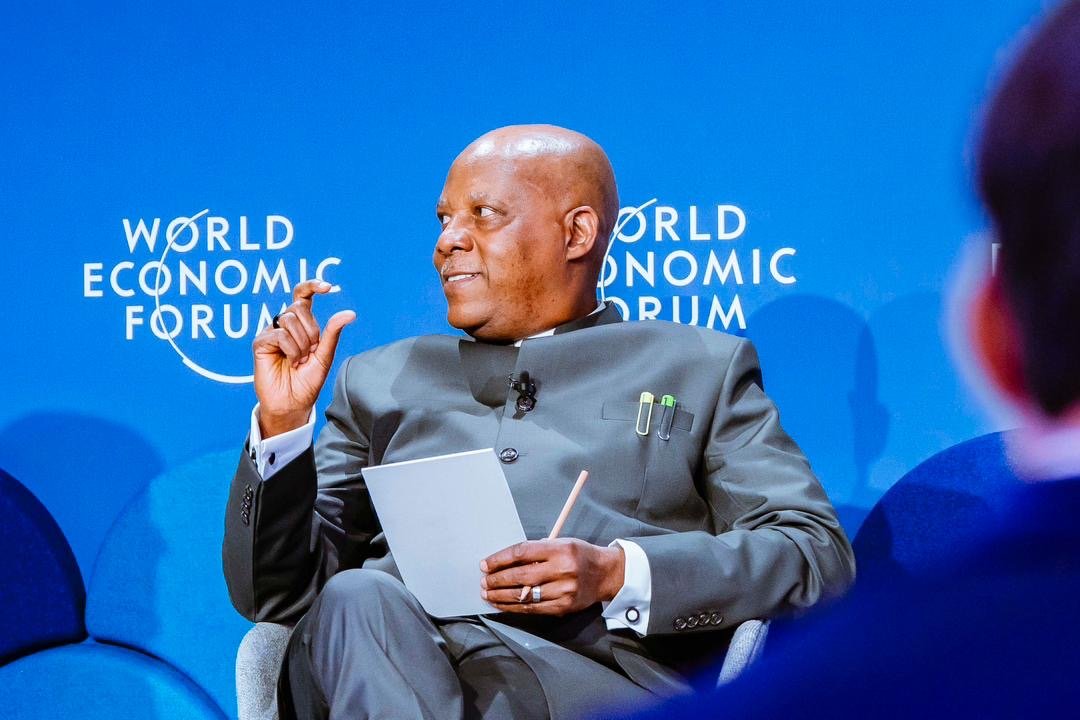
Vice President Kashim Shettima speaking at World Economic Forum
ABUJA, Nigeria – Nigeria now treats food security as a core national security and macroeconomic priority, Vice President Kashim Shettima declares at the World Economic Forum.
Speaking during a high-level session titled When Food Becomes Security, Shettima says food production directly affects inflation, foreign exchange stability and national cohesion, making it inseparable from governance.
“Food security is no longer sectoral. It defines our stability and security outcomes,” he says.
According to a State House statement on Thursday, the government’s rethink follows climate shocks, global supply disruptions and persistent insecurity in key farming regions. Many of Nigeria’s major food belts remain conflict-affected, limiting output and fuelling food inflation.
“Most of our food baskets are security-challenged,” Shettima notes. “That is why we are creating food security corridors to allow farmers to return safely to their land.”
The Vice President says the government launches a Back to the Farm Initiative to resettle displaced farmers, provide inputs, insurance and financing, and reduce import dependence. Nigeria’s reliance on wheat, sugar and dairy imports, he explains, intensifies inflationary pressure and foreign exchange demand.
“Our response is local production and substitutes—sorghum, millet and cassava flour,” he says.
Shettima adds that climate change is reshaping agriculture nationwide, citing desertification in the north and flooding in southern and central regions. The government is scaling drought-resistant and flood-tolerant crops under President Bola Tinubu’s Renewed Hope Agenda.
Nigeria’s strategy rests on increased production, environmental sustainability and regional trade integration. Shettima urges African countries to deepen cooperation under AfCFTA, arguing that intra-African food trade is now a strategic necessity.
At Davos, Nigeria positions food systems not just as economic assets, but as pillars of national security in a volatile global environment.
About the Author


 Oluwatobi Adu
 Mirian Gom
 Oluwafunbi Bello
 Chukwu Obinna